
Emergency Air Duct Cleaning Near Me: What South Fulton Homeowners Should Do First
Calling for emergency duct cleaning right after a flood, a smoke event, or a confirmed rodent problem is the expensive mistake we hear about most. The system that spreads conditioned air through your house will happily spread contamination to every register too, and it does that long before anyone shows up with equipment. The right first move in South Fulton isn’t a phone call to a cleaner. It’s triage. Most “duct emergencies” need isolation and verification before cleaning, and doing it out of order can turn a salvageable system into a full remediation job.
If you’d rather not sort through it alone, call (833) 991-9213. We answer 24/7, with fast dispatch from 7am to 7pm, Sunday through Friday. Estimates are free.
Key Takeaways
- Shut the HVAC system down before anything else. A running blower spreads contamination to every register in the house.
- Not every urgent situation calls for cleaning. Post-flood, rodent, fire/smoke, and mystery-odor events each have a different first step.
- Microbial situations usually need testing before cleaning, not after. Cleaning first can destroy the evidence your insurer needs.
- Ask what equipment a company actually carries. HEPA negative air machines and containment gear are not standard on every truck.
- Gather documentation immediately if an insurance claim is possible. A cleaning invoice alone rarely closes a claim.
What Counts as a Real Duct Emergency in South Fulton?
Four situations genuinely qualify as urgent duct emergencies. Each one has a different first step, and treating them all as “call a cleaner today” is how homeowners waste money. Here’s how we sort them.
- Water intrusion or sewage backup into the duct system. This is the most serious. Standing water or damp material inside ducts starts supporting microbial growth quickly, and the blower will distribute it through the home. First step: shut down the system and isolate it. Cleaning comes after assessment.
- Confirmed rodent intrusion. Droppings, nesting material, or a live animal in the ductwork. First step: shut the system down, then get a wildlife professional to remove the animal and seal entry points. Duct cleaning and repair follow.
- HVAC fire or smoke event. Even a small electrical fire in or near the air handler leaves soot and smoke residue in the plenum and ducts. First step: system off, and don’t run the fan to “clear the air.”
- Sudden unexplained odor. A persistent smell with no obvious source is the situation most often misdiagnosed. Sometimes it’s a dead animal, sometimes a failing component, sometimes a duct connection pulling air from an unconditioned space. First step: find the source before scheduling cleaning.
If your situation doesn’t match any of these, you probably don’t have an emergency. A dirty system that’s been dirty for a year is a scheduling decision. A wet system or a confirmed animal is a today decision.
What Should You Do Before the Technician Arrives?
Shut the system off at the thermostat and, if you can reach it safely, at the breaker serving the air handler. That single step prevents the blower from pushing contamination into every room. Here’s the full pre-arrival protocol we walk South Fulton homeowners through.
- Turn the HVAC off at the thermostat first, then power down the air handler if the breaker is accessible and clearly labeled. Don’t open a panel to reach a breaker you can’t identify.
- Don’t run the fan in “on” mode to try to air things out. That’s the opposite of what you want.
- Close supply registers in rooms you can reach, and cover return grilles with plastic sheeting and tape if debris or odor is active. This is temporary containment, not a repair.
- Don’t run a shop vac or a box fan near affected vents. Consumer vacuums exhaust fine particles back into the room.
- Move pets and family members away from the affected area, especially anyone with respiratory sensitivity.
- Photograph everything before anything is moved or cleaned. More on that below.
None of this replaces a professional assessment. High-voltage components, gas-fired equipment, and any wiring near the air handler belong to a trained technician, so keep your hands out of the equipment cabinet itself.
Why Post-Flood Duct Situations Usually Need Testing Before Cleaning
If water, sewage, or sustained high humidity has reached the duct system, mold testing typically comes before cleaning, not after. Cleaning a system that may already be colonized destroys the samples an assessment depends on, and it can aerosolize spores that were settled. In South Fulton’s humid summers, a damp duct system has a short window between “wet” and “actively growing,” so the sequence matters.
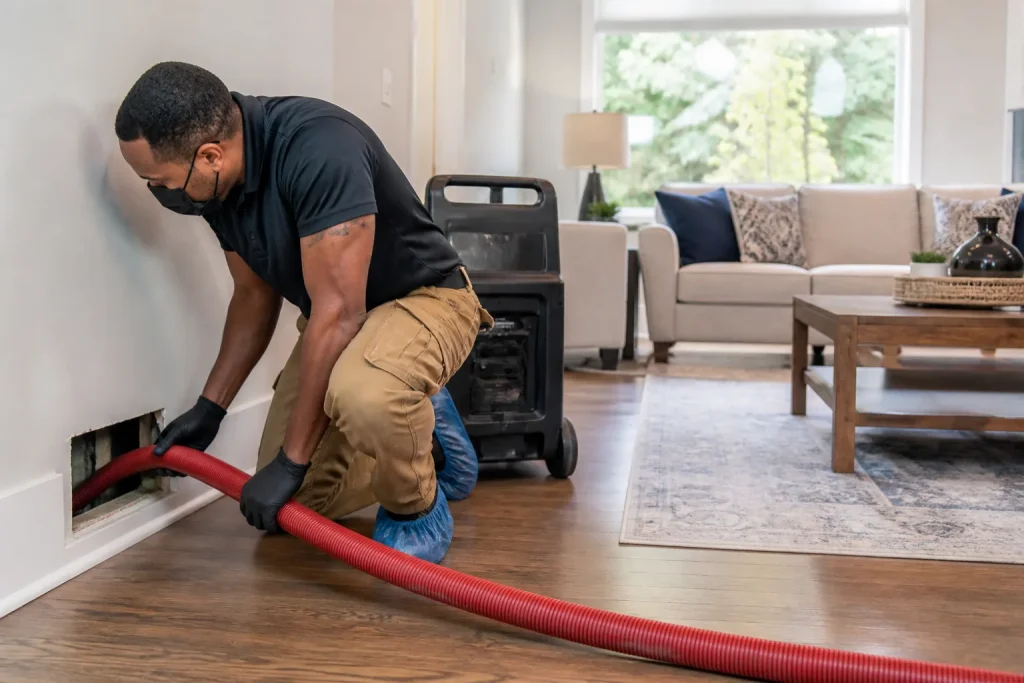
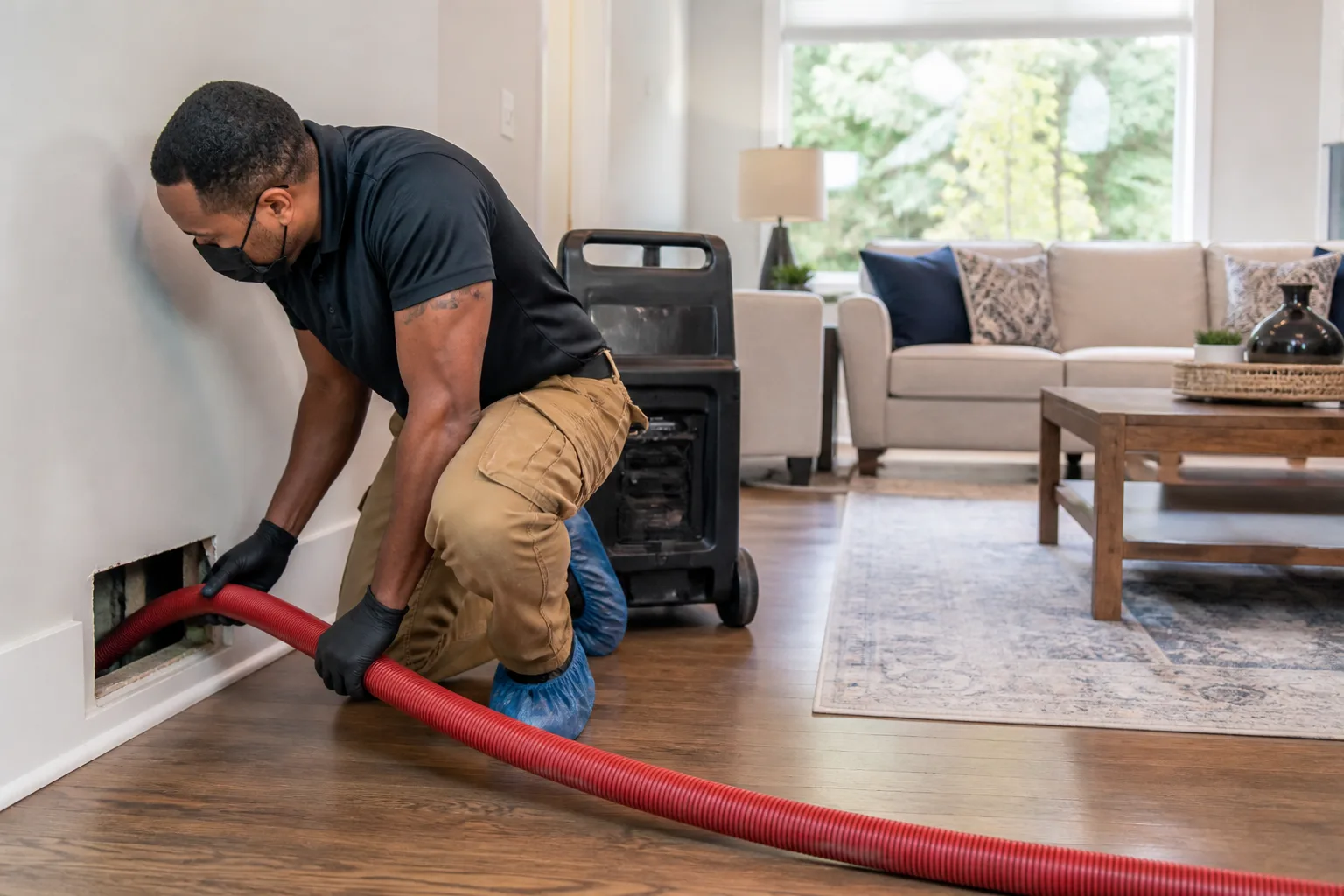
The right order is: stop the system, document conditions, get a moisture and microbial assessment, then clean with the correct equipment. Standard brushing and vacuum work isn’t the right tool for a microbial situation. Remediation-grade work calls for HEPA negative air machines and containment barriers, which is why we run Abatement Technologies filtration equipment and treat containment as a protocol rather than an afterthought. Guardsman products round out the treatment side.
If a contractor wants to start cleaning before assessment on a wet system, ask why. “We’ll clean it and see” is not a remediation plan. It’s a way to charge twice.
How Do You Verify a Company Is Equipped for Your Specific Emergency?
Ask what equipment they carry before you book, and listen for specifics. A company set up for microbial remediation will name HEPA negative air machines, containment barriers, and extraction equipment. A company set up for routine cleaning will talk about a brush and a big vacuum. Both have their place, but they’re not interchangeable.
Useful questions to ask on the phone:
- Do you carry HEPA negative air machines and containment equipment for remediation work?
- Can you perform air duct repair if the inspection finds damaged or disconnected ductwork?
- What documentation do you provide at the end of the job, and do you photograph before and after?
- Do you work with Honeywell and Aprilaire IAQ systems if they’re part of the setup?
- Are you able to coordinate with an environmental testing professional if microbial sampling is needed?
One-call coverage matters here. If cleaning turns up a crushed or disconnected run, you don’t want to chase down a second contractor while the system sits open. We clean it. If it’s damaged, we repair it. For standard work, you can read more about air duct cleaning and what a proper job includes. Our technicians have up to 13 years of experience with Rotobrush brush systems, Nikro vacuum equipment, and the remediation-grade tools these situations call for.
What Documentation Should You Gather for an Insurance Claim?
Photograph and document immediately, before anything is moved or cleaned. Insurers process claims on evidence of cause and condition, not on a receipt for work performed. A cleaning invoice alone usually isn’t sufficient because it proves you paid for a service, not that damage occurred.
Gather these while the scene is fresh:
- Photos and video of standing water, staining, visible debris, droppings, soot, or damaged duct material, taken before cleanup.
- Date and cause of the event, plus any related receipts (plumbing repair, roof work, appliance failure).
- The assessment or testing report, if microbial sampling was done.
- Your HVAC service records, which help establish the system’s prior condition.
- A written scope of work from the contractor, itemized by task, not a single lump-sum number.
- Before-and-after photos of the duct interior from the contractor, dated and labeled.
Keep the paper trail separate from the cleaning. If a claim is possible, tell the contractor up front so the documentation is built the way an adjuster will want to read it.
When to Call a Pro (and When to Wait)
Call a professional now if water or sewage has reached the ducts, if you’ve confirmed rodents or found droppings, if there’s been a fire or smoke event in or near the air handler, or if a persistent odor has no obvious source. Those are the four situations where sequence and equipment matter and where a wrong first step costs real money. If none of those apply, you can schedule on a normal timeline.
In our experience, the calls that turn into expensive remediation are the ones where a homeowner ran the system “just to see” after a water event. Don’t be that call. If you’re unsure which situation you’re in, describe it to us and we’ll tell you the right first step. Call (833) 991-9213. We answer 24/7. Fast dispatch from 7am to 7pm, Sunday through Friday, and we’re closed on Saturday.
Related services in South Fulton: alongside air duct cleaning, we handle dryer vent cleaning as a standalone safety service. A clogged dryer vent is a fire hazard that most homeowners don’t think about until the dryer starts taking two cycles to finish a load. If you’re near Riverdale, we cover that area too.
The Bottom Line
The four real duct emergencies in South Fulton – post-flood or sewage intrusion, confirmed rodent presence, an HVAC fire or smoke event, and a sudden unexplained odor – each start with isolation, not a cleaning appointment. Shut the system down, document the conditions, then get an assessment before anyone starts brushing and vacuuming. Verify the company carries the equipment your specific situation needs, and gather claim documentation while the evidence is still there.
We bring professional-grade equipment to every job – Rotobrush brush systems, Nikro extraction, Abatement Technologies filtration, and Guardsman products – and we set one flat price per system, agreed before work starts, with before-and-after photos of your own ducts. If you’re in South Fulton and need help, Tidewater Air Duct Cleaning offers free estimates. Call (833) 991-9213. We answer 24/7. Fast dispatch from 7am to 7pm, Sunday through Friday.
Frequently Asked Questions
Pricing depends on the situation, not just the square footage. A routine whole-system cleaning is priced per system, while post-flood or microbial remediation work involves containment, filtration, and possible testing, so it’s a different scope and a different estimate. The written estimate sets the final price, and you get it before work starts. Call (833) 991-9213 for an exact quote. Estimates are free.
No. Shut the system off at the thermostat and at the air handler if the breaker is clearly labeled and safely reachable. A running blower pushes moisture and any biological growth into every supply register in the house. Keep the fan off until a technician assesses the system.
A very low quote usually means a smaller scope: a quick brush pass with no containment, no filtration, no interior photos, and no repair capability if something is found. Ask what equipment is on site and what documentation you’ll receive. The cheapest quote is often the one that needs to be redone.
Ask for before-and-after photos of your own duct interior, taken and dated by the technician. Reputable work is documented, itemized, and explained. If a contractor won’t photograph the interior before and after, that’s your answer. Call (833) 991-9213 if you’d like a free estimate with documented results.
Written by the team at Tidewater Air Duct Cleaning.
Need Air Duct Cleaning Help?
Call Tidewater Air Duct Cleaning - licensed & insured, with free written estimates in South Fulton.
(833) 991-9213