
Last updated November 15, 2026
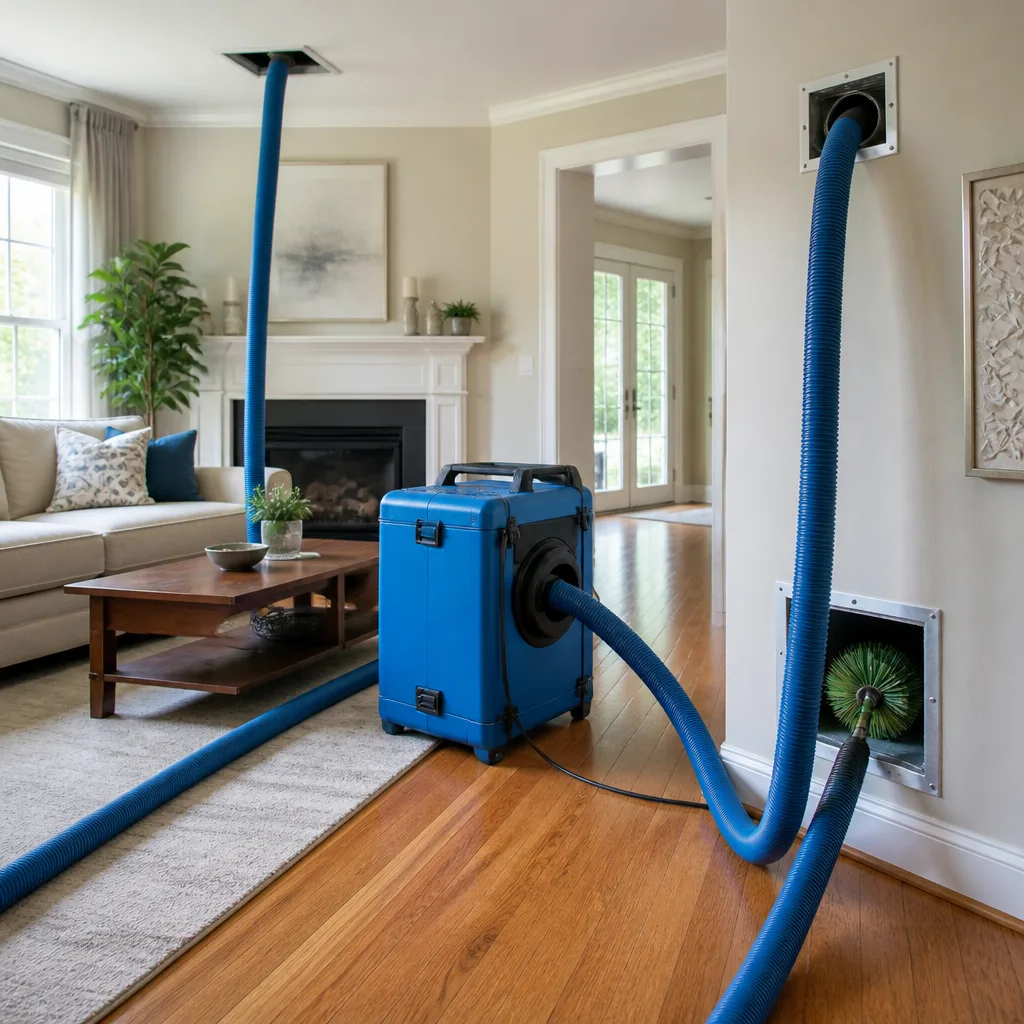 Whole-home duct cleaning
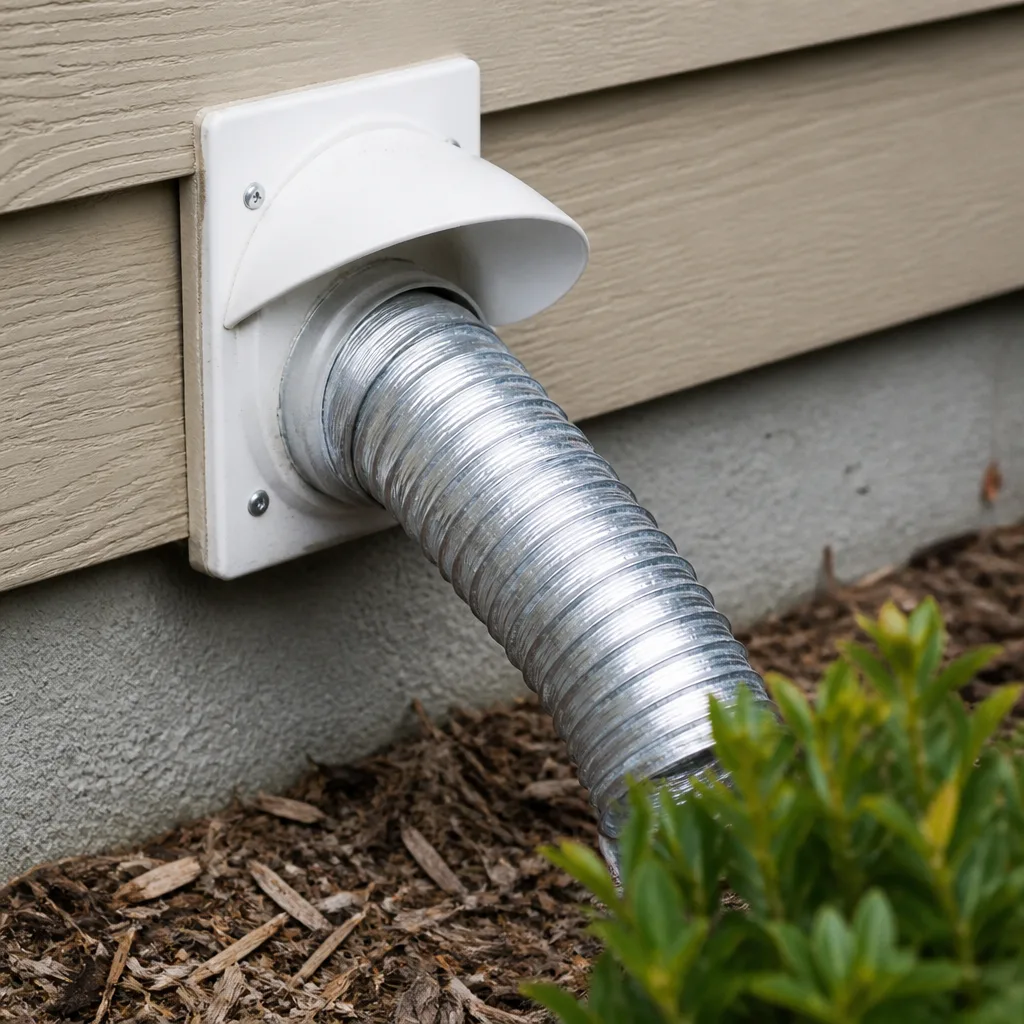 Dryer vent cleaning
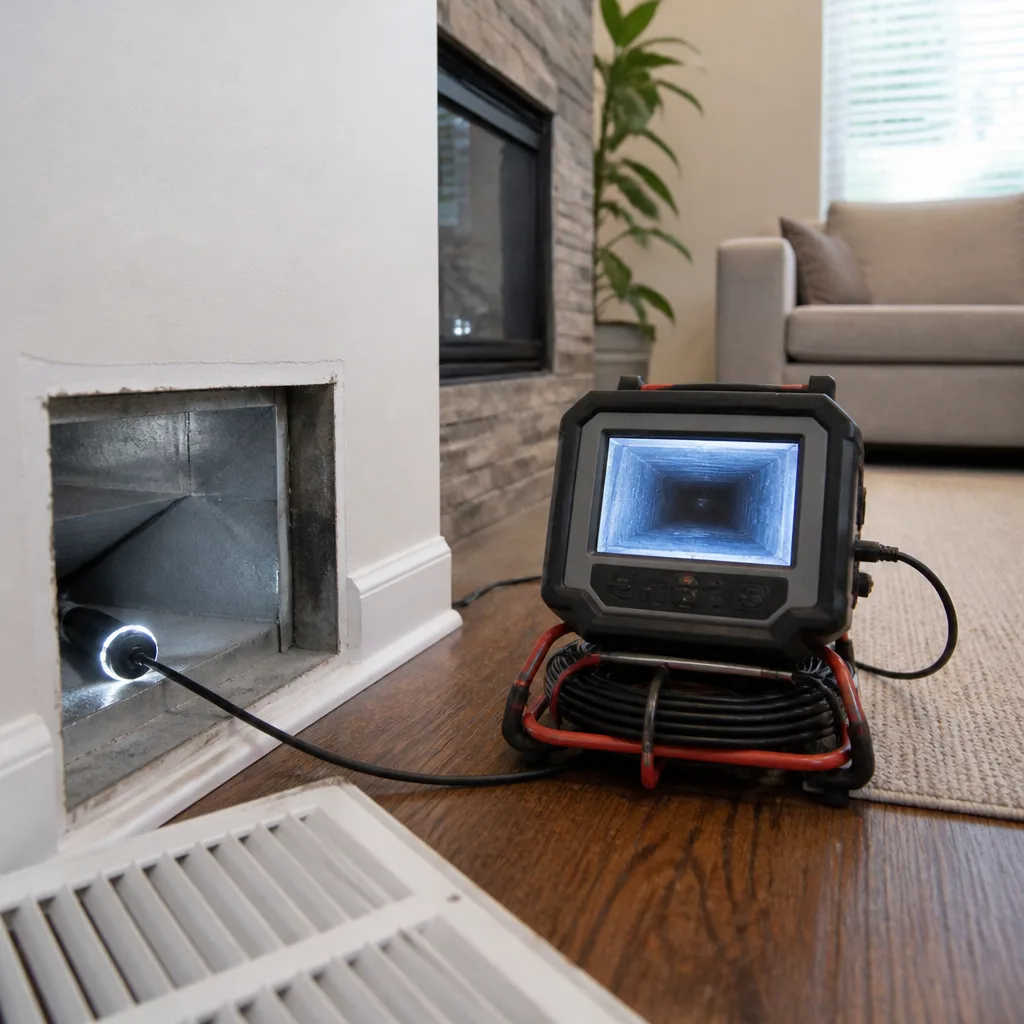 Camera inspection
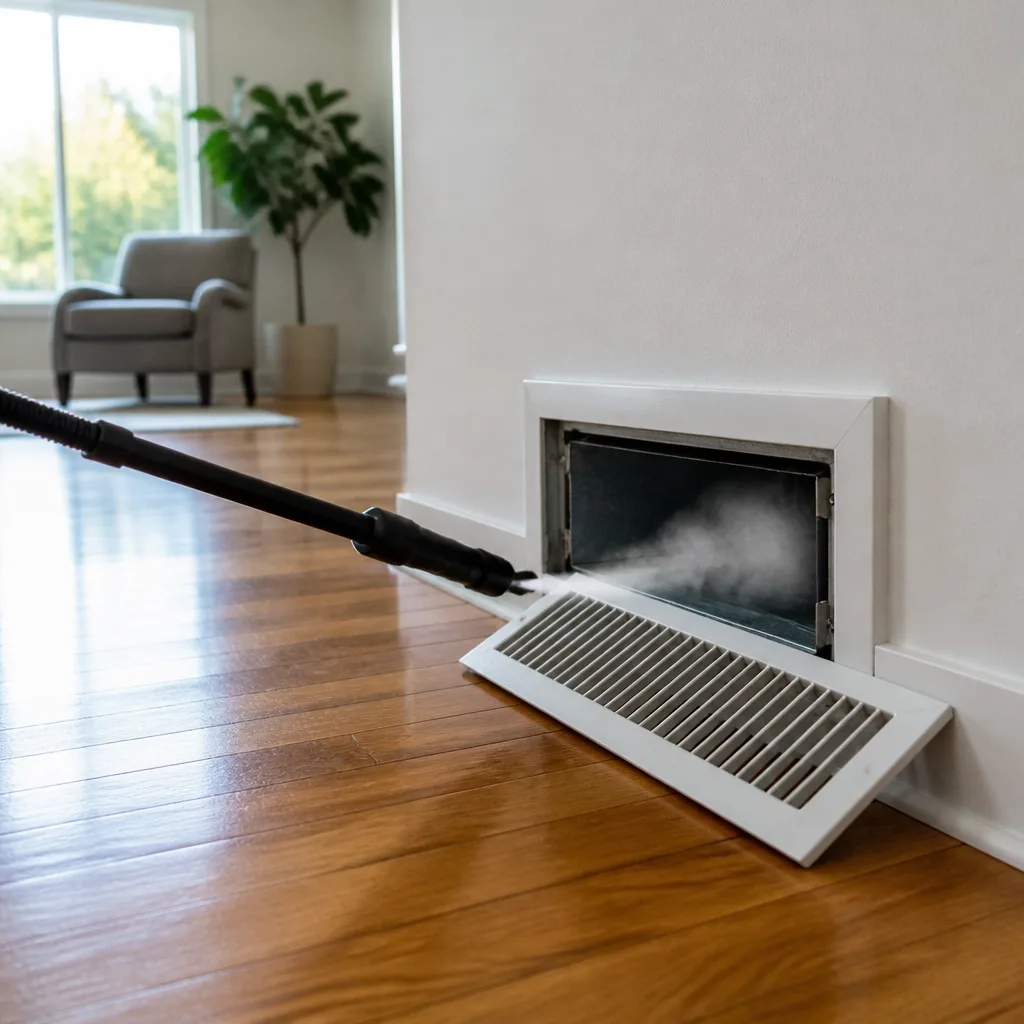 Sanitizing & deodorizing
Whole-system duct and dryer vent check with before-and-after photos - you see exactly what came out of your vents
That "$99 whole-house special" is a bait ad - the real number appears once they are in your hallway, or the "clean" is a shop-vac at the register. We photograph the inside of your ducts before and after instead.
DIY vs Professional Air Duct Cleaning: The South Fulton Homeowner’s Decision Guide
Here’s the part most homeowners never hear: air duct cleaning isn’t really a skill question. It’s an airflow question. The debris sitting on your duct lining and in the joints of your supply runs doesn’t care how much time you spend or how stiff your brush is. It moves when something pulls it, and it stays put when nothing does. A shop-vac can’t generate the pressure differential that source-removal cleaning requires, so a DIY attempt tends to redistribute contamination through the system rather than get it out. This guide explains the physics behind that, what DIY work actually reaches, where a South Fulton home can get hurt by a well-intentioned weekend project, and the narrow list of tasks you genuinely can handle yourself.
Quick Answer
Professional air duct cleaning removes contamination at the source using high-volume negative pressure (thousands of cubic feet per minute) paired with mechanical agitation, while DIY cleaning with a shop-vac only reaches register-level dust and pushes finer particles deeper into the system. In a South Fulton home, that difference matters because flex duct runs, filter bypass, and humid summer air amplify the consequences of incomplete cleaning. Professional cleaning is the right call for any system that hasn’t been cleaned in years, was exposed to renovation dust, or shows visible debris on supply registers.
Styles & brands we work with
- Whole-home duct cleaning
- Dryer vent cleaning
- Camera inspection
- Sanitizing & deodorizing
Table of Contents
- Why Airflow Physics Decides This Question
- What DIY Cleaning Actually Reaches (And What It Misses)
- Where DIY Goes Wrong in South Fulton Homes
- DIY vs Professional: A Realistic Cost Breakdown
- The DIY Tasks You Can Legitimately Handle
- How a Previous DIY Attempt Complicates Professional Cleaning
- What Professional Equipment Brings to the Job
- Common Mistakes to Avoid
Why Airflow Physics Decides This Question
A consumer shop-vac generates roughly 90 CFM (cubic feet per minute) of airflow. A professional truck-mounted vacuum collection system generates somewhere between 2,000 and 16,000 CFM depending on the unit. That’s not a marketing gap. It’s about two orders of magnitude, and it’s the reason professional cleaning can lift particles that a shop-vac leaves glued to duct lining.
Three physics variables drive source-removal cleaning:
- Volume. High CFM means the vacuum can move the total air mass inside the duct system fast enough to carry loose and adhered particulate into a collection filter rather than just stirring it. A shop-vac pushed up to a single register only sees the cubic inches in front of the nozzle.
- Negative pressure. Professional cleaning puts the entire duct system under negative pressure, meaning air is always flowing toward the collection point instead of escaping through seams, joints, or unsealed returns. That containment is why proper cleaning doesn’t blow dust into your living room.
- Agitation. Vacuum alone can’t dislodge adhered debris from duct lining, especially on the supply side where years of heated air have baked dust onto surfaces. Mechanical agitation through brush systems (the kind Rotobrush machines run) scrubs the surface while the vacuum pulls the loosened material out.
Airflow velocity is not something you can improvise. You can’t rent a shop-vac and generate it. You can’t borrow a leaf blower and generate it. The equipment that produces this level of suction is truck-mounted or trailer-mounted for a reason.
If you want the deeper detail on how duct cleaning works on a technical level, our air duct cleaning page walks through the full process from access cuts to final verification.
What DIY Cleaning Actually Reaches (And What It Misses)
If you decide to attempt a DIY clean, here’s exactly what a homeowner with a shop-vac and patience can actually do.
What you can reach:
- Surface dust on the floor and ceiling registers (the return grilles especially, since they get handled and bumped often).
- Loose debris within a few inches past the register boot, if the register is easily removed and the duct is rigid.
- Surface dust on the outside of the HVAC air handler cabinet.
- Fresh filter installation and a filter upgrade if your system will accept a higher-MERV model.
What you can’t reach:
- The interior lining of flex and rigid duct runs beyond the first bend.
- Dust that has settled in trunk lines, plenum connections, and the return-side system.
- Debris baked onto the supply-side duct walls from years of heated airflow.
- Anything inside the air handler beyond the filter slot.
- Contamination that has migrated into the coil area or into the joints between duct sections.
The honest summary is that DIY reaches the doorway but not the room. On a system with visible dust plumes at the registers or a home that’s been through a renovation, a shop-vac pass at the register boot doesn’t change the state of the system. It just makes the register look clean until the next airflow cycle pushes debris back out.
Where DIY Goes Wrong in South Fulton Homes
South Fulton is an area where duct systems swing between two extremes: long, humid cooling seasons pushing conditioned air through flex runs, and older housing stock where duct systems have sometimes been modified, extended, or torn open during reconfigurations. That combination produces specific DIY failure modes worth knowing about before you start.
Flex duct lining disturbance
A large portion of the residential systems in South Fulton homes are flex duct, meaning the interior surface is a thin non-metallic liner stretched over a wire coil. A shop-vac nozzle dragged through a flex run can tear or wrinkle that liner. A torn liner creates a pocket where dust accumulates and never comes out, and a wrinkled liner interrupts airflow, which changes static pressure in the whole system. The repair for a torn flex liner is replacement of the affected section, and that’s a real cost a professional clean would not have introduced.
Improperly sealed access cuts
Professional cleaning requires cutting small access points in the ductwork to insert agitation tools and connect the vacuum. Those cuts are then sealed so the duct system stays airtight. A DIY attempt that cuts a register boot open and seals it with tape or foil-faced putty is creating a leak point. Duct leakage on the supply side pulls attic air into the conditioned air stream. In South Fulton’s humid summers, that means a moist, dust-loaded air mixture is being delivered straight into your living space.
Filter bypass from improper reassembly
If a filter is reinstalled seated wrong, or if a register boot is reinstalled without a proper gasket, air bypasses the filter entirely. That’s called filter bypass, and it defeats the purpose of filtering. On a system with a Honeywell or Aprilaire filter cabinet, the tolerances are specific, and improper reassembly is one of the most common cheap-fix failures we find.
Humidity and mold-adjacent conditions
South Fulton’s summer humidity is a fixture. Duct systems that cool a humid interior will see condensation on cold surfaces if airflow is restricted or if the return side is pulling unconditioned attic air. A DIY clean that disturbs lining without restoring airflow can worsen an already-marginal humidity condition inside the duct system. That’s not a scenario a homeowner wants to create by hand.
DIY vs Professional: A Realistic Cost Breakdown
Homeowners ask this comparison expecting DIY to win on price. Sometimes it does. Sometimes it doesn’t, once secondary costs come in. Here’s the honest comparison.
| Approach | Typical cost | What you get | What you don’t get |
|---|---|---|---|
| DIY with existing shop-vac | $0-$150 in brushes and adapters | Surface register dust removed; new filter installed | In-duct cleaning; source removal; verification |
| DIY with shop-vac purchase | $150-$400 for a unit + accessories | Same as above; the shop-vac is yours afterward | Still no source removal; no containment |
| DIY with rental equipment | $80-$200 for a day rental | Same as above | Rental equipment isn’t duct-cleaning rated |
| Professional whole-system cleaning | Estimate-based, per system, typically several hundred dollars for a full residential system | Source removal, containment, mechanical agitation, verification with before-and-after photos | Nothing relevant; pricing is set by written estimate |
| Clean up after a bad DIY attempt | Higher than a standard cleaning due to repair scope | Correction of liner damage, resealing, then cleaning | Time, and often duct repair on top of cleaning |
Two things to weigh in this table. First, the professional line is an estimate, not a coupon price, and it covers a whole system rather than a per-vent tally. Second, the last row is where DIY loses. A single torn flex liner or resealed access cut that isn’t actually sealed can turn a standard cleaning into a cleaning-plus-repair job.
If you want a straight number for your home, call (833) 991-9213. Estimates are free, and they’re written.
The DIY Tasks You Can Legitimately Handle
Not everything belongs to the professional. Here’s the short, honest list of what a homeowner can do without risk.
- Clean supply and return registers. Remove the grille (most are held by two screws), wash it in a utility sink or with a hose, dry it fully, and reinstall. Do this seasonally, and do it before you call for professional cleaning. A clean register grille means the professional is spending time inside the duct system, not on the cover.
- Upgrade your air filter. A fresh filter is the single cheapest thing you can do for indoor air. Match the MERV rating to your HVAC manufacturer’s recommendation, not to the highest rating on the shelf. Higher MERV isn’t always better if the system wasn’t designed for it, and an over-restricted filter can reduce airflow and increase static pressure.
- Vacuum return grilles carefully. A soft brush attachment on the outside of the return grille is fine. Don’t push a nozzle into the duct.
- Document what you see. Photograph supply and return registers before and after a cleaning. Photograph the filter slot. Photograph anything visible inside the register boot. Good documentation makes a professional estimate more accurate and lets you compare work done before and after.
- Check your dryer vent and lint trap. Emptying the lint trap after every load and pulling the vent hose off the back of the dryer to look for lint accumulation is legitimate homeowner maintenance. Full dryer vent cleaning of the run inside the wall is a different job, and it’s one we handle as a dedicated service rather than an add-on.
Everything beyond that list carries real risk of making a professional cleaning harder or a duct system worse. That line is where we’d suggest a call.
How a Previous DIY Attempt Complicates Professional Cleaning
If a homeowner has already tried a DIY clean and now wants professional help, the picture changes. We look for four things during the assessment, and any of them can shift the scope of the job.
Liner damage from flex duck runs
A torn or crushed flex liner is the most common DIY consequence we encounter. If the liner is torn, professional agitation will worsen it, so the affected run needs repair before cleaning. If it’s crushed or wrinkled, the pressure loss is affecting the whole system and the run needs replacement. This is where our air duct repair capability changes the conversation: we can clean the system and repair the damaged section in the same visit, rather than sending you to a second contractor and coming back.
Improperly sealed access cuts
Access cuts sealed with tape or foil-faced putty that didn’t properly bond will show up as leaking during the diagnostic pass. On the supply side, that means attic air being pulled into the supply stream. In South Fulton’s summer, that’s moisture plus attic debris entering the conditioned space. Resealing those cuts is part of the job.
Boots reinstalled with the wrong gasket
Register boots that were pulled out and reinstalled without proper sealing create filter bypass. From a cleaning perspective, that’s extra contamination inside the boot; from a system perspective, it’s a pressure imbalance at that run. We reseal boots as part of a professional cleaning when we find them.
Contamination pushed deeper instead of removed
A shop-vac pass can blow fine dust particles deeper into the duct system, especially on the return side where the return trunk pulls everything back toward the air handler. That dust doesn’t disappear. It sits in the trunk and the plenum and eventually migrates to the coil. Cleaning that after the fact is a bigger job than a straightforward clean, not a smaller one.
What Professional Equipment Brings to the Job
The gap between DIY and professional cleaning shows up clearly when you look at the equipment category. Not the logo on the side, but what each tool was actually designed to do.
- Rotobrush brush systems are built for in-duct mechanical agitation. The rotating brush head applies scrubbing force to duct lining while the vacuum pulls loosened material away in the same pass.
- Nikro vacuum equipment handles high-volume extraction and HEPA-level filtration on the collection end, which means what comes out of your ducts stays out.
- Abatement Technologies filtration is the containment layer. It’s the same category of equipment used in commercial and remediation work, where negative pressure and filtered exhaust are requirements rather than nice-to-haves.
- Guardsman products support the treatment and post-cleaning protocols that keep the system in a clean state after the work is done, not just during the cleaning itself.
The point isn’t the brand names. It’s that these categories exist as a system, and no consumer tool substitutes for the airflow, containment, and agitation that system provides. If your indoor air quality setup includes a whole-home humidifier or dehumidifier running on Honeywell or Aprilaire controls, professional cleaning also accounts for those components during the assessment, since bypass or restriction at the IAQ hardware changes how the system behaves.
What any homeowner should want from a professional quote is clarity on four things: what equipment will be used, whether containment is included, whether before-and-after photos are part of the deliverable, and what repair capability exists if damage is found. If a quote doesn’t answer those four, keep looking.
To see how we approach this on a standard residential job, start with our Tidewater Air Duct Cleaning overview, and for our local capability and service-area details, see the Riverdale page.
Common Mistakes to Avoid
- Renting a shop-vac and calling it duct cleaning. Shop-vac CFM is a fraction of what source removal requires, and pushing a nozzle into a duct can tear flex liner or push dust deeper. It’s not a middle step toward professional cleaning; it’s a different activity.
- Cutting access into supply ducts and resealing with tape. Supply-side leakage pulls attic air into conditioned space. In South Fulton’s humid summers, that means moisture and debris coming in through a taped joint that looks fine until it doesn’t. Proper access cuts are sealed with materials that match the duct construction.
- Reinstalling a register boot without a proper gasket. Filter bypass starts at the boot. If the boot isn’t seated and sealed correctly, air skirts around the filter instead of going through it, and the filter is doing nothing.
- Choosing the highest-MERV filter available. A filter your system wasn’t designed for can restrict airflow and raise static pressure across the system. Follow the equipment manufacturer’s recommendation, not the highest number on the shelf.
- Not photographing the filter slot and registers before starting. Good before-and-after photos are the single best way to know whether a cleaning (DIY or professional) actually changed anything. Without them, you’re working from memory.
- Believing a low quoted price without asking about scope. The classic duct-cleaning bait-and-switch starts with a low per-vent figure and ends with a much larger invoice once the technician is on site. Ask for the flat price per system, agreed before work starts, with before-and-after photos as part of the job.
- Confusing dryer vent cleaning with a quick vacuum at the back of the dryer. Your dryer vent is a fire hazard waiting to be ignored. Pulling the hose and vacuuming the lint trap is maintenance; cleaning the full run inside the wall is a separate, dedicated service, and it should be scheduled as one.
See the difference
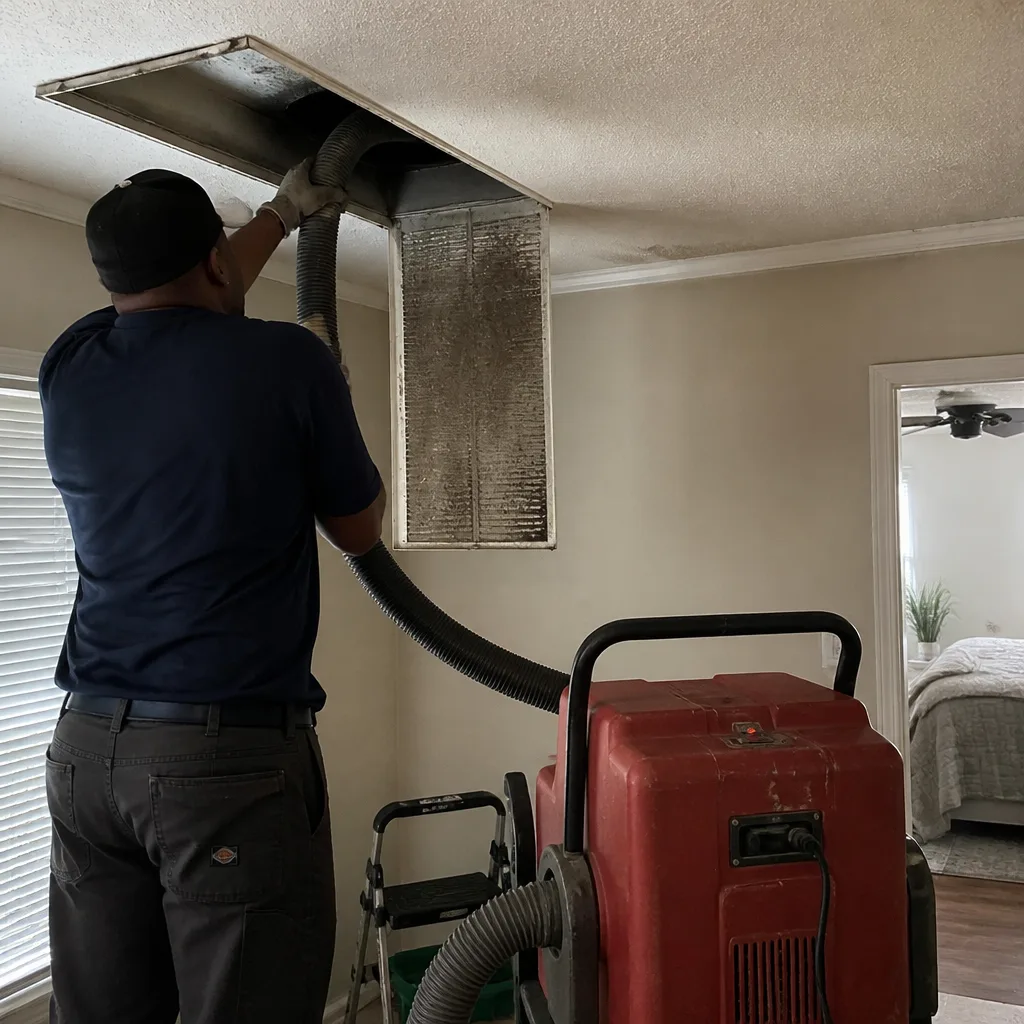 Before
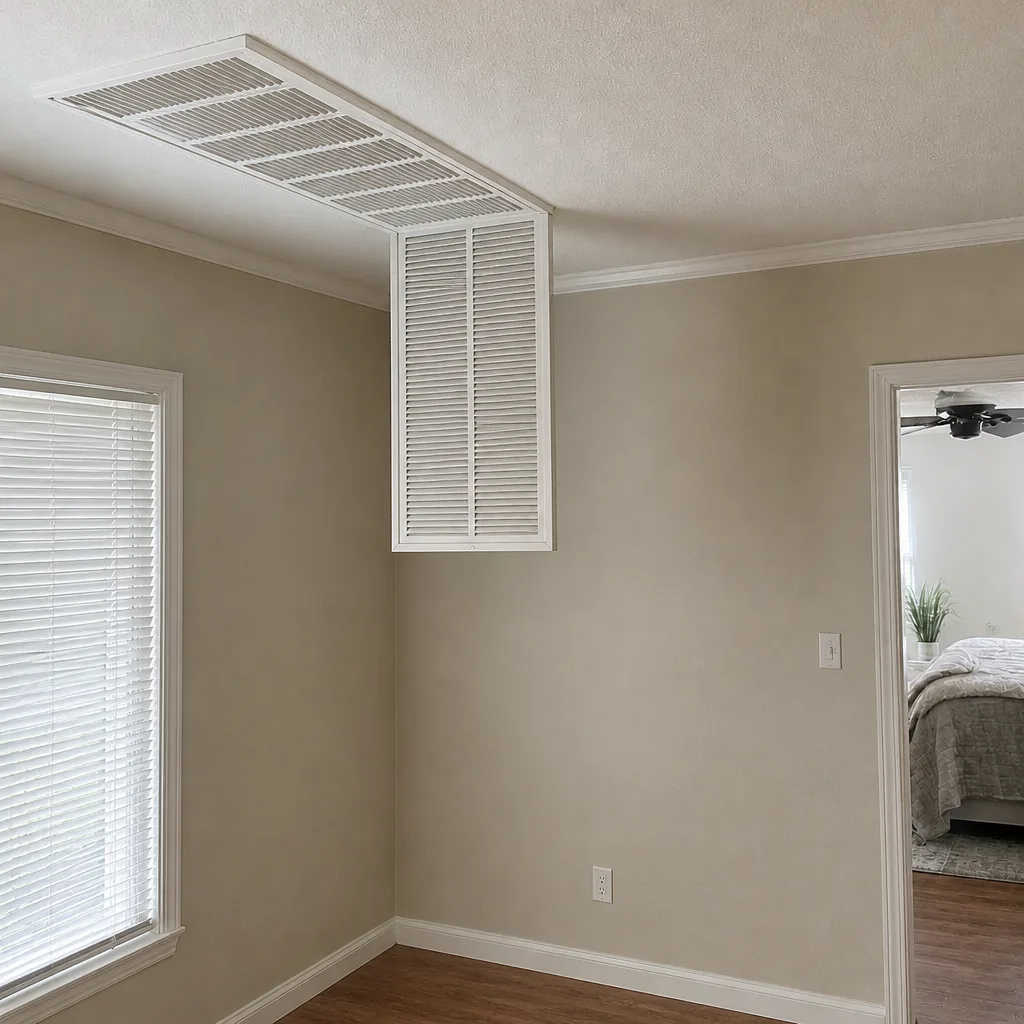 After
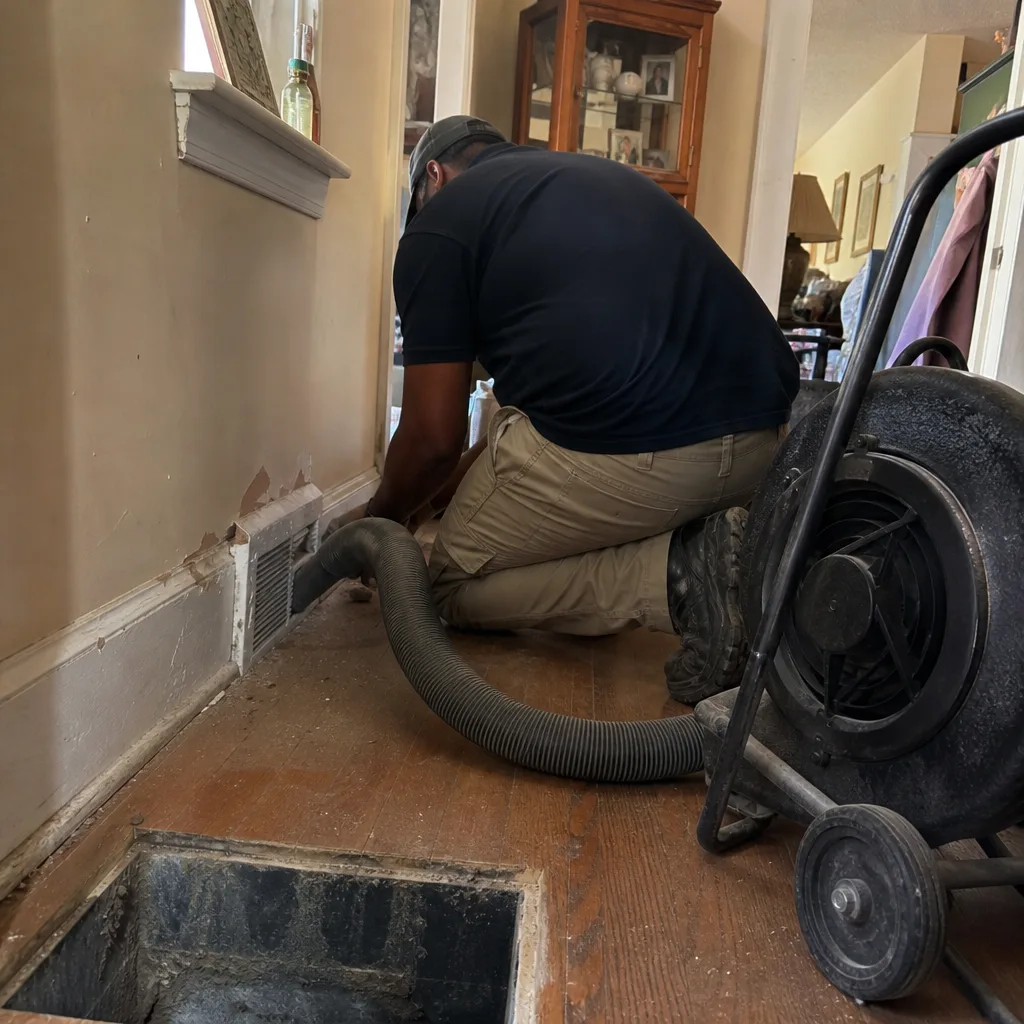 Before
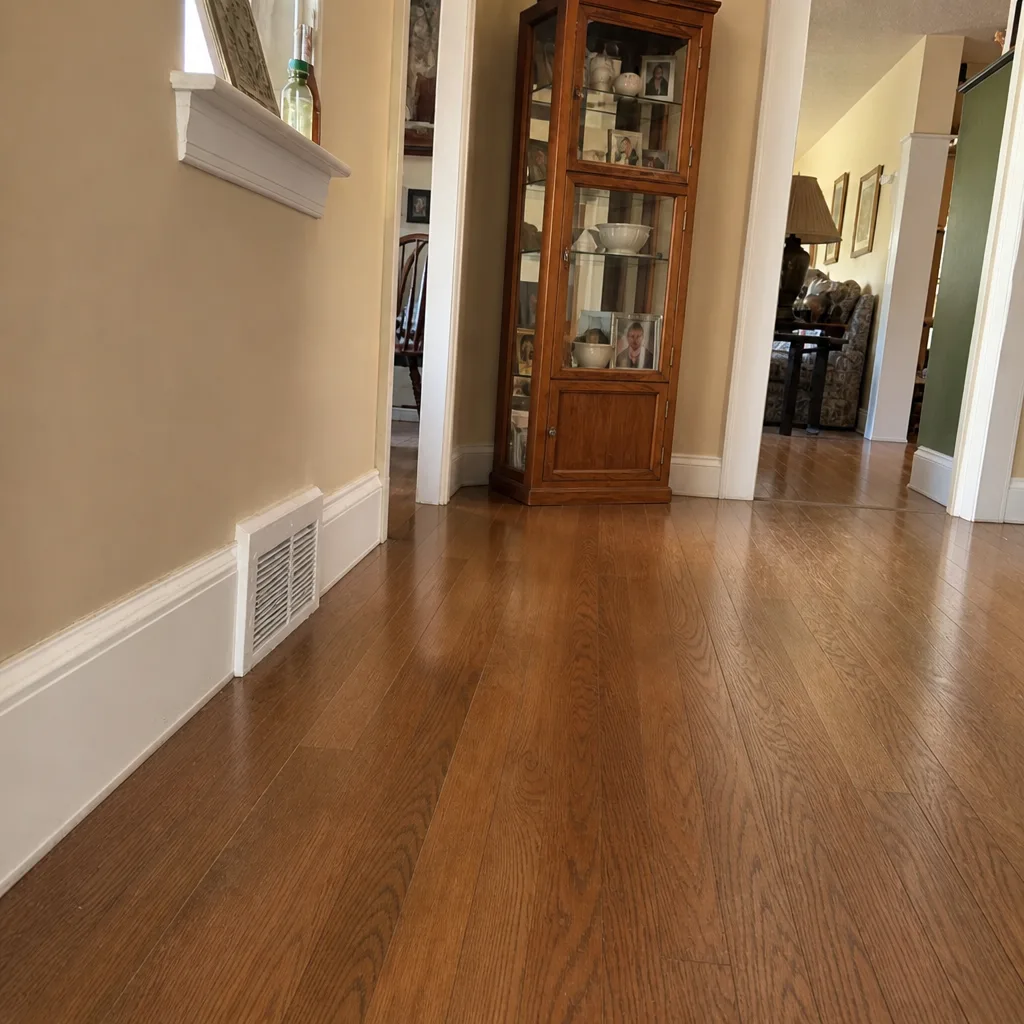 After
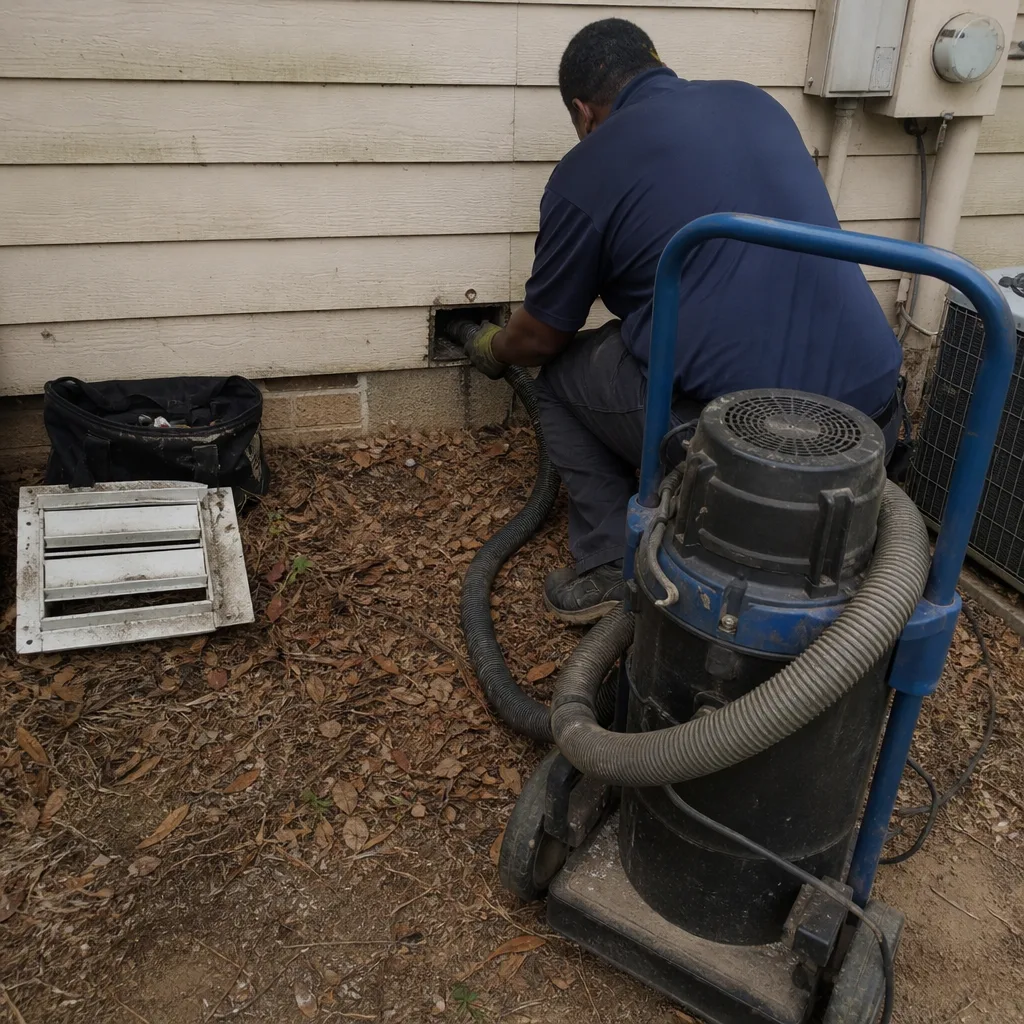 Before
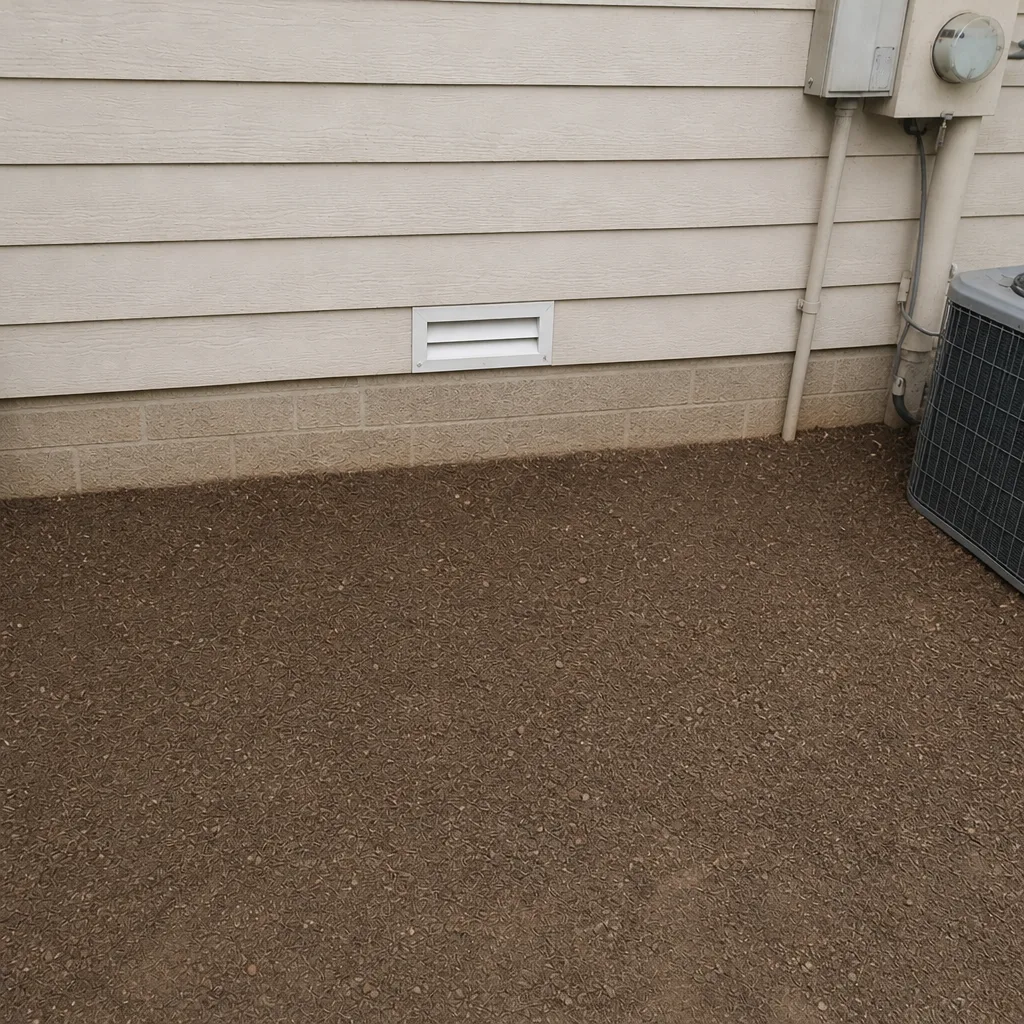 After
When to Call a Professional
If any of the following describes your situation, the DIY decision is already made:
- You’ve recently completed a renovation, remodel, or new HVAC install, and construction dust is in the system. Consumer vacuum tools cannot handle source removal at this dust volume.
- You bought a home in South Fulton and have no record of when (or whether) the ducts were last cleaned.
- Someone in the household has respiratory, allergy, or asthma concerns and you want a real answer on what’s in the ducts before assuming it helps or doesn’t.
- Supply registers show visible dust plumes when the system first cycles.
- Your dryer takes longer than expected to dry a load, or you see lint accumulation that the lint trap doesn’t account for.
- A previous DIY attempt involved flex duct, access cuts, or register boot removal, and the system has felt different since.
Tidewater Air Duct Cleaning offers free estimates in South Fulton, and the price is set by a written estimate agreed before work starts, one flat price per system rather than per vent. Call (833) 991-9213. We answer 24/7. Fast dispatch from 7am to 7pm, Sunday through Friday.
Frequently Asked Questions
Costs vary by system size and condition, and we set one flat price per system based on a written estimate after inspection. If a previous DIY attempt damaged flex liner or left unsealed access cuts, the estimate will reflect the repair scope on top of cleaning, which is why we assess before quoting rather than pricing blind. Call (833) 991-9213 for an exact quote. Estimates are free.
Cheap quotes are almost always per-vent or per-register teasers that don’t include containment, agitation, or verification, and the price rises on site once the truck arrives. The gap between a coupon number and a real whole-system price reflects the equipment and the scope, not a discount. Ask any company for a flat price per system before work starts, and treat “per vent” pricing as a warning sign. Call (833) 991-9213 for a written estimate and see the difference in what’s included.
Ask for before-and-after photos of your own ducts, not stock images. Any legitimate cleaning will be documented, and photos are the standard proof a homeowner can review without any technical background. If a company can’t show you the system before and after, they didn’t do the job you paid for. Call (833) 991-9213 and we’ll walk you through what the photos will show.
For most South Fulton homes without special circumstances, professional cleaning every three to five years is a reasonable baseline, and more often if you’ve renovated, added pets, or notice dust at supply registers. Homes with a documented mold issue, pest activity, or a recent HVAC install need cleaning sooner regardless of the calendar. Call (833) 991-9213 if you’re not sure which category your home falls into.
You can handle register cleaning, filter changes, and visual documentation yourself. Anything inside the duct beyond the first register boot is a professional job, because the airflow required for source removal is not something consumer tools can produce. On flex duct systems, DIY attempts can tear lining and create a repair cost that wouldn’t have existed otherwise. Call (833) 991-9213 and get an honest assessment of what your system actually needs.
South Fulton’s long, humid cooling season means the air handler, coil, and duct system spend months in wet air, and any restriction to airflow raises the moisture risk on the supply side. Duct leakage from a bad DIY seal pulls humid attic air into the conditioned stream, which is why proper sealing matters more here than in drier climates. Call (833) 991-9213 to schedule a free estimate and we’ll check the condition of your whole system.
The Bottom Line
DIY air duct cleaning and professional cleaning aren’t competing products. They operate on different physics. A shop-vac can clean register grilles; it can’t generate the airflow that source removal requires, and on flex duct it can do real damage. The DIY tasks that make sense are narrow: register cleaning, filter changes, and documentation. Everything past the register boot needs professional equipment with proper containment, and if a previous DIY attempt left a torn liner or a bad seal, duct repair needs to be part of the plan. If you’ve been weighing this in South Fulton, the answer is usually to have a professional assess the system first, then decide.
Written by the team at Tidewater Air Duct Cleaning.
Call (833) 991-9213 for a free estimate. We answer 24/7. Fast dispatch from 7am to 7pm, Sunday through Friday. Licensed and insured, one flat price per system agreed before work starts, and before-and-after photos of your own ducts as part of the job.