
Last updated November 15, 2026
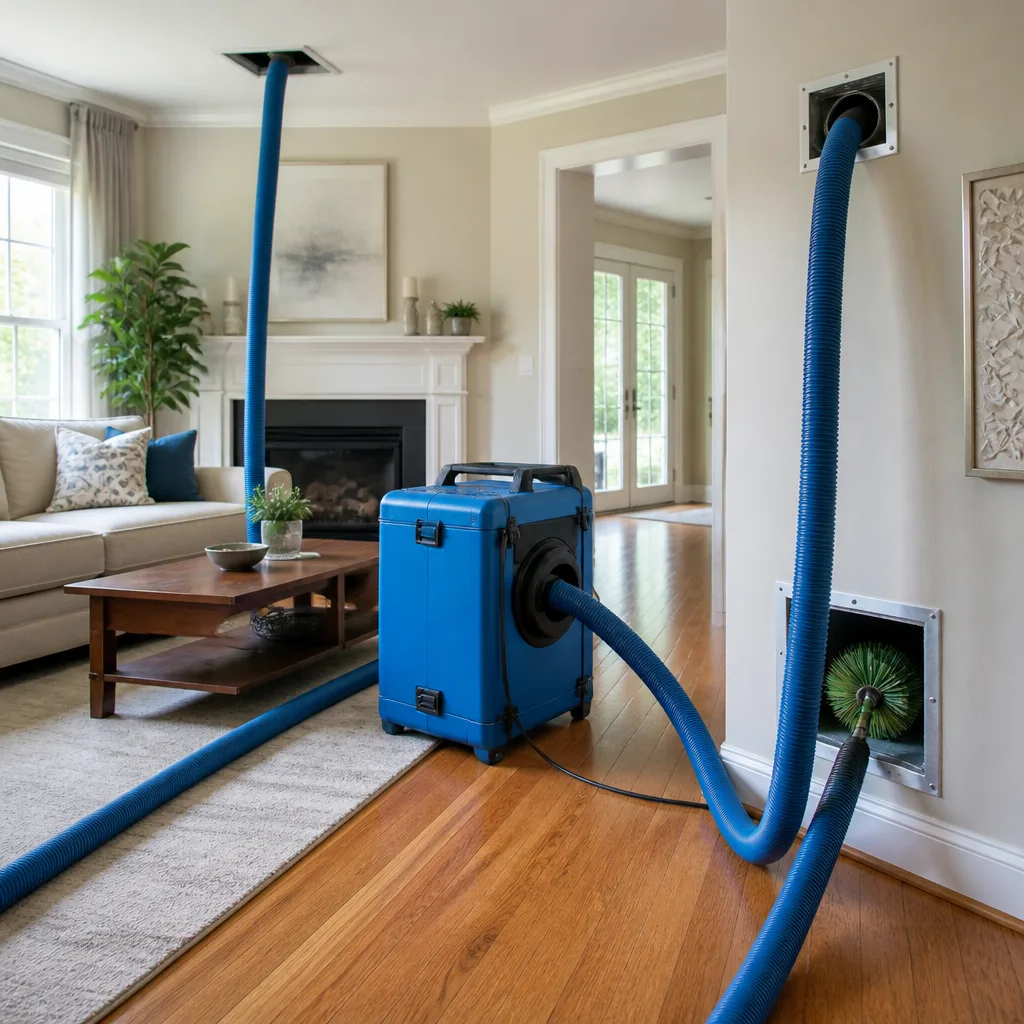 Whole-home duct cleaning
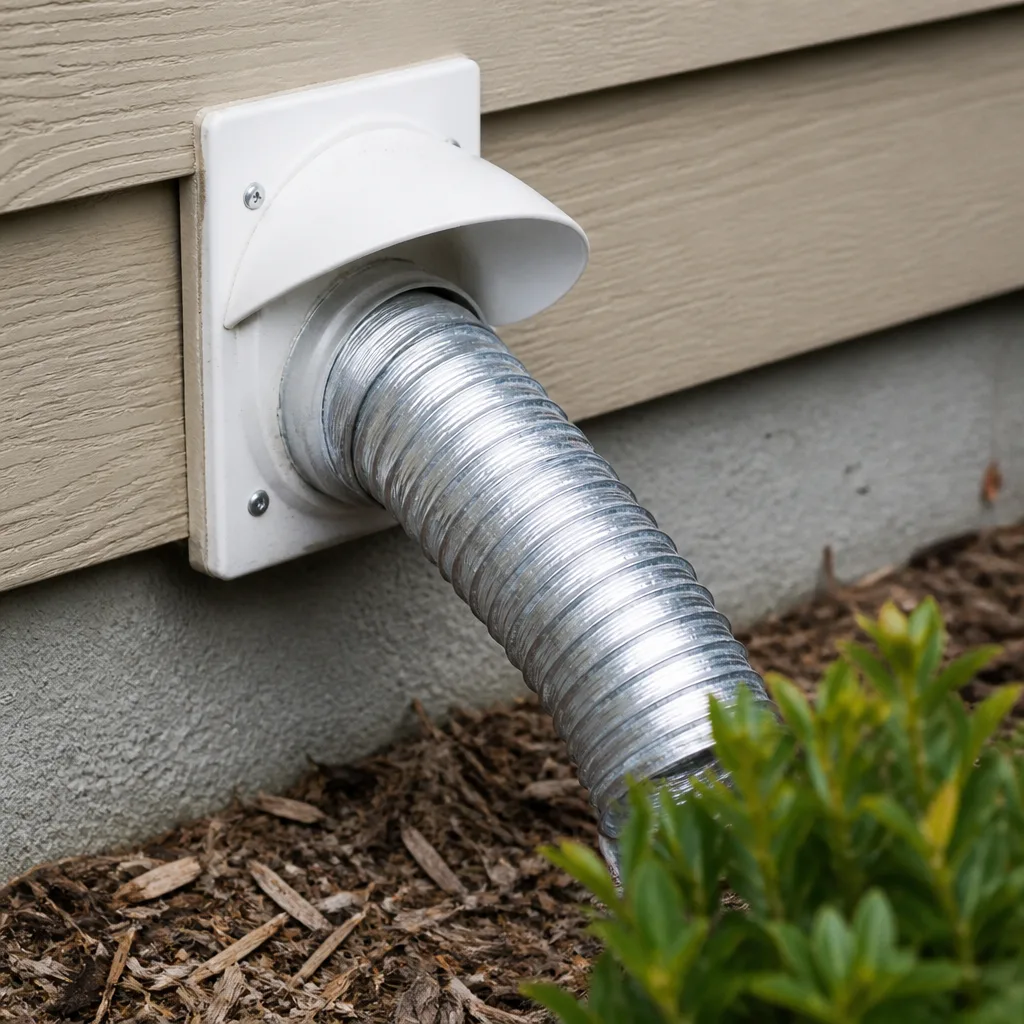 Dryer vent cleaning
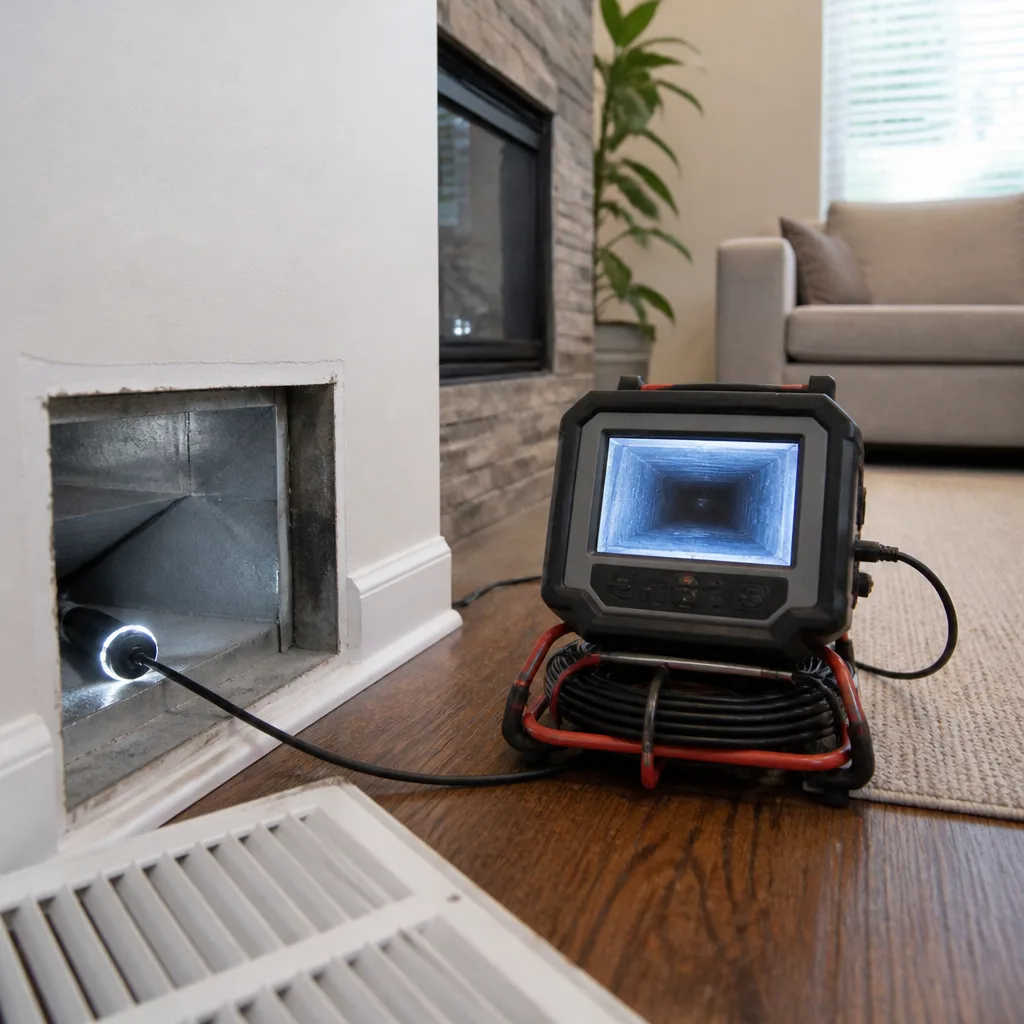 Camera inspection
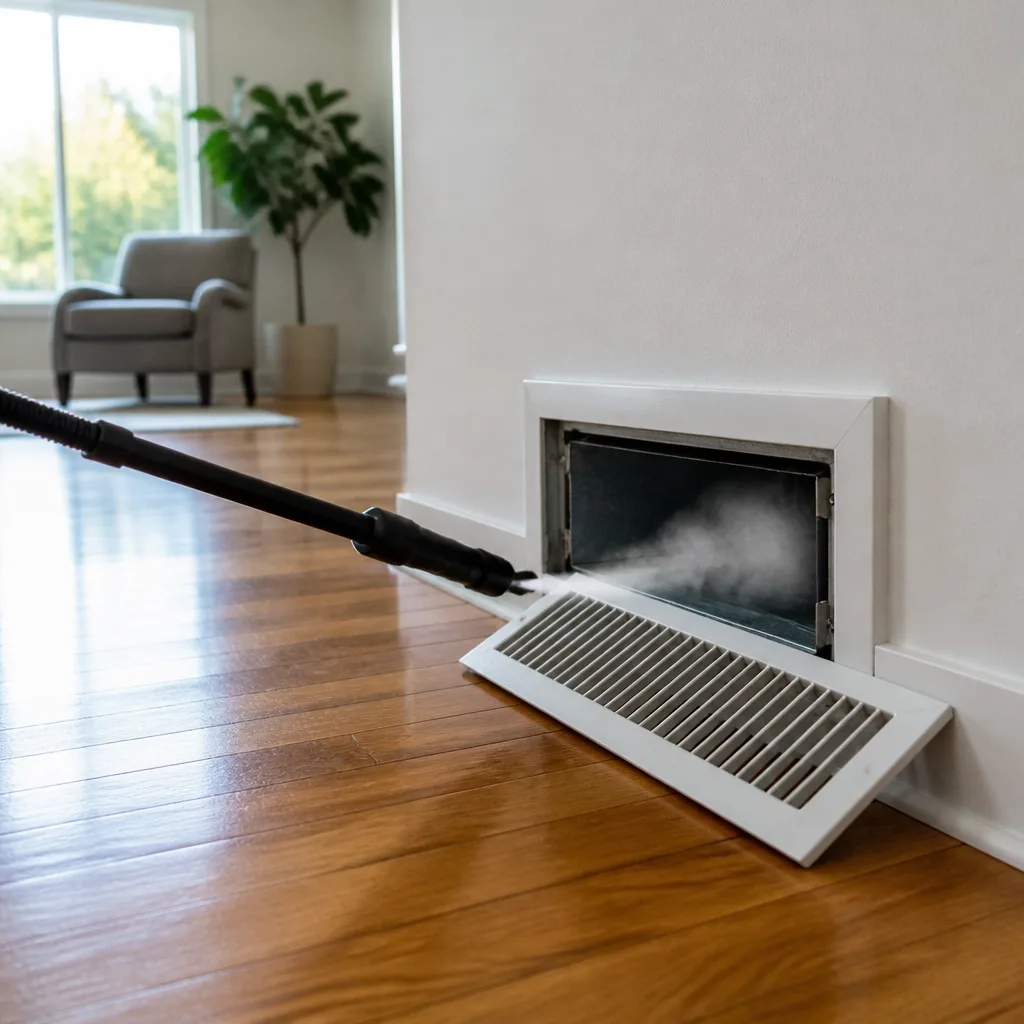 Sanitizing & deodorizing
Whole-system duct and dryer vent check with before-and-after photos - you see exactly what came out of your vents
That "$99 whole-house special" is a bait ad - the real number appears once they are in your hallway, or the "clean" is a shop-vac at the register. We photograph the inside of your ducts before and after instead.
Seasonal Air Duct Cleaning Care for South Fulton: Year-Round Homeowner’s Guide
The most common piece of air duct advice you’ll find is “clean every three to five years,” and it’s the wrong rule to follow in South Fulton. Our seasons don’t stress a duct system evenly, and elapsed time tells you almost nothing about what’s actually happening inside the ductwork. South Fulton gets more than 50 inches of rain a year, most of it while the air conditioner is running hard, and that moisture load moves through the house and through the system. What settles in flex duct in July looks different from what builds up in January. This guide maps the four seasonal stress points to homeowner tasks and professional triggers, and shows you how to keep a rolling log that tells you when cleaning is actually warranted.
Quick Answer
In South Fulton, air ducts should be inspected at least twice a year, once at the end of the cooling season and once before the heating season starts, because this climate creates two distinct stress windows rather than one. Cleaning is warranted when your log or an inspection shows visible loading, filter bypass, moisture staining, or a rise in allergy symptoms and airflow complaints, not simply because a set number of years has passed. Homeowners who track conditions season by season usually find their system needs attention after a specific event like pollen season, a renovation, or a wet stretch, not on a fixed calendar.
Styles & brands we work with
- Whole-home duct cleaning
- Dryer vent cleaning
- Camera inspection
- Sanitizing & deodorizing
Table of Contents
- Spring in South Fulton: Pollen, Filter Bypass, and Duct Surface Loading
- Summer: Humidity, Attic Runs, and What to Check After the Cooling Season
- Fall: Pre-Heating-Season Inspection Priorities
- Winter: Cold Snaps, Condensation, and Flex Duct Joints
- Building a Rolling 12-Month Duct Log That Actually Works
- What Professional Equipment Changes About the Job
- When Cleaning Turns Up a Repair Problem
- Common Mistakes to Avoid
Spring in South Fulton: Pollen, Filter Bypass, and Duct Surface Loading
Spring is the heaviest particle-loading season in South Fulton. The metro Atlanta area sits in one of the country’s densest tree pollen corridors, and that pollen doesn’t respect your doors and windows. Most of it walks in on shoes and clothes and gets pulled into the return. What matters for your ducts is what happens next: a filter that fits correctly catches most of it, and a filter that doesn’t fit correctly lets it into the ductwork where it settles on the duct interior and coats the surfaces.
That’s why spring is the season to check for filter bypass first, before you think about cleaning. Filter bypass means air is going around the filter instead of through it. The usual culprits are a filter frame that’s a fraction too small for the slot, a filter that’s collapsed under static pressure, or a return grille whose filter rests loosely against the edges.
Spring homeowner checklist
- Pull the filter and hold it up to light. A bright, clean border with a dark, loaded center means the filter is doing its job.
- Look at the filter slot edges. If you can see a gap between the filter edge and the frame, air is bypassing.
- Check that the filter hasn’t collapsed or bowed toward the blower.
- Wipe the return grille face with a damp cloth and look at what comes off.
- Note the date you changed the filter in your log.
If pollen season leaves visible dust settling on your registers faster than usual, the general state of the system is probably worse than the registers show. A professional inspection in spring identifies whether the loading is concentrated near the returns or spread through the whole run. The air duct cleaning process is more effective when it’s matched to where the debris actually is, and spring is a good time to establish a baseline before the cooling season loads the system further.
Summer: Humidity, Attic Runs, and What to Check After the Cooling Season
Summer is when South Fulton’s rainfall and humidity do the most work on a duct system. Typical duct runs in this area pass through unconditioned attic space, and the attic in July is hot and humid. Any duct joint that isn’t sealed pulls humid attic air into the airstream, and once that moist air hits a cool surface inside the conditioned space, condensation forms. Over a summer, condensation at the wrong spot can support microbial growth on the duct interior.
The month after the cooling season ends is the best time to check the system. That’s when the evidence is still fresh: staining at seams, moisture marks on the insulation jacket, or a musty smell the first time the system runs a few days after the AC has been off.
What to check after the cooling season
- Look at the flex duct jacket at every joint. Wrinkled, sagging, or damp-looking insulation at a joint is a sign of a leak.
- Check the crawlspace or attic for standing water or condensation trails near the ducts.
- Note any musty smell in a specific room. Smell localized to one register points to a problem near that run.
- Compare airflow at each register. Weak registers mean restriction or leakage upstream.
- Look at the air handler cabinet for rust or water marks.
If a summer of humidity has left the system smelling damp, cleaning alone won’t resolve a moisture source. The right sequence is to find the leak, repair or reseal it, then clean. That order matters. Cleaning a system with an active leak just puts clean ductwork back in the path of the same humid air.
Fall: Pre-Heating-Season Inspection Priorities
Fall is the season to inspect before the heating season starts, and it’s the season most South Fulton homeowners skip. The furnace or heat pump has been idle through a long, hot summer, and any dust that settled during the cooling season or pollen season is still sitting in the ductwork. The first cold morning pulls all of that into the living space at once, which is why the big dust event often happens on the first heating day rather than in the middle of winter.
Fall is also when the inspection can catch things the summer didn’t. A duct system that sat idle through a humid summer is the one where mold colonies on duct surfaces, or corrosion at the air handler, are most likely to show up before any heating complaint does.
Fall inspection priorities
- Inspect the air handler and the coil area visually, without opening anything you shouldn’t. Look for debris, dust buildup, or staining.
- Look at the return ducts for heavy dust loading and the supply runs for settlement at low points.
- Turn the heat on for 15 minutes and note any smell during the first run. A short-lived dusty smell is normal. A continuing musty or chemical smell means the system needs attention.
- Check every register for dust shadows or staining around the grille.
- Write down what you found in the log, along with the date.
Fall is the time to decide about cleaning, because winter heating tends to mask the problem. Once the system runs continuously, the air feels fine even if the ducts are loaded, because most of the debris has been pulled through. Getting to it before the heating season is easier than catching it in January. If you’ve been putting off the question of whether it’s time, fall is the season where the answer is easiest to read.
Winter: Cold Snaps, Condensation, and Flex Duct Joints
South Fulton winters are brief and damp rather than extreme, and that changes how a duct system fails. You get a few short cold snaps a year rather than a long deep freeze, and each snap sets up a condensation cycle. Warm, moist conditioned air moving through a duct that passes through cold crawlspace or attic space will condense on the outside of the duct or inside the jacket if the vapor barrier is compromised. When the snap ends, the moisture sits. When the next snap hits, it does the same thing again. Repeat that a dozen times across a winter and you have a real moisture problem hidden inside the duct jacket.
The weak point is almost always the joint. Flex duct joints that are taped or mechanically connected but not properly sealed will leak a small amount of air continuously. In summer that leak is a small efficiency loss. In winter, with a cold crawlspace, that leak is a moisture generator.
Winter checks to make after a cold snap
- Look at the vapor barrier on every flex run in the crawlspace. Any tear or gap lets moisture in.
- Check for condensation on the duct jacket in the hours after a cold snap ends.
- Look for sagging flex duct that dips below the insulation line. Sag points collect condensation first.
- Check that duct supports haven’t pulled loose over the summer, causing a run to sit lower than it should.
- Note in the log any snap where the system ran long and there was a musty smell afterward.
Condensation problems usually reveal themselves slowly, and they’re easier to catch with a log than with a one-time inspection. If you see recurring moisture evidence at the same joints, that’s a repair problem, not a cleaning one. Tidewater Air Duct Cleaning handles the repair side directly, which is the reason to make a single call rather than schedule a second contractor to re-inspect and fix what cleaning turns up.
Building a Rolling 12-Month Duct Log That Actually Works
A rolling 12-month log tells you whether cleaning is warranted based on observed conditions, not calendar time. The idea is simple: for each month, you record a handful of observations. After a year, the log shows you the pattern, and the pattern is more useful than any generic interval. For South Fulton, the log should track the two stress windows the climate creates: the pollen season in spring and the humid cooling season into early fall.
The log format
- Month and date of the entry.
- Filter change date and filter condition (light, moderate, heavy loading).
- Any odd smell, and which room or register it came from.
- Airflow notes for two or three registers (strong, weak, unchanged).
- Dust visible on register faces within one week of cleaning them.
- A note on any weather event: heavy pollen, a wet stretch, a cold snap.
- A simple yes/no: would I have cleaned the ducts this month based on what I’m seeing?
Two things tend to happen once a homeowner keeps this log for a year. First, they discover the pattern is real: the heaviest dust is almost always at specific registers rather than everywhere. That’s useful information when the cleaning is scheduled, because the professional can be told where to focus. Second, they discover their actual cleaning interval is shorter than the generic advice or longer, depending on the home, and both outcomes are valid. A newer, tight home may go considerably longer than the generic advice suggests. An older South Fulton home with flex duct in a vented crawlspace may need attention at a shorter interval.
When the log shows a consistent pattern (visible loading in the same place for several months, recurring smell after weather changes, airflow dropping slowly), that’s the signal to get an inspection. When it doesn’t, you have evidence to wait. The log works for both outcomes.
What Professional Equipment Changes About the Job
The difference between a professional duct cleaning and a generic one is mostly equipment. Professional systems combine a high-volume negative-pressure vacuum, a rotary brush that actually contacts the duct surfaces, and containment so the debris that comes loose is captured instead of distributed through the house. Shops that use a shop vac and a promise aren’t doing the same job, and the results look different.
We use Rotobrush brush systems and Nikro vacuum equipment, along with Abatement Technologies filtration for containment. The reason those specific names matter is that the same tools show up in commercial and remediation work. Homeowners researching duct cleaning in South Fulton run into these products when they read professional material, and once you know the names, you can ask any contractor what they’re using. The answer is informative.
What a professional job looks like
- Containment is set up first, so the work area is isolated from the rest of the house.
- The vacuum establishes negative pressure at the system before any brush is introduced.
- Each supply and return run is individually brush-cleaned rather than blown through.
- Filters and registers are removed, cleaned, and reinstalled.
- Before-and-after photographs of the customer’s own ducts are taken during the job.
We also work with Honeywell and Aprilaire indoor air quality systems. If a home has a whole-house filter, humidifier, or UV system from either brand, the air handler configuration matters when the ducts are cleaned, and a contractor who knows those systems knows what to avoid disturbing. It also means the cleaning plan can account for the IAQ equipment the homeowner already has rather than treating it as an obstacle.
The pricing structure matters too. Our pricing is one flat price per system, agreed before the work starts. There isn’t a per-vent price, and there isn’t a teaser coupon that turns into a larger invoice. If your research keeps turning up quotes that seem too good to be true, this is why: a low number that changes once the technicians are in the driveway isn’t a quote, it’s an opening bid. A flat price per system with before-and-after photos is the structure that lets you compare quotes honestly.
When Cleaning Turns Up a Repair Problem
Cleaning reveals problems. Once the debris is out of the run, leaks and disconnected joints that were hidden under dust become visible, which is why the ability to repair on the same visit matters. If the cleaning turns up a joint that’s failed, a flex duct section that’s torn, or a connection that’s pulled loose at the boot, the fix is part of the job rather than a separate appointment.
Some things cleaning commonly uncovers in South Fulton homes:
- Flex duct that’s sagging at a support point, which is a thin spot where debris settles.
- A joint where the tape has dried and failed, leaking air into unconditioned space.
- Disconnected runs above a register boot, common after a renovation or an HVAC install where the connection was never re-secured.
- A return duct with a tear in the jacket, pulling attic or crawlspace air into the system.
- Crushed sections where a run was walked on or stored against during other work.
Repairing a duct is not just about airflow. A sealed system holds its pressure, which means the blower doesn’t have to work as hard and the run delivers the volume it was sized for. A system that’s been slowly leaking for a couple of seasons shows up as high bills or weak airflow before anything else, and it’s worth checking when the cleaning is scheduled. If you have reason to think you’re dealing with that kind of leak, the Riverdale page is a useful companion to this guide, because the same climate mechanics apply across the area.
Dryer vent cleaning belongs in this section too, for a separate reason. A dryer vent is its own system, not part of the HVAC ductwork, and it’s a fire and efficiency hazard that gets ignored because nothing about it makes noise. A dryer that takes two cycles to dry a load is telling you the vent is restricted. Cleaning the vent restores the airflow and reduces the fire risk, and it’s worth scheduling separately from the HVAC cleaning unless both are due at once.
Common Mistakes to Avoid
- Following a fixed calendar interval. The three-to-five-year rule doesn’t reflect South Fulton’s climate. A home near the river bottoms with flex duct in a vented crawlspace and a home on a tight, newer slab build in the same month do not need the same schedule.
- Skipping the post-cooling-season inspection because the system “still works.” Most hidden moisture problems don’t show up as a performance complaint. They show up as a smell or a stain that a homeowner would catch with a five-minute check, which is why the inspection matters more than the performance test.
- Ignoring filter bypass in spring. Pollen season is when bypass does the most damage, and it doesn’t announce itself. A filter slot that’s a quarter-inch too wide puts a whole pollen season into the ductwork.
- Letting a low quote set the expectation. A quote with a coupon price that expands after the technicians arrive is the industry’s reputation problem. A flat price per system, agreed before work, is a different business model. Ask which one you’re getting.
- Cleaning without repairing first. If the run has a leak or a tear, cleaning it just loads the system back up. The repair and the cleaning happen together, which is another reason to work with someone who does both.
- Forgetting the dryer vent because it isn’t the HVAC. The dryer vent is a fire hazard separately from the air ducts, and it needs its own cleaning on its own schedule. If your dryer is taking a full second cycle to dry a normal load, that’s the signal.
- Taking a contractor’s word without asking what equipment they use. Ask for the brand name. Rotobrush, Nikro, and Abatement Technologies are professional equipment. A shop vac and a surface wipe isn’t.
See the difference
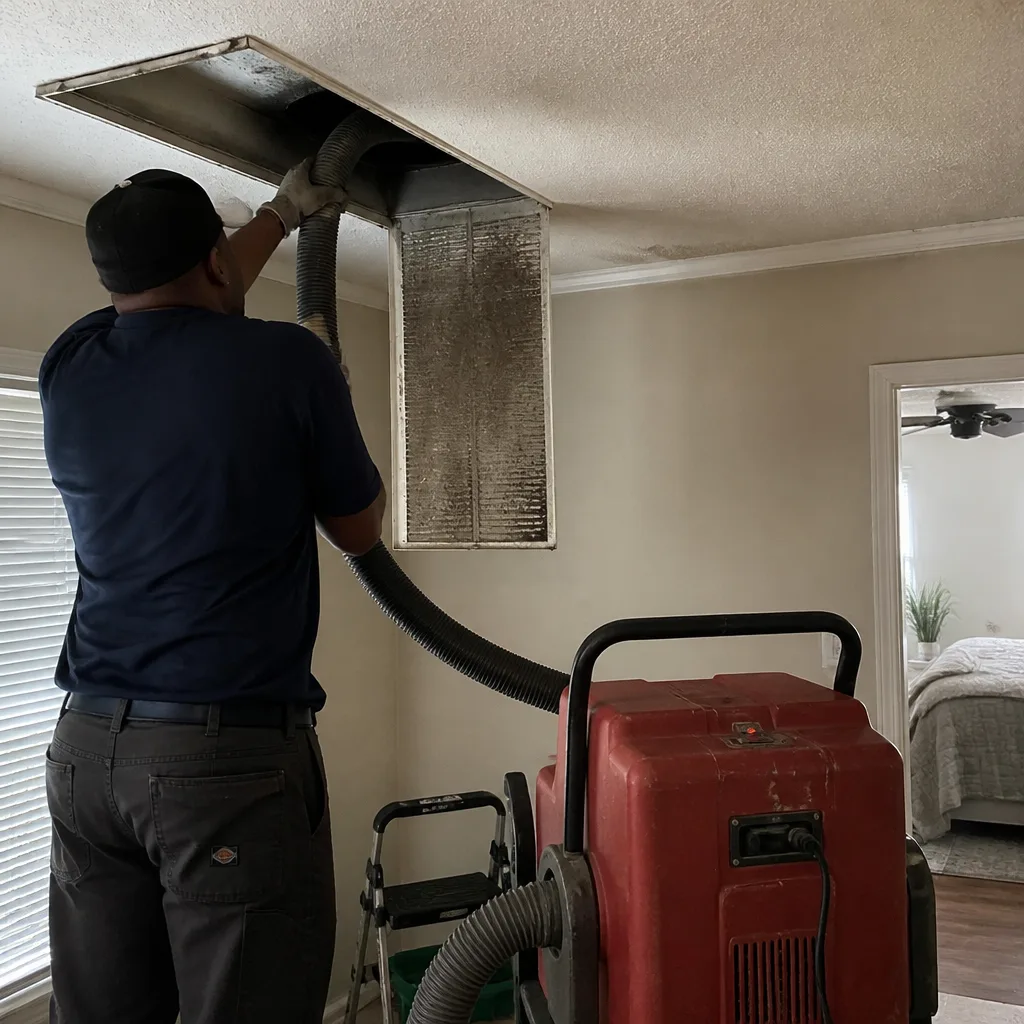 Before
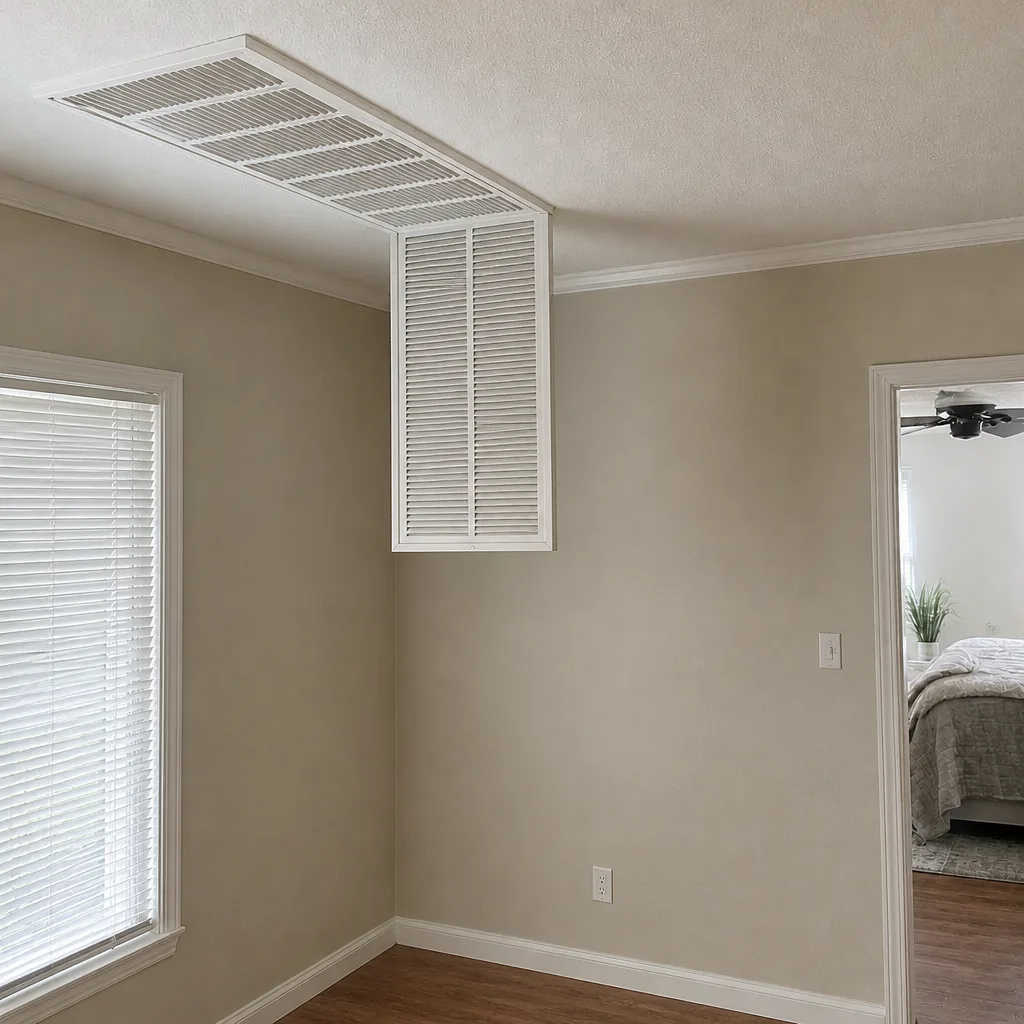 After
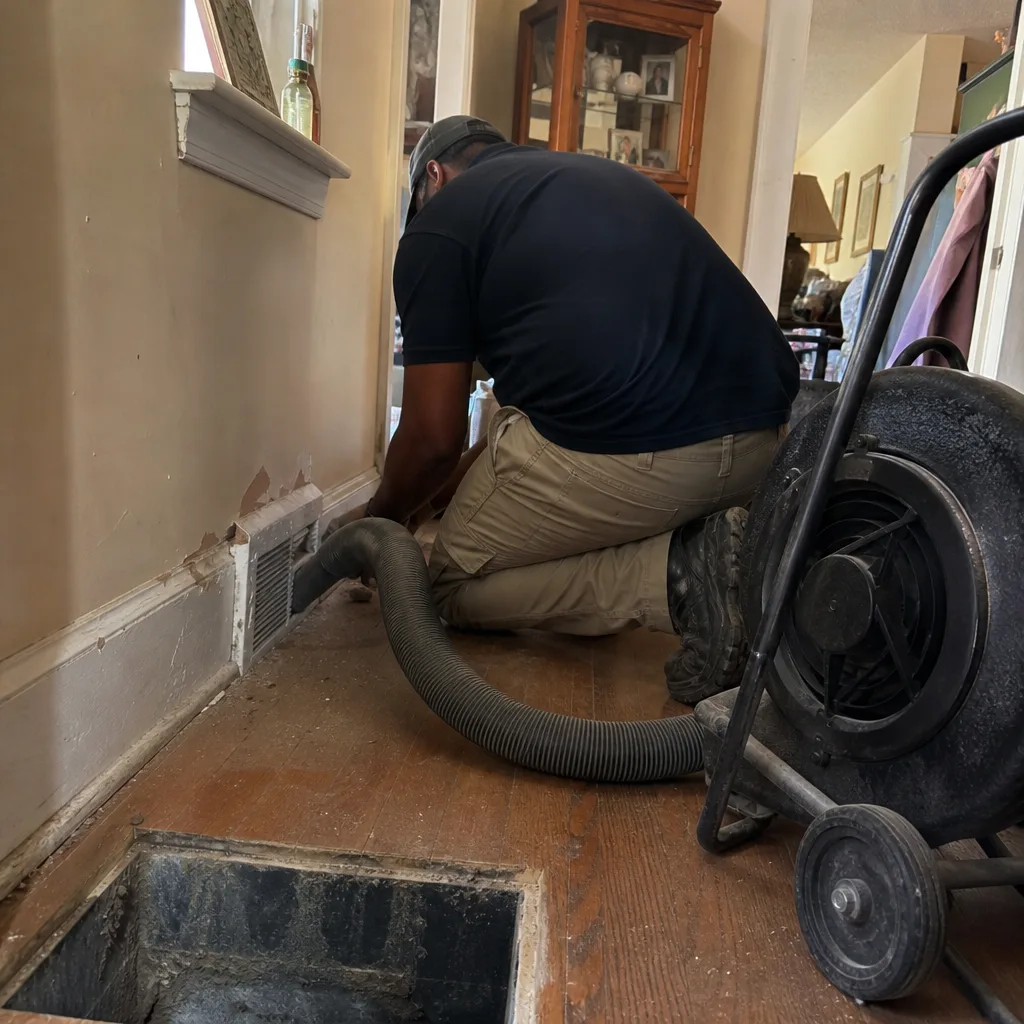 Before
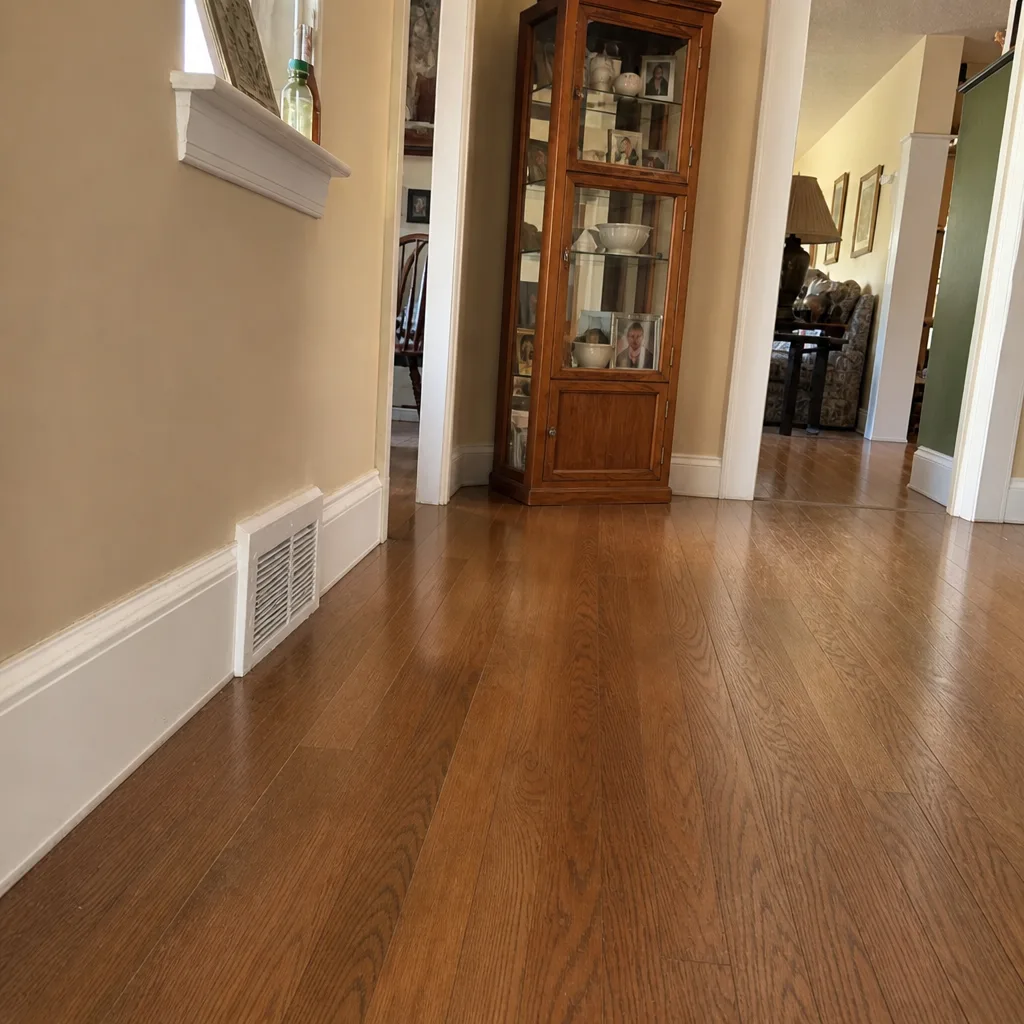 After
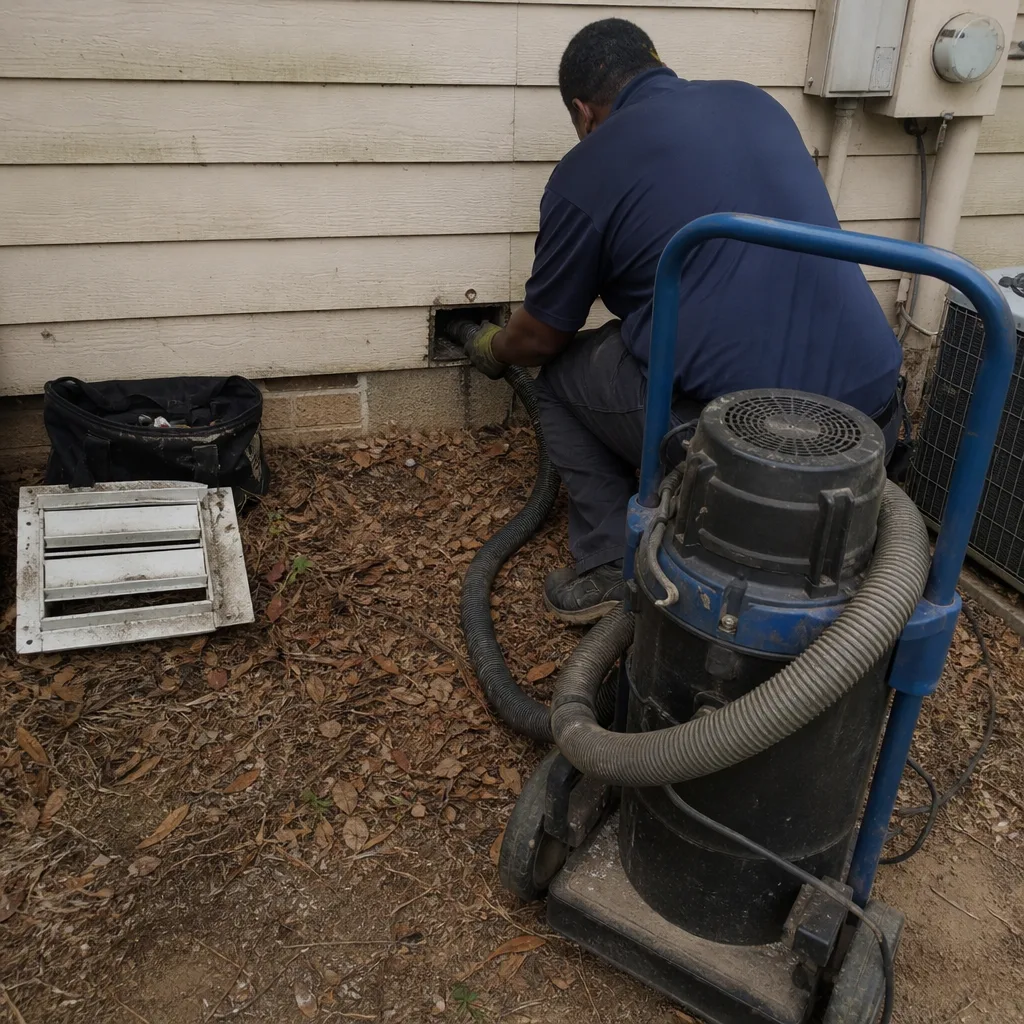 Before
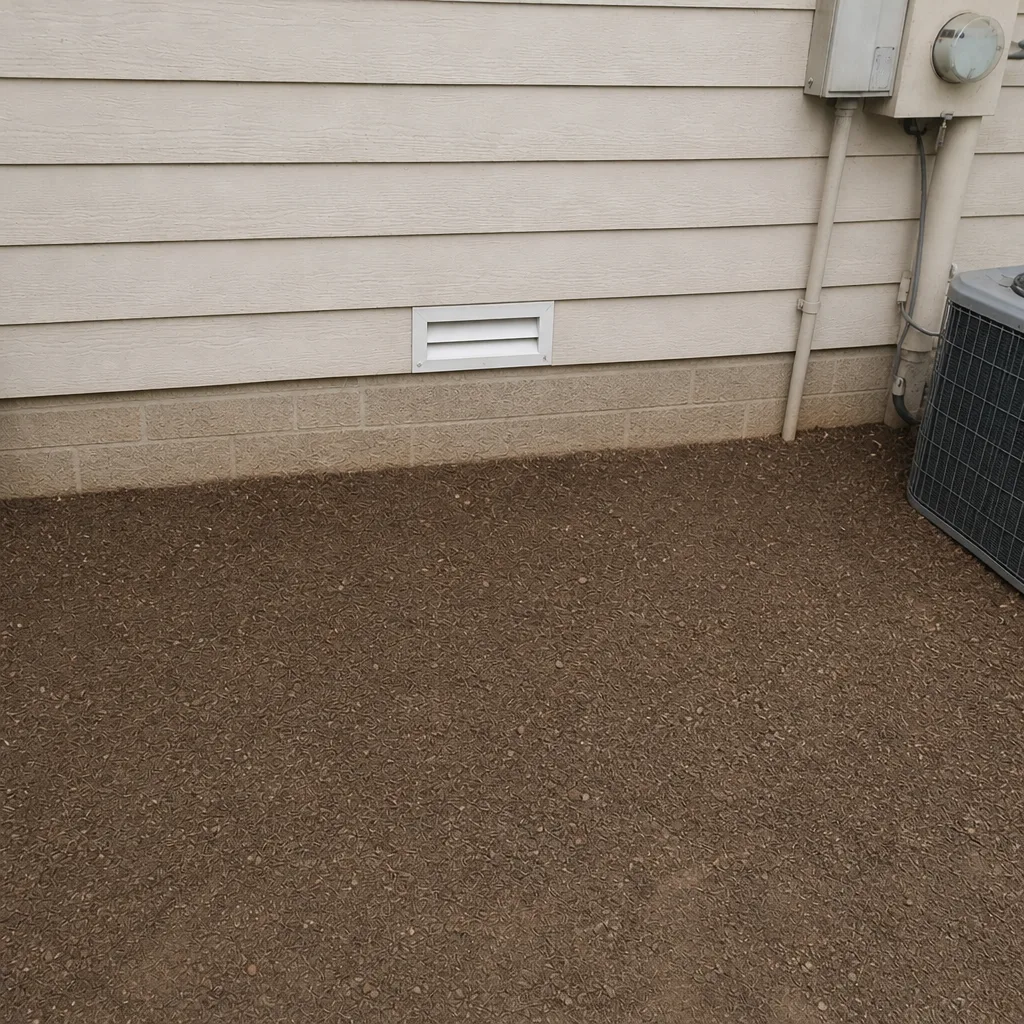 After
When to Call a Professional
Call when your log shows recurring loading at the same registers, when the first-run smell after a season change doesn’t clear in a few minutes, when airflow at a specific register has dropped noticeably, or when a renovation or HVAC install has left visible debris in the system. Also call if you’ve just bought the home and don’t know when the ducts were last cleaned. In each case, an inspection tells you whether you’re looking at a cleaning problem or a repair problem, and the answer sets the work plan.
One call covers cleaning, venting, and repair. We use professional-grade equipment, not improvised tools, and the price is a flat price per system agreed before the work starts, with before-and-after photos of your own ducts. Tidewater Air Duct Cleaning offers free estimates in South Fulton. Call (833) 991-9213. We answer 24/7. Fast dispatch from 7am to 7pm, Sunday through Friday. You’ll get a written estimate, and the written estimate is what sets the final price.
Frequently Asked Questions
Most South Fulton homes fall somewhere between every two and every five years, but the right interval depends on the home, not the calendar. Homes with flex duct running through vented crawlspaces and homes with heavy spring pollen exposure tend to need attention on the shorter end. A rolling 12-month log tells you where your home actually falls instead of guessing.
Seasonal care is mostly inspection and record-keeping, not equipment work. Spring is for checking filter bypass and filter fit. Summer is for checking joints and insulation after the cooling season. Fall is for a pre-heating inspection while the system is still idle. Winter is for moisture checks after cold snaps. The log is what ties the four together.
A very low quote usually means either a smaller set of equipment or a price that changes once the technicians are in the driveway. A shop vac isn’t the same tool as a negative-pressure vacuum, and a per-vent price can expand quickly as the vent count goes up. We quote one flat price per system, agreed before the work starts. Call (833) 991-9213 for an exact quote, because estimates are free.
You see it. On a properly run job, before-and-after photographs of your own ductwork are part of the record, not a courtesy. We take them during the job, so you can compare what went in with what came out. If a contractor doesn’t want to show you the ducts after cleaning, that’s the answer without having to ask the question.
Usually yes, and it should be repaired before or during the cleaning rather than after. A leaking joint pulls unconditioned air into the system, which is what causes the moisture problems in the first place. If we find a failed joint, a torn jacket, or a disconnected run during cleaning, we repair it as part of the same visit. We do cleaning and repair, which is why one call can cover both.
Often, yes. A restricted dryer vent is the most common reason a dryer takes a second cycle, and it’s a fire hazard worth treating as a separate service from HVAC duct cleaning. If your dryer is doing this and the lint trap is clean, schedule a dryer vent cleaning. Our dryer vent cleaning is a dedicated service, not a cursory add-on after the HVAC work.
The Bottom Line
South Fulton’s climate creates four distinct stress points, and a fixed cleaning interval misses all of them. Pollen season loads the ducts and exposes filter bypass. The humid cooling season puts moisture in attic and crawlspace runs. The shoulder season before heating is the easiest time to see what summer left behind. Winter’s short cold snaps turn small flex duct leaks into moisture generators. The single best tool for a homeowner is a rolling 12-month log, because it replaces calendar guessing with observed conditions. When the log points to cleaning, get an inspection. If a repair is needed, do it before the cleaning. One call covers cleaning, venting, and repair, with professional equipment and a flat price per system. Call (833) 991-9213 for a free estimate. We answer 24/7. Fast dispatch from 7am to 7pm, Sunday through Friday.
Written by the team at Tidewater Air Duct Cleaning.