
Last updated November 15, 2026
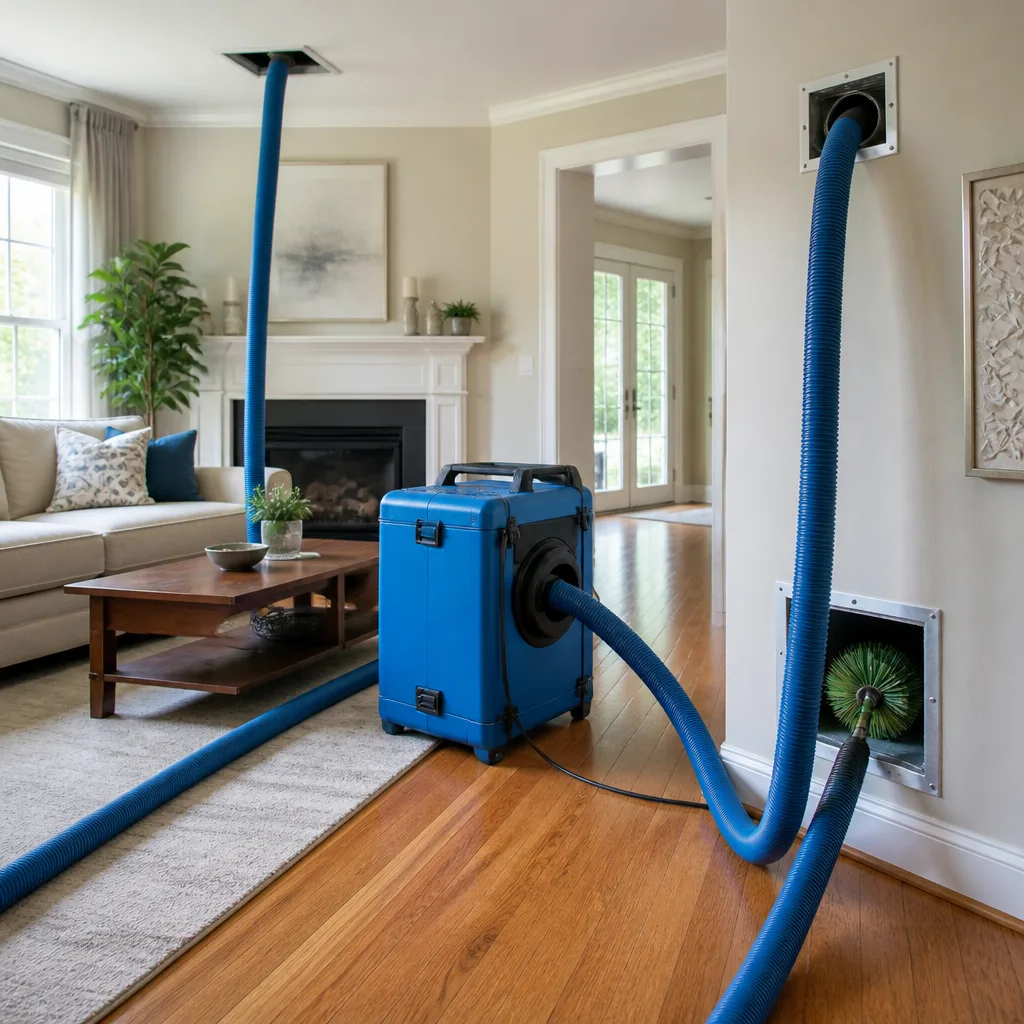 Whole-home duct cleaning
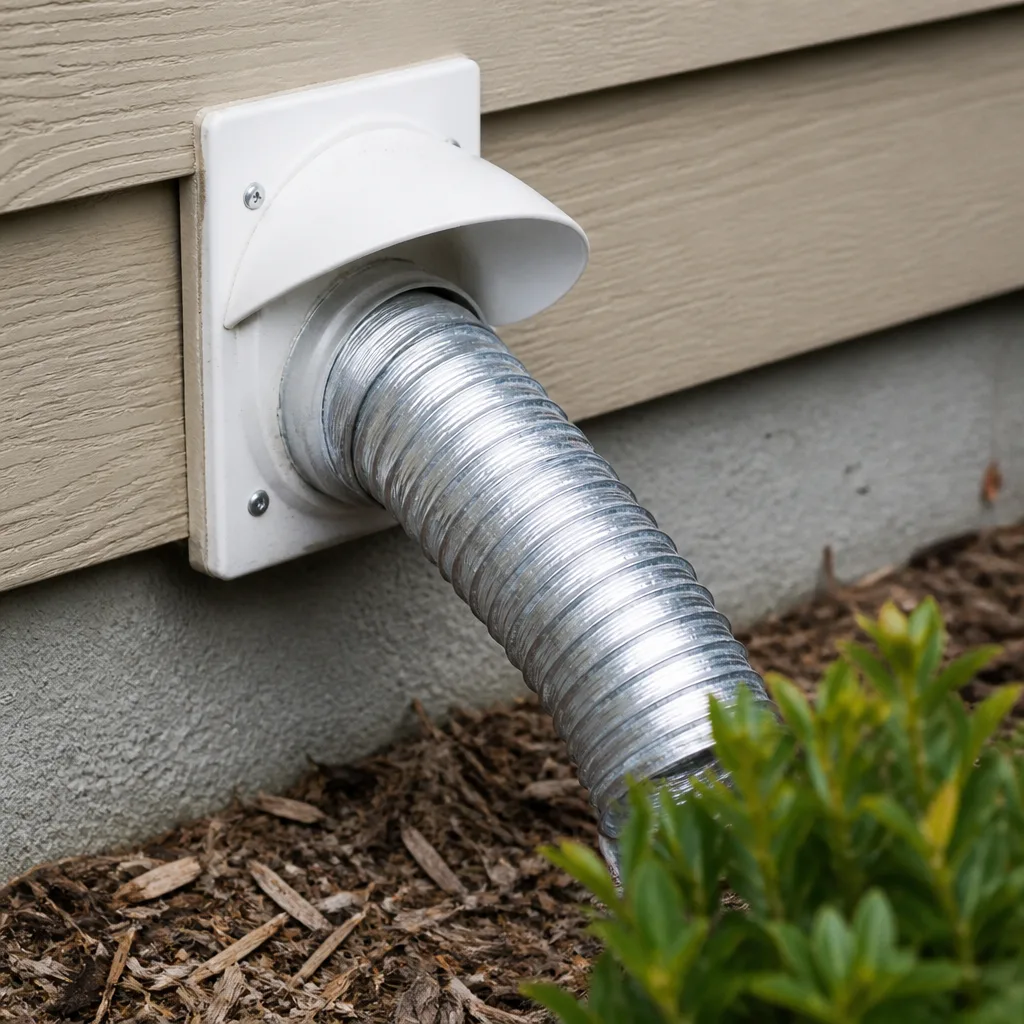 Dryer vent cleaning
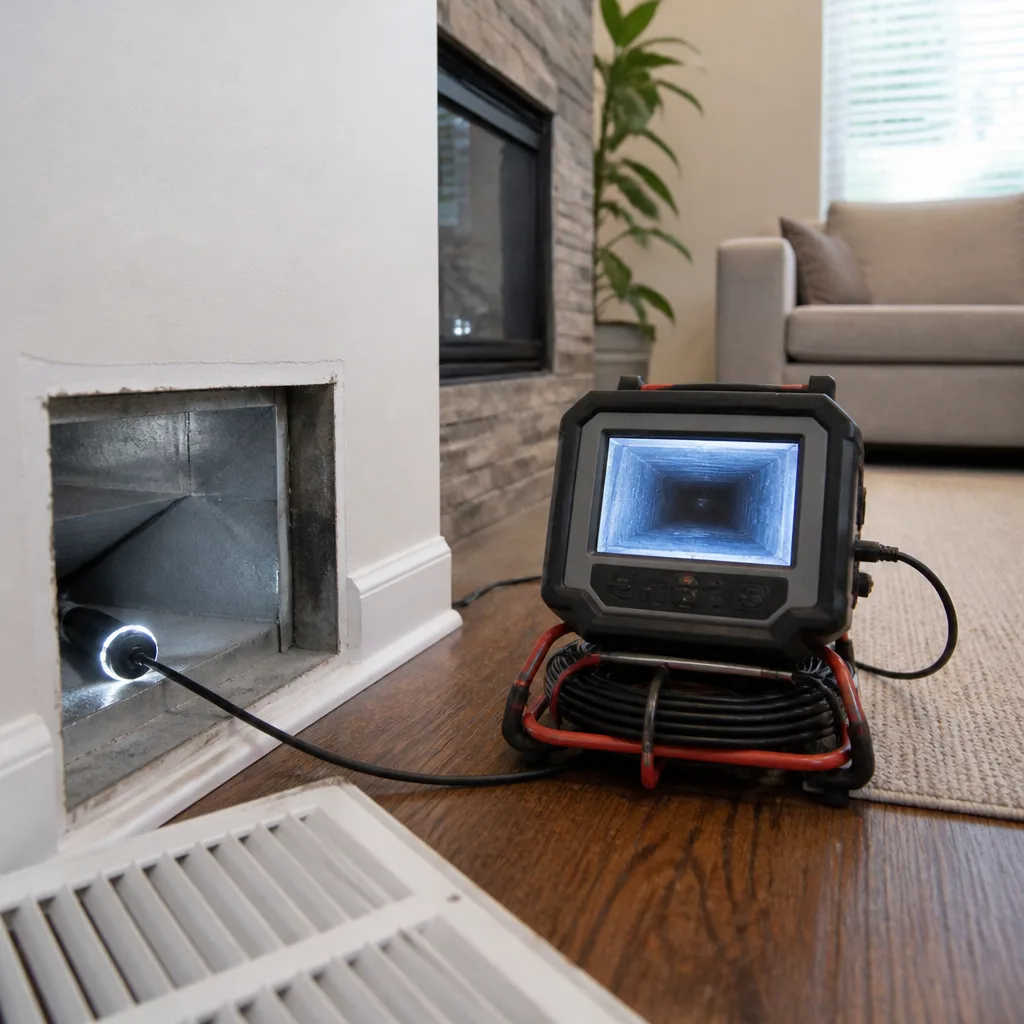 Camera inspection
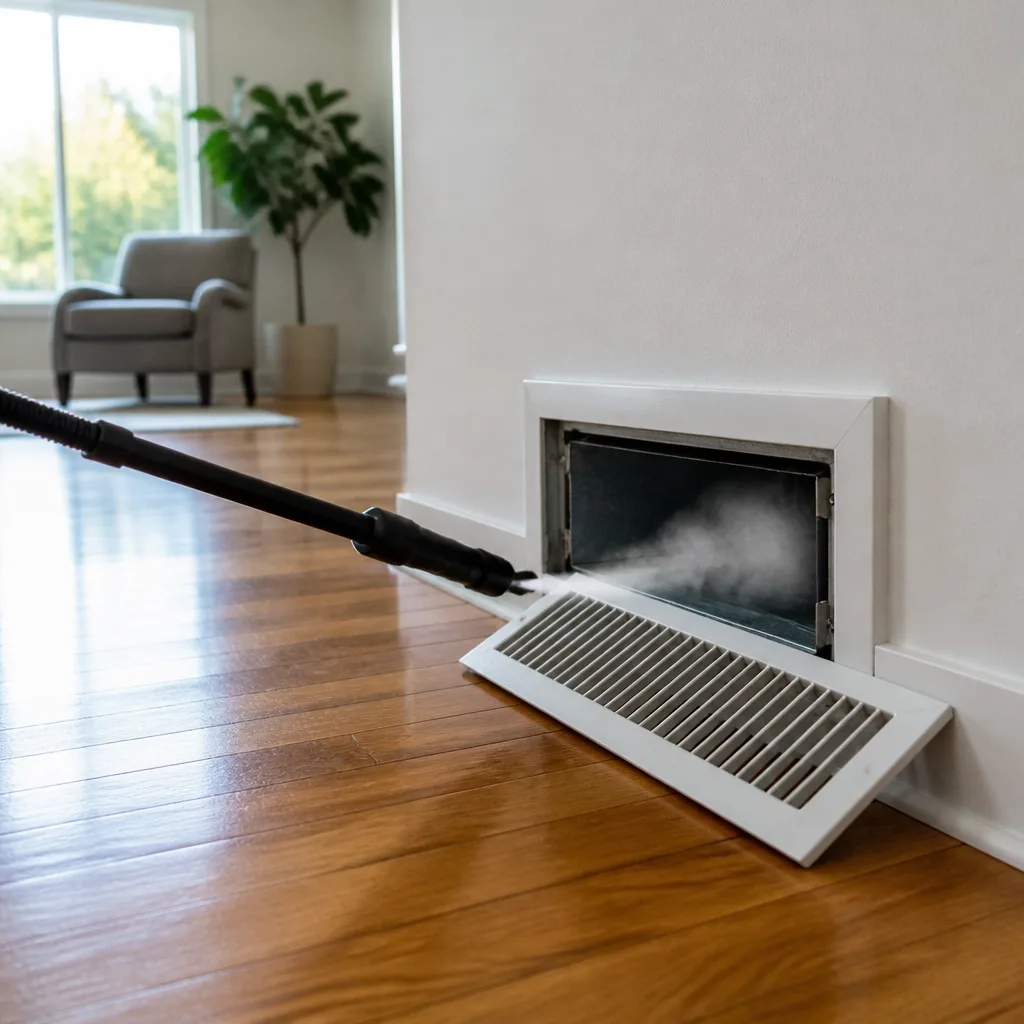 Sanitizing & deodorizing
Whole-system duct and dryer vent check with before-and-after photos - you see exactly what came out of your vents
That "$99 whole-house special" is a bait ad - the real number appears once they are in your hallway, or the "clean" is a shop-vac at the register. We photograph the inside of your ducts before and after instead.
The Complete Guide to Air Duct Cleaning in South Fulton
Most homeowners assume duct cleaning is something you schedule on a calendar, like an oil change. The reality is less tidy. The EPA does not recommend air duct cleaning on a routine schedule, yet plenty of companies sell it that way, often before anyone has opened a register or looked inside the system. The difference between a cleaning that actually improves your air and one that just makes noise comes down to a single question: did anyone inspect your ductwork before switching on the vacuum? This guide walks through what a real assessment involves, how South Fulton’s clay-heavy soil and humid summers shape what ends up inside flex duct, and what a finished job should look like on paper.
Quick Answer
Air duct cleaning in South Fulton should start with a diagnostic inspection, not a sales pitch. A thorough job means a technician inspects the system first, confirms whether contamination is actually present, cleans using source-removal methods with professional equipment like Rotobrush brush systems and Nikro vacuums, and hands you documentation with before-and-after photos when the work is done. If a company quotes you a price before looking at your ducts, that’s a warning sign.
Styles & brands we work with
- Whole-home duct cleaning
- Dryer vent cleaning
- Camera inspection
- Sanitizing & deodorizing
Table of Contents
- Why Diagnosis Comes Before Cleaning
- What a Pre-Cleaning Inspection Should Include
- How South Fulton’s Soil and Humidity Affect Your Ducts
- Source-Removal Cleaning vs. Blow-and-Go Methods
- Why Duct Repair Often Happens Before or During Cleaning
- What a Completed Job Should Look Like on Paper
- How Much Does Air Duct Cleaning Cost in South Fulton?
- Common Mistakes to Avoid
Why Diagnosis Comes Before Cleaning
The duct cleaning industry has a reputation problem, and it’s earned. A homeowner calls a number, gets a low teaser price over the phone, and by the time the technician arrives the price has grown. The reason this happens so often is that nobody inspected the system before quoting. You can’t price a job you haven’t seen.
A proper diagnosis answers three questions before any equipment comes off the truck:
- Is there actually contamination? A duct system that’s been sealed and serviced regularly may be in better shape than the homeowner assumes. Skip the cleaning if it’s not needed.
- Where is it coming from? Debris inside ducts rarely appears out of nowhere. It usually enters through a return-side leak, a disconnected joint, or a filter housing that doesn’t seal. Cleaning without finding the source means you’ll be back in the same spot in a couple of years.
- What condition is the ductwork in? Flex duct that has collapsed, torn, or come loose at a collar needs repair before cleaning, not after. Running a brush through damaged duct makes the damage worse.
In our experience, this step is where most companies cut corners. A van pulls up, a technician walks in with a vacuum hose, and fifteen minutes later he’s done. No inspection, no photos, no measurement of what the system looked like before. That’s not duct cleaning. That’s surface work with a receipt.
If you want to see how the process works on a straightforward system, our air duct cleaning service page walks through the equipment and methods we use. The principle is the same in South Fulton: look first, then clean.
What a Pre-Cleaning Inspection Should Include
An inspection that’s worth the time takes thirty to forty-five minutes on a typical South Fulton home and covers more than peering into one register with a flashlight. Here’s what it should include, in order:
- Walk the whole system. Every supply register, every return, and the air handler or furnace closet. A technician who checks two registers and calls it done has skipped most of the house.
- Open the air handler cabinet. The blower compartment and evaporator coil area are where the worst buildup usually lives. If the coil is matted with dust, no amount of duct cleaning downstream will fix air quality.
- Photograph before opening anything else. Pictures of the interior of the return plenum and at least two supply runs set the baseline. These are the shots that go into your final report.
- Test for airflow blockages. Checking static pressure at the air handler before and after work is a genuine measurement of whether the system is breathing properly. Without it, nobody can say whether the job actually changed anything.
- Check every accessible joint and connection. Flex duct runs through attics and crawl spaces where it gets stepped on, kinked, or pulled loose at the collar. Loose joints pull in attic air, insulation fibers, and whatever else is floating around up there.
- Note whether a permit is required. If the inspection turns up a repair that touches the duct system’s structural layout, most cities require a permit, so ask South Fulton’s building department before any work that changes the system’s footprint.
This inspection is also when you should ask the technician what equipment they use. Professional-grade tools leave evidence, and consumer-grade vacuums don’t hold up to a real job. Rotobrush brush systems, Nikro extraction units, and Abatement Technologies HEPA filtration are what show up on commercial and remediation jobs, and they’re what we bring into a house.
How South Fulton’s Soil and Humidity Affect Your Ducts
South Fulton sits on clay-heavy soil, and that matters more than most homeowners realize. Clay expands and contracts dramatically with moisture, and that movement translates into small shifts in foundations, slab penetrations, and any ductwork that runs through a crawl space or under a slab. A joint that was sealed tight three years ago can open a hairline gap after a wet spring followed by a dry fall. Every gap pulls in whatever’s nearby.
Then there’s the humidity. South Fulton summers run hot and sticky for months, and that means the air handler and coils see a lot of condensation. A poorly sealed return duct in a humid attic draws in warm moist air, which condenses on cold surfaces inside the system. That’s a recipe for biological growth on duct liners and evaporator coils. It doesn’t matter how clean the supply side is if the return side keeps feeding moisture in.
Two specific patterns we look for in South Fulton homes:
- Clay dust tracked into return-side leaks. When the soil shifts and a crawl space duct opens up, fine red clay dust gets pulled into the return. It shows up as a rust-colored film on the inside of return plenum walls and on the filter.
- Condensation staining on flex duct insulation. Flex duct that runs through an unconditioned attic in summer can sweat on the outside. If the outer jacket is torn, the insulation inside gets wet and stays wet. That’s a repair, not a cleaning.
This is why a South Fulton job often looks different from a cleaning on a home in a drier climate. There’s more emphasis on finding leaks and checking insulation condition. If you’re further south in the metro, the pattern shifts slightly, but the principle holds across the area. Homeowners in Riverdale call us with the same complaint: dust keeps showing up no matter how often they change the filter. It’s almost always a return-side leak or a filter housing that doesn’t seal.
Source-Removal Cleaning vs. Blow-and-Go Methods
There are two ways to clean a duct system. One removes the contamination. The other moves it around. The difference isn’t marketing, it’s mechanical.
Source-removal cleaning uses negative pressure to hold debris in a HEPA-filtered vacuum while mechanical agitation breaks it loose from duct walls. A Rotobrush whip or brush travels the full length of each run, scrubbing the walls. The Nikro vacuum pulls everything back to the collection unit. Abatement Technologies HEPA filtration keeps fine particles out of the living space. When a company says it follows NADCA standards, this is what those standards describe. Nothing is left in the ducts that wasn’t there before, and the work is verified by camera and by static pressure readings.
Blow-and-go is the industry’s shortcut version. A technician connects a shop-style vacuum at one register, uses compressed air to blast debris loose inside the ducts, and calls it finished. Debris that was on the duct walls is now airborne in your house or has settled further downstream where the vacuum can’t reach. The registers look cleaner. The system isn’t.
How to tell the difference without climbing into the attic yourself:
- Ask what equipment they use. Professional companies name their gear. Rotobrush, Nikro, Abatement Technologies and Guardsman are common on serious jobs. Vague answers about “specialized vacuums” are a red flag.
- Ask about containment. A proper job uses negative pressure and, in sensitive situations, Guardsman or similar containment products to keep debris from drifting into living space.
- Ask whether they’ll take before-and-after photos inside the return plenum and at least two supply runs. If they won’t, or if they can’t, that tells you something.
Why Duct Repair Often Happens Before or During Cleaning
Here’s a scenario we run into more than any other in South Fulton: the cleaning is scheduled, the technician arrives, and inspection turns up a duct that’s come apart at a collar or has a torn jacket in the attic. A blow-and-go crew would ignore it, vacuum the rest, and hand over a bill. That’s not the right call. A damaged duct needs attention before or during the cleaning because:
- Cleaning a broken duct sends debris into the wrong place. If the return side is open, the vacuum pulls air through the tear instead of through the registers. You’re cleaning half a system and pressurizing an attic cavity.
- Brush equipment can widen a failure. Running a whip through flex duct that’s already collapsed at a bend pushes the material further apart. Repair first, then clean.
- Fix-as-you-go saves the homeowner a second call-out. Getting a separate contractor out to handle a repair you already know about means paying for a second visit, a second setup, and a second schedule window.
We clean it. If it’s damaged, we repair it. That’s the whole reason we offer duct repair as its own service rather than treating it as a referral. The most common repairs are reconnecting flex duct that’s pulled loose at a collar, replacing torn sections, sealing joints with mastic, and re-supporting sagging runs so they don’t collapse again. None of this is glamorous work, but it’s the difference between a duct system that works and one that keeps pulling attic air into your living room.
If you’ve already had a cleaning and something still doesn’t feel right, that’s often the reason. Our Tidewater Air Duct Cleaning team handles both cleaning and repair as one job, so the diagnosis and the fix happen in the same visit.
What a Completed Job Should Look Like on Paper
In a market full of low-bid operators, documentation is the clearest sign you got what you paid for. When the job is finished, you should walk away with more than a receipt. You should have a report that answers these questions:
- Before-and-after photos of the return plenum and at least two supply runs. These should be dated and clearly show the same locations.
- Static pressure readings taken before and after. Static pressure measures how hard the blower is working to move air through the system. A drop tells you the ducts are flowing better than they were.
- Notes on any repairs performed and any that were recommended but not done. If a repair is deferred, you should know why.
- A component list. Registers, grilles, supply trunk, return trunk, plenum, air handler cabinet, and blower. If any of these weren’t touched, the report should say so.
Ask for the documentation before the job starts, not after. Any company that can’t tell you up front what you’ll receive on paper is probably not producing anything on paper. If they hand you a one-page invoice with no photos and no readings, you don’t actually know what happened inside your ducts. That’s not a knock on every low-cost company, it’s an honest read on where the shortcuts show up.
How Much Does Air Duct Cleaning Cost in South Fulton?
Honest pricing is by system, not by vent. A duct cleaning quote that starts with a per-vent figure is a warning sign, because the number of vents has almost nothing to do with how much work the job involves. One 2,000 square foot house can have a simple trunk-and-branch layout, and another can have multiple zones, a finished basement, and a crawl-space run with two repairs needed. Same vent count, wildly different job.
Typical whole-system ranges for South Fulton homes look like this:
| Job type | What it covers | Typical range |
|---|---|---|
| Standard air duct cleaning | Full supply and return cleaning with source-removal methods, inspection, photos, and static pressure readings | $400 to $800 |
| Deep cleaning with heavy contamination | Renovation dust, mold-affected liners, or significant buildup requiring extended agitation and containment | $700 to $1,200 |
| Dryer vent cleaning (standalone) | Full-length lint removal, vent path clearing, and airflow check | $150 to $300 |
| Duct repair | Reconnecting, sealing, or replacing damaged flex duct; per-issue pricing by estimate | Priced by written estimate |
These are estimates, not quotes. The written estimate sets the final price, and it should be produced after an inspection, not before. If you’re comparing bids, the question isn’t just what each company wants to charge, it’s what each company has actually looked at to arrive at that number. The lowest bid is often the one that skipped the inspection.
Why are some quotes so much cheaper? Because they’re pricing a blow-and-go job with no documentation, no static pressure readings, and no repair capability. That price is accurate for what you’re buying, which is a surface-level pass with a vacuum. If you want the full source-removal job with before-and-after photos, expect the number to reflect it. Call (833) 991-9213 for a free estimate. We answer 24/7. Fast dispatch from 7am to 7pm, Sunday through Friday.
Common Mistakes to Avoid
- Booking before an inspection. If a company quotes a firm price over the phone without seeing your system, they’re either guessing or planning to change the number once they arrive. Insist on an inspection first.
- Choosing on price alone. A cheap cleaning that misses the return plenum and skips the air handler cabinet is not the same service as a full-system cleaning. Compare what’s included, not just the dollar figure.
- Ignoring the air handler cabinet. The blower and evaporator coil are where South Fulton’s humidity creates the worst buildup. Cleaning the ducts without touching the cabinet leaves the source untouched.
- Assuming the cleaning fixed a duct problem. If flex duct has come loose at a collar or has a torn jacket in the attic, cleaning makes it worse. Have the system inspected for leaks as part of the assessment.
- Skipping the dryer vent. Your dryer vent is a fire hazard waiting to be ignored, and it’s a separate system from your supply ducts. Cleaning the HVAC ducts does nothing for it. If your dryer is taking two cycles to dry a load, the vent needs attention.
- Settling for an invoice instead of a report. No before-and-after photos and no static pressure readings means no proof the work was done. Ask what documentation you’ll receive before you schedule.
- Cleaning on a schedule instead of on evidence. Every three years is not a rule. A well-sealed system may not need cleaning for a decade. A system with a return leak may need repair and cleaning within a year of the last visit. Let the inspection drive the decision.
See the difference
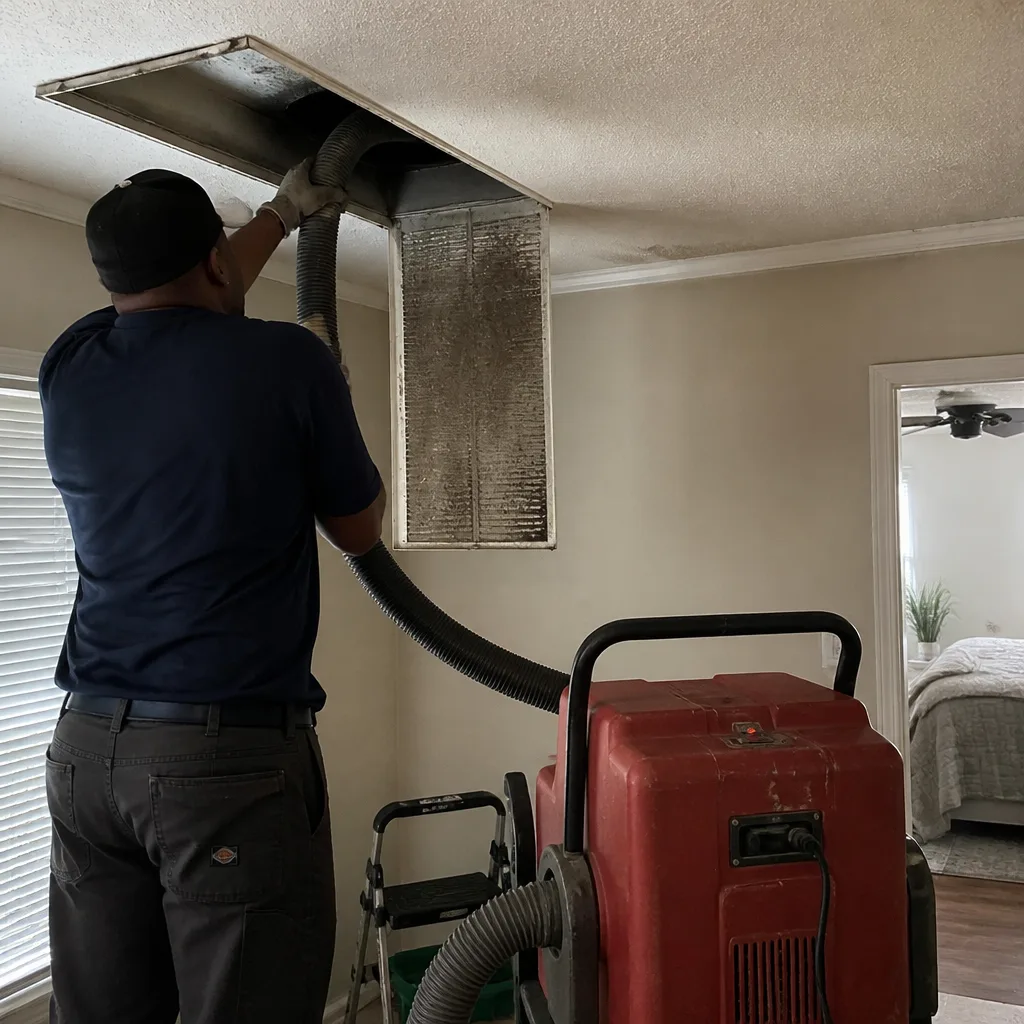 Before
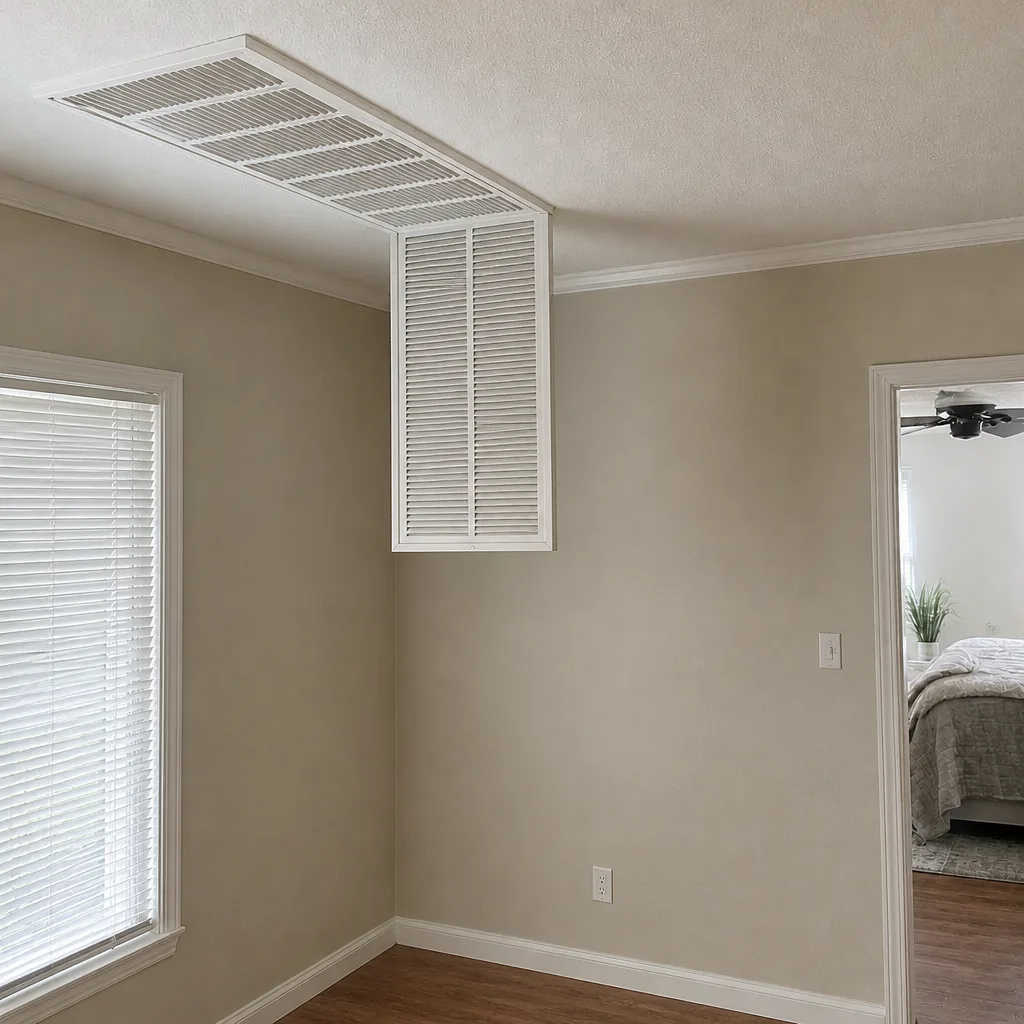 After
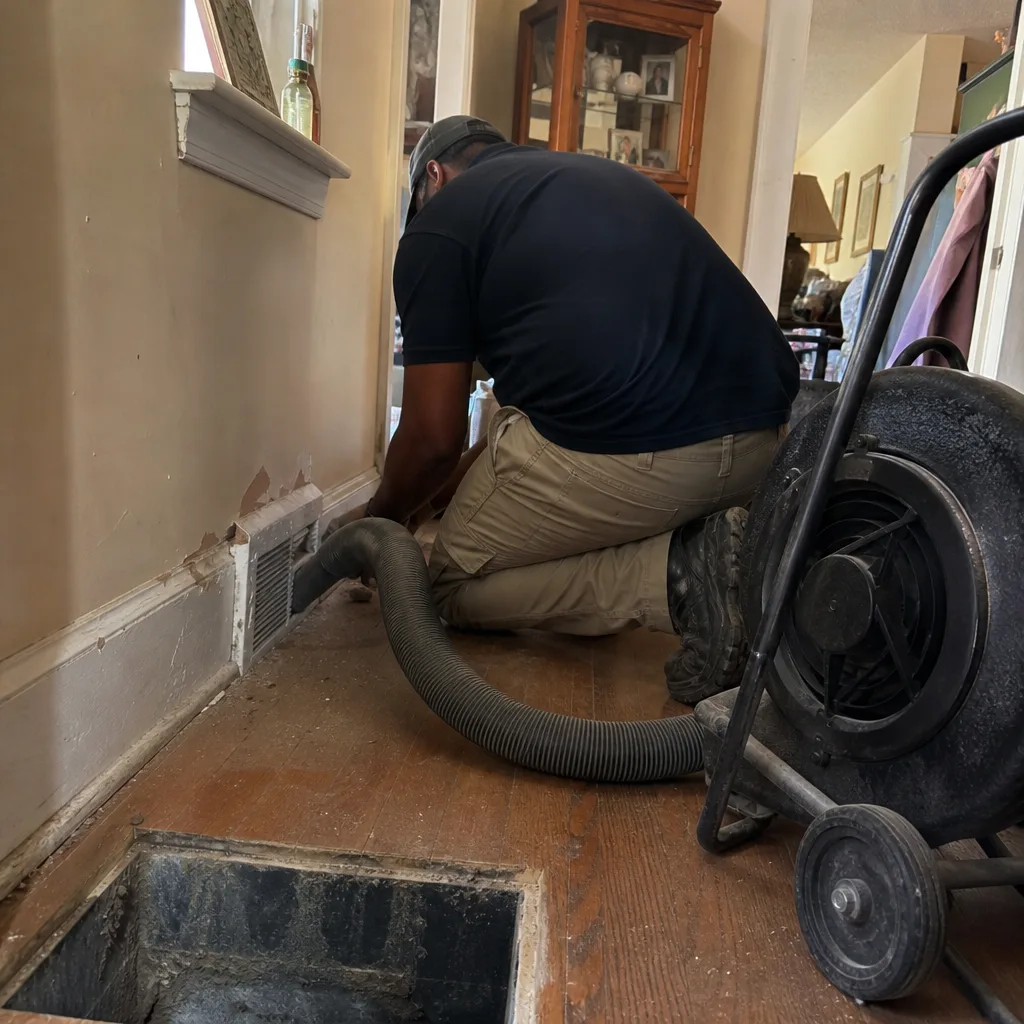 Before
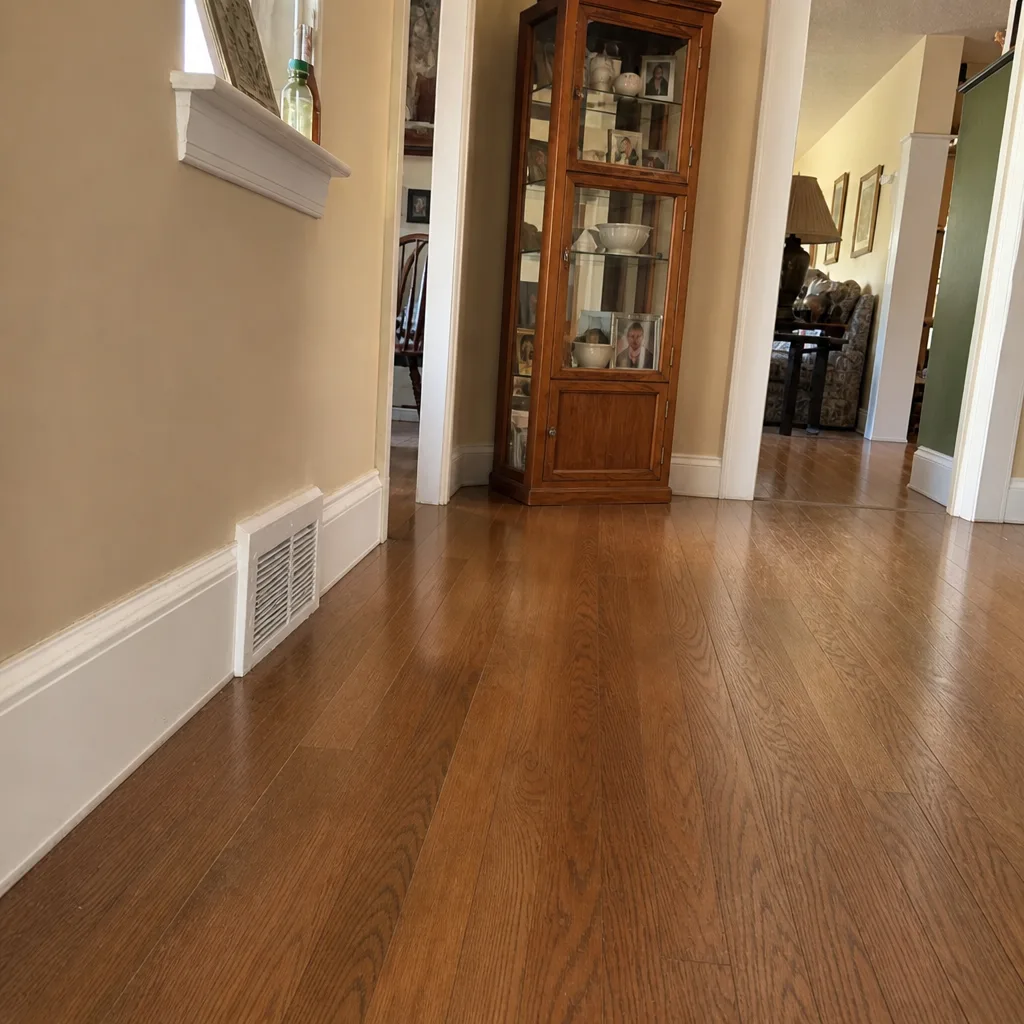 After
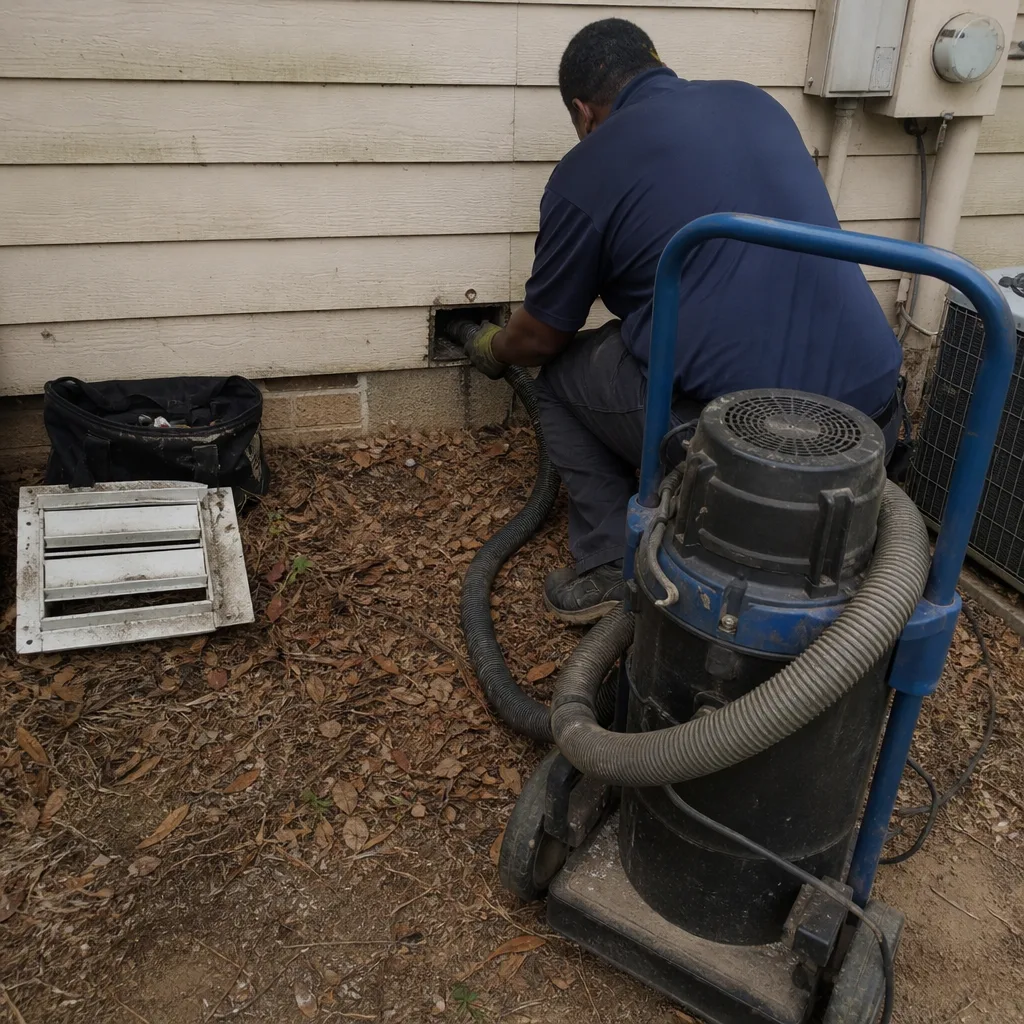 Before
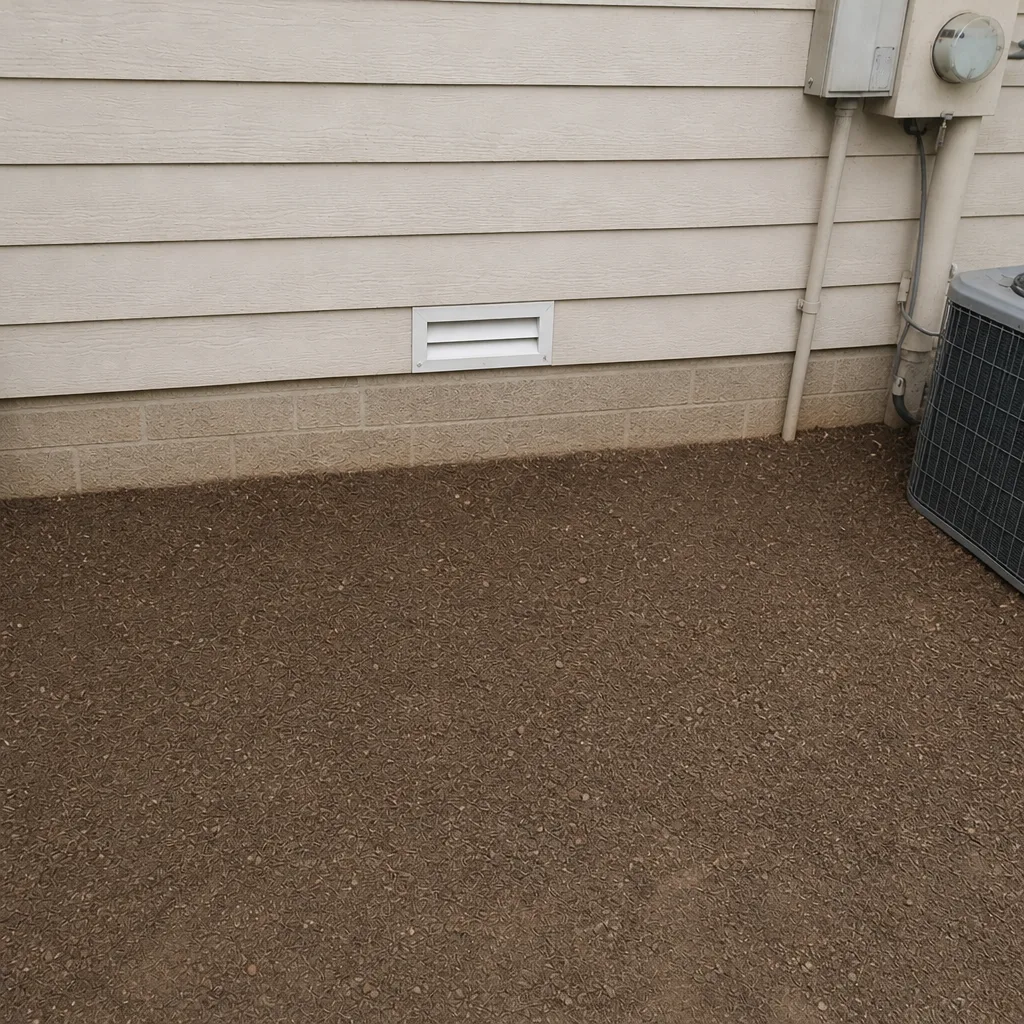 After
When to Call a Professional
Some duct conditions are fine to live with. Others genuinely need a professional assessment, and knowing the difference saves money and frustration. Call when you’ve just finished a major renovation and drywall dust has settled into the return system. Call after a new HVAC install if the contractor didn’t clean the ducts as part of the job. Call if you’re buying a South Fulton home and the previous owner’s maintenance history is unclear. Call if someone in the house has a persistent respiratory complaint and the filter keeps loading up faster than it should. Call if the dryer takes two cycles to dry a load, or if the vent flap outside doesn’t open fully when the dryer runs. Call if a visible register or return shows dust buildup inside the duct beyond the grille. And call if a duct or vent feels warm in an area where it shouldn’t, or if you smell a musty odor near a register in humid weather and can’t find the source. Tidewater Air Duct Cleaning offers free estimates in South Fulton. Call (833) 991-9213 for a free estimate.
Frequently Asked Questions
Typical whole-system cleaning runs about $400 to $800 for a standard home, with deep-cleaning jobs on heavily contaminated systems landing between $700 and $1,200. The written estimate after an inspection sets the final number, and any quote offered before an inspection should be treated as a rough figure only. Call (833) 991-9213 for a free estimate. We answer 24/7. Fast dispatch from 7am to 7pm, Sunday through Friday.
There’s no fixed schedule, and companies that push a set interval are selling a commodity, not a service. A sealed, well-maintained system in a South Fulton home may not need cleaning for years. A system with a return-side leak, recent renovation dust, or a humid attic run may need attention much sooner. The right answer is based on inspection, not a calendar.
Yes. Repair and cleaning often happen together because damage is found during the inspection. Reconnecting loose flex duct, sealing joints, or replacing a torn section before the cleaning proceeds protects the equipment and ensures the whole system is addressed. If you’re managing a duct problem on your own, our full-service dryer vent cleaning page shows how the same repair-first approach applies to vent work.
You should receive before-and-after photos inside the return plenum and at least two supply runs, plus static pressure readings taken before and after the work. A written report that lists which components were cleaned and which weren’t is the standard for the work. If a company can’t produce that, the work is unverified no matter what the invoice says.
Cheap quotes usually reflect a smaller job: blow-and-go cleaning without proper containment, no air handler cabinet service, no static pressure readings, and no documentation. Those are real services missing from the price, not a discount on the same work. Compare what’s included, not just the total. Call (833) 991-9213 for a free estimate so you can see what a full-system price looks like for your home.
Not automatically, but it’s worth checking. During an install, the blower cabinet and coil are opened up, and construction debris from the surrounding work often ends up inside the return. Some contractors clean the ducts as part of the job, but not all do. An inspection after a new install confirms whether the return system picked up dust that should come out before the new equipment runs on it.
The Bottom Line
Air duct cleaning in South Fulton works when it starts with a diagnosis and ends with documentation. Skip the inspection and you’re buying a cleaning without knowing whether the system needed one, whether the debris had a source that’s still open, or whether a repair was needed before a brush ever touched the duct. Ask what equipment a company uses, ask what documentation you’ll receive, and ask what happens if the inspection turns up a repair. The answers tell you whether you’re dealing with a company that thinks in systems or one that thinks in coupons. Call (833) 991-9213 for a free estimate. We answer 24/7. Fast dispatch from 7am to 7pm, Sunday through Friday.
Written by the team at Tidewater Air Duct Cleaning.