
Last updated November 15, 2026
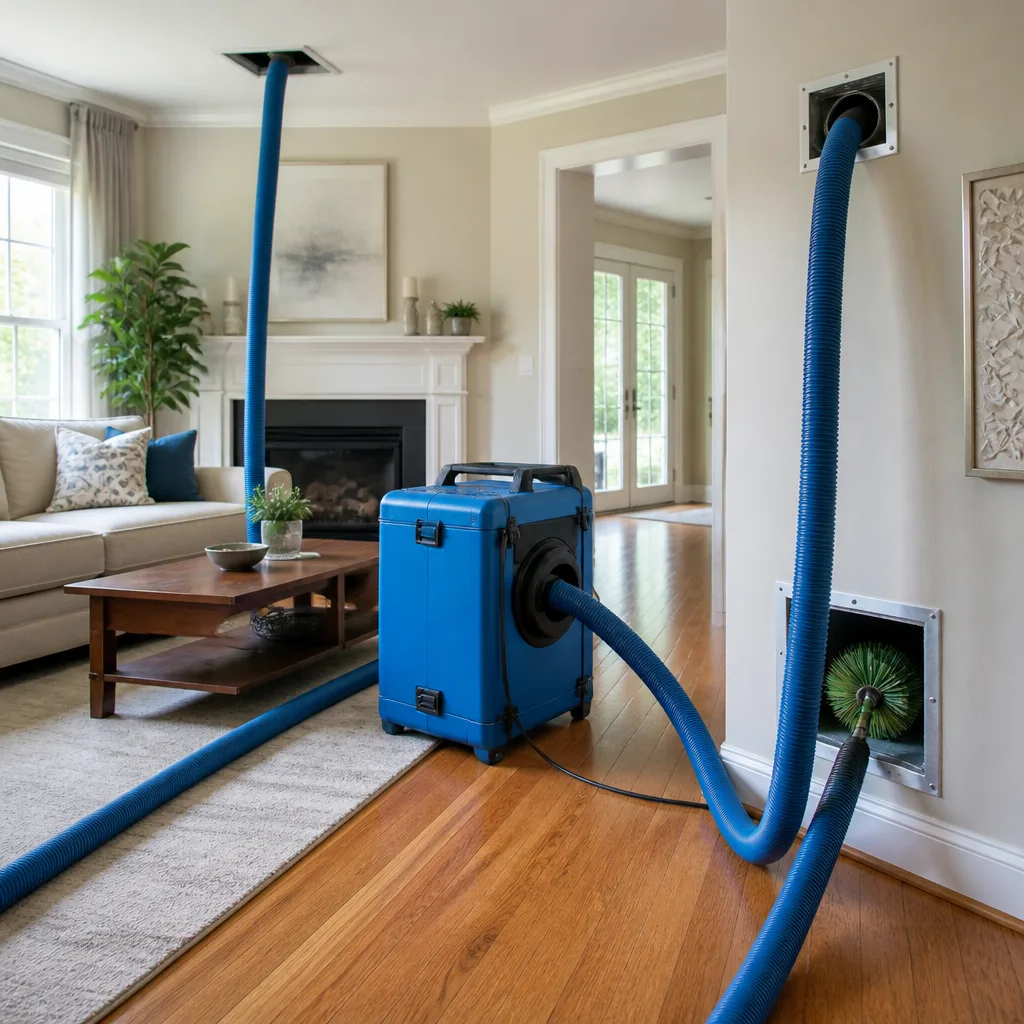 Whole-home duct cleaning
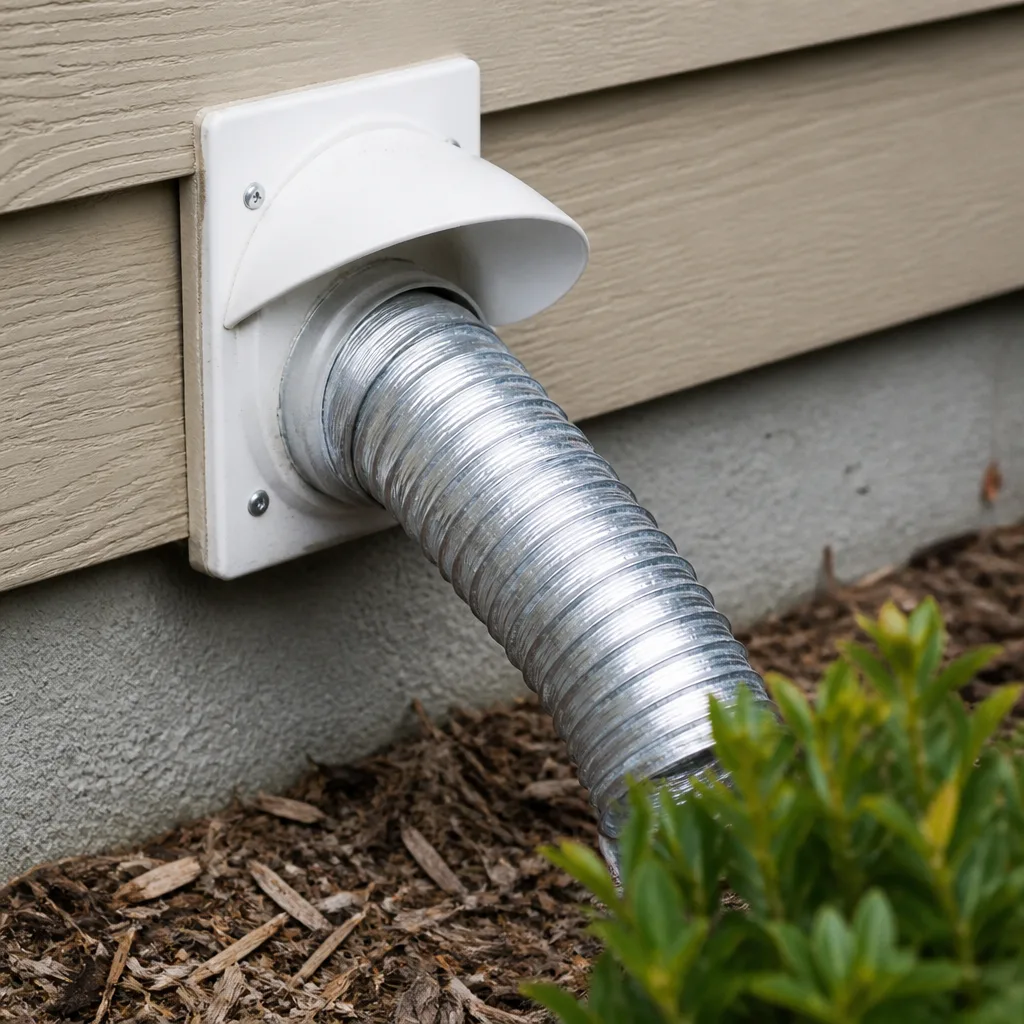 Dryer vent cleaning
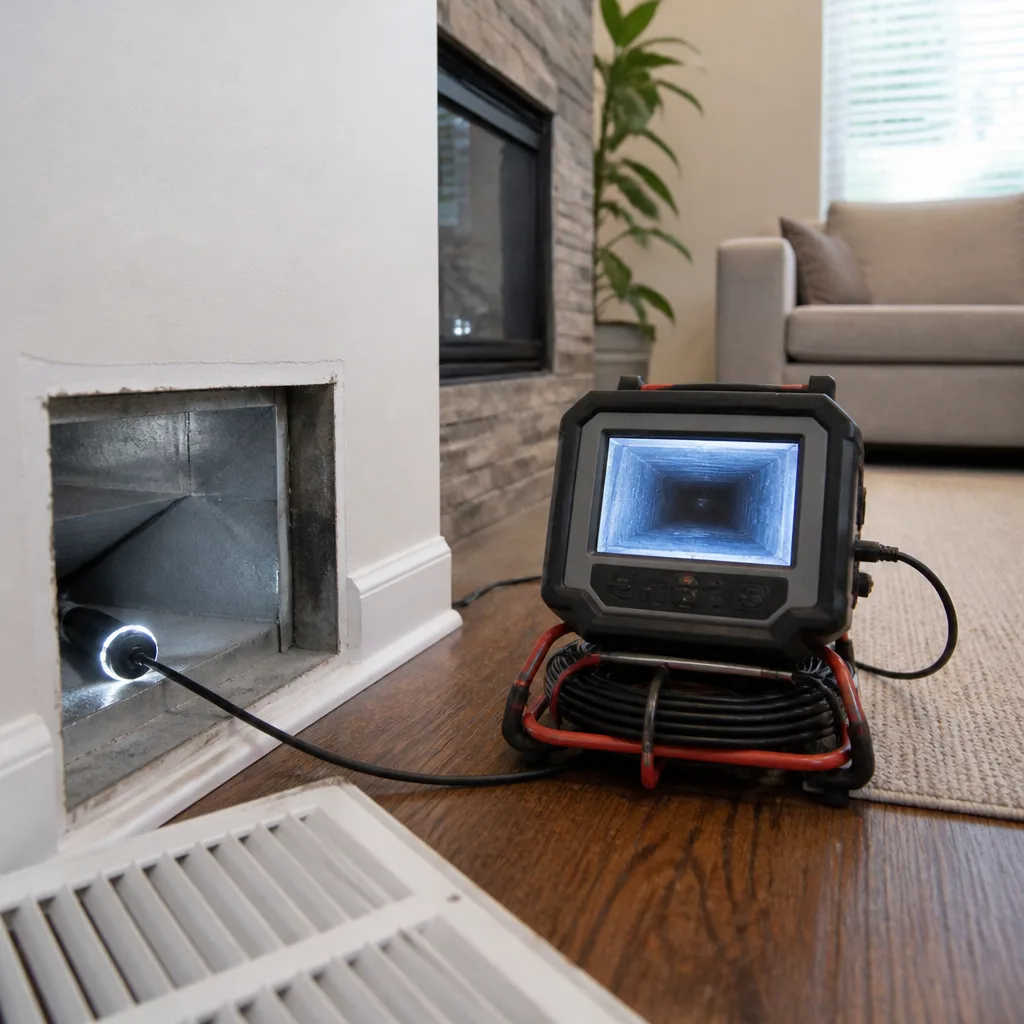 Camera inspection
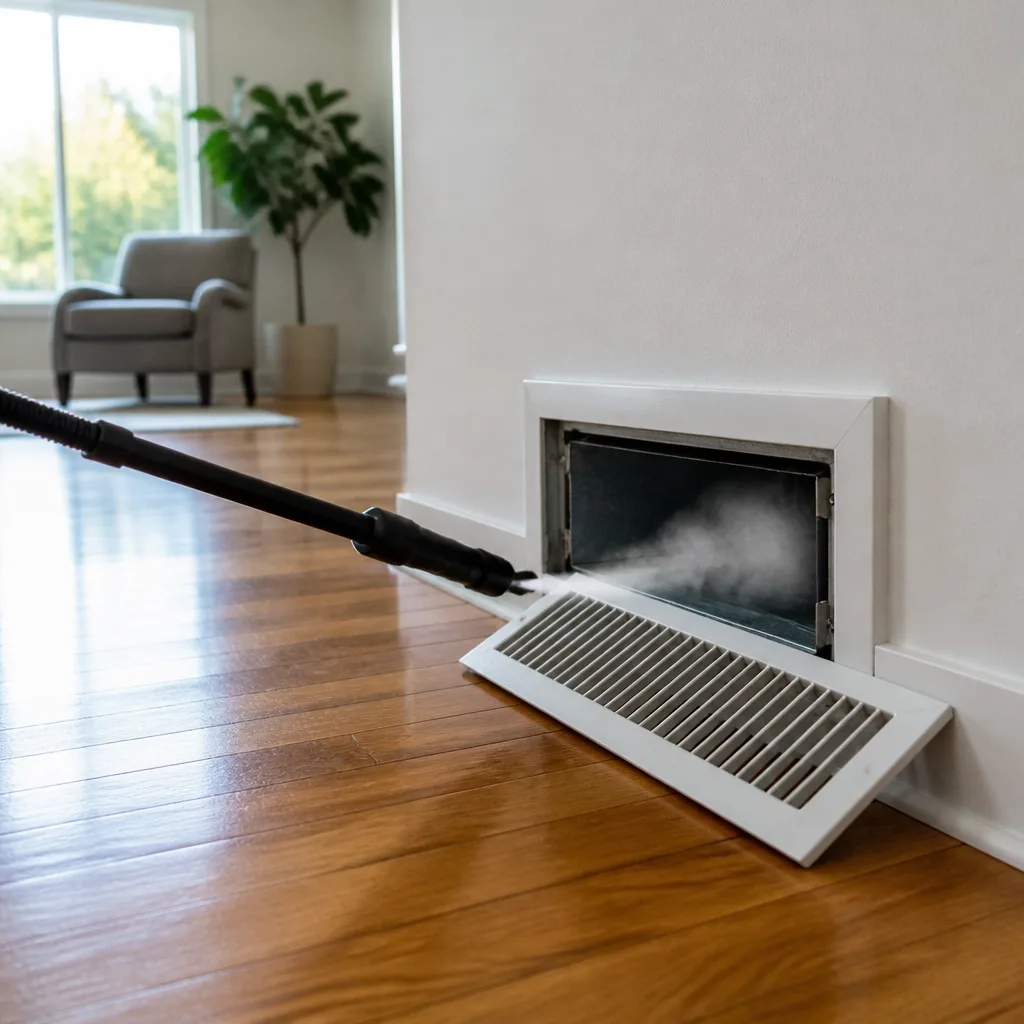 Sanitizing & deodorizing
Whole-system duct and dryer vent check with before-and-after photos - you see exactly what came out of your vents
That "$99 whole-house special" is a bait ad - the real number appears once they are in your hallway, or the "clean" is a shop-vac at the register. We photograph the inside of your ducts before and after instead.
Air Duct Cleaning Troubleshooting in South Fulton: Common Problems and How to Fix Them
If your HVAC contractor has already replaced the filter, checked the refrigerant, and shrugged, the problem is probably inside your ducts, not your equipment. That’s the part most homeowners miss. A furnace or air handler can be running perfectly and still leave the back bedroom two or three degrees warmer than the front hall, because the ductwork carrying the air is crushed, leaking, or packed with twenty years of dust. In South Fulton, where crawlspaces stay damp for much of the year, the ducts themselves become the weak link in a system everyone keeps blaming on the equipment. This guide maps the symptoms you’re noticing to the real duct-system causes, tells you which ones you can diagnose yourself, and explains when a camera inspection needs to happen before anyone touches a vacuum.
Quick Answer
Uneven room temperatures, musty odors, whistling registers, and rising energy bills in South Fulton are most often duct-system problems, not HVAC equipment failures. A cleaning solves dust and debris buildup; a repair solves collapsed flex duct, disconnected trunk lines, and leaks at the seams. Before a cleaner starts, a visual register check and sometimes a camera inspection tell you which problem you actually have.
Styles & brands we work with
- Whole-home duct cleaning
- Dryer vent cleaning
- Camera inspection
- Sanitizing & deodorizing
Table of Contents
- Symptom-to-Cause Map: What Your House Is Telling You
- Why Some Rooms Never Get Comfortable
- The Tissue Test: Cleaning Problem or Repair Problem?
- Musty Smells After Cleaning: What They Really Mean
- South Fulton Humidity and Your Flex Ducts
- What You Can Diagnose Yourself and What Needs a Camera
- Dryer Vent Troubleshooting
- When to Clean and When to Repair
Symptom-to-Cause Map: What Your House Is Telling You
Most duct problems announce themselves long before anyone opens a register. The trouble is that the symptoms look like something else: a tired air conditioner, a dirty filter, a thermostat that needs replacing. Here in South Fulton, where much of the housing stock is ranch-style and split-level with long duct runs through the attic and crawlspace, those symptoms tend to point back to one of a handful of causes.
Here’s how the symptoms usually map to causes:
- One room always hot, one room always cold: likely a collapsed or kinked flex duct section, an undersized branch run, or a trunk line that has come loose from its boot.
- Whistling or roaring at a register: restriction somewhere upstream, a crushed section, or a register that’s been partially closed to compensate for uneven pressure.
- Musty smell when the system kicks on: moisture in the ductwork, deteriorating internal liner, or flex duct that’s been sitting in a damp crawlspace absorbing humidity.
- Visible dust puffing out of a supply register: dust and debris buildup in the supply trunk, or leaks in the return that are drawing unfiltered air from the attic or crawlspace.
- Higher utility bills with no change in usage: air escaping from loose joints and unsealed seams before it ever reaches the room.
- Dust settling on surfaces right after cleaning: the system was cleaned but not sealed, so it’s re-entraining the same crawlspace or attic air.
The key insight is that these symptoms are diagnostic. They tell you what kind of problem you have before anyone climbs into a crawlspace. That matters because a cleaning and a repair cost different amounts of money and fix different things. Confusing the two is the most common mistake we see in South Fulton duct work.
Why Some Rooms Never Get Comfortable
Uneven room temperatures in South Fulton are usually one of three duct-system problems, and each has a distinct signature. The first is a collapsed flex duct. Flex duct is a cheap material that runs from a trunk line out to each supply register. It bends easily, and over time it can sag, kink, or crush under foot traffic in an attic or under debris in a crawlspace. When flex duct collapses along its run, the airflow to that room drops sharply. The room stays cool in winter and warm in summer, and no thermostat adjustment fixes it because the air simply can’t get there.
The second cause is a blockage. The internal liner of a duct can delaminate and fall inward, creating a flap that restricts air. Dust and debris can also accumulate at a bend or a reducer. Sometimes the obstruction is at the register boot itself, where a lazy install left extra flex duct bunched up.
The third and often the most misunderstood cause is a disconnected trunk line. Trunk lines feed branch runs. If the connection at a boot or a takeoff comes loose, the branch has no air to deliver. A room served by a disconnected trunk behaves like a room with no duct at all. It gets whatever leaks in through the gap, which is usually attic or crawlspace air.
Here’s how to distinguish them without pulling apart your ceiling:
- Turn the system on fan-only and hold your hand over the register. A weak, cool-to-the-touch flow suggests a kink or a blockage.
- Listen at the register. A rush of air with no real delivery suggests a disconnected run feeding the wrong space.
- Compare the temperature at the register to the room. If the register is delivering air but the room isn’t changing, the problem may be the room’s envelope, not the duct.
- Look for sagging flex duct during any attic or crawlspace inspection. Kinks and crush points are visible to a trained eye.
Once you know which of the three you’re dealing with, the fix is straightforward. A kinked line can often be re-routed. A collapsed section needs replacement. A disconnected trunk line needs to be reconnected and sealed. This is the kind of work that belongs in a repair visit rather than a cleaning visit, which is why we handle both at Tidewater Air Duct Cleaning through Tidewater Air Duct Cleaning.
The Tissue Test: Cleaning Problem or Repair Problem?
You can tell a lot about your duct system with a single square of tissue and five minutes. The tissue test is a simple way to check whether air is reaching a register and whether the register itself is a source of leakage. It won’t tell you everything, but it separates a dust problem from an airflow problem fast.
Here’s how to run it:
- Hold a tissue loosely against the face of a supply register while the system is running.
- If the tissue flutters and flaps toward the room, air is reaching the register. The question becomes whether the air is clean and whether it’s reaching the room in the right volume.
- If the tissue barely moves, the register isn’t delivering. Airflow upstream is restricted or the branch is disconnected.
- Now move the tissue slowly around the edges of the register, where it meets the wall or ceiling. If the tissue gets pulled against the seam, you have leakage at the boot.
- Repeat on a return register. A return that pulls strongly is normal. A return that barely pulls suggests a duct sizing or disconnect problem on the return side.
The tissue test also does something more important: it tells you whether you need a cleaning or a repair. If your supply registers deliver air but the air is dusty and there’s visible buildup inside the register boot, you have a cleaning problem. If your registers don’t deliver air, or if the tissue gets sucked against the seam at the boot, you have a repair problem. Cleaning a system with disconnected runs and unsealed boots will not fix the room temperatures. It will just move the same dust around.
This is why we do a visual walk-through before any cleaning starts in South Fulton. If we see disconnected runs or gaps at the boots, we flag them. Cleaning and repair are different services. Cleaning removes what has accumulated; repair reconnects and seals what has come apart. Doing both in the same visit is why our air duct cleaning work pairs so naturally with our repair service.
Musty Smells After Cleaning: What They Really Mean
A musty smell that returns within a week or two of a cleaning is not a sign the cleaning failed. It’s a sign the ducts have a moisture or liner problem the cleaning was never going to solve. This trips up homeowners in South Fulton because the smell shows up right after the cleaning, which makes it look like a cleaning failure. It isn’t. Here’s what’s actually happening.
The most common cause is deteriorating internal duct liner. Older ductwork often has a fiberglass liner on the inside to reduce noise. When that liner gets wet, it can harbor biological growth and begin to flake. Cleaning dislodges the loose material briefly, but the liner keeps degrading, and the smell returns. The fix isn’t another cleaning; it’s replacing the damaged liner or section of duct.
The second cause is moisture intrusion. Flex duct sitting in a humid crawlspace absorbs moisture from the air. When the system runs, that moisture gets carried into the airstream. If the crawlspace has no vapor barrier or has standing water, the moisture load is continuous. The ducts will keep getting wet no matter how often they’re cleaned.
The third cause, which is less common but worth knowing, is a disconnected return drawing air from a damp crawlspace. A return that has separated from its boot may pull crawlspace air, which carries the musty smell, directly into the system. That’s a repair problem, not a cleaning problem.
We use Abatement Technologies filtration equipment on cleaning jobs exactly because it captures fine debris and can help contain contamination during the work, but filtration doesn’t fix a wet liner or a disconnected return. If you’ve had a cleaning and the smell came back, the next step is identifying the moisture source and checking the liner, not scheduling another round of cleaning.
South Fulton Humidity and Your Flex Ducts
South Fulton sits in the type of humid, long-summer climate where crawlspaces and attics stay damp for months at a time. That’s the local context that most out-of-town duct companies miss. Duct systems here are routinely installed in vented crawlspaces that see high summer humidity, and flex duct is porous by design. It pulls moisture from the air around it.
What that means for troubleshooting:
- Moisture in the ducts is a normal risk here, not an anomaly. Every cleaning job should include a check for wet insulation or condensate at the low points of the system.
- Flex duct in a vented crawlspace is more vulnerable than metal duct or duct board. If your system is mostly flex, moisture and mold growth in the inner liner are worth checking for first.
- Crawlspace vapor barriers and drainage matter as much as the ducts themselves. If the crawlspace stays wet, the ducts will keep getting wet, and no cleaning protocol stops that.
- Spring and early summer in South Fulton bring humidity spikes. That’s when musty smells typically return if a moisture problem is still active.
- Foundation vents that are blocked by landscaping or debris reduce airflow and raise humidity in the crawlspace. That’s a homeowner problem the technician can flag but not fix.
In our experience with South Fulton homes, the musty smell complaints that come back after cleaning almost always trace to a moisture source in the crawlspace rather than to the cleaning itself. That’s a repair-and-moisture problem, not a cleaning problem. If your ducts are being cleaned and the smell returns, the crawlspace deserves a look.
What You Can Diagnose Yourself and What Needs a Camera
Some duct problems are visible to a careful homeowner. Others are hidden inside the ductwork and require a camera to find. Knowing the difference saves you a wasted service call and prevents the wrong job from being sold.
These checks are reasonable for a homeowner to do:
- Run the tissue test at every supply register and note which rooms fail.
- Look into the register boot with a flashlight for visible dust, debris, or the edge of the duct liner coming loose.
- Sniff for mustiness at each register. Note whether the smell is stronger at one register than at another.
- Check for moisture at the crawlspace or attic. Look for standing water, staining on joists, or condensation on duct insulation.
- Check the dryer vent for lint buildup at the outside termination and note if the flap doesn’t open fully during a cycle.
These checks are not reasonable for a homeowner to do:
- Finding a disconnected trunk line buried in attic insulation or behind a sealed crawlspace access.
- Finding a collapsed flex section that’s running under a floor or behind a wall.
- Confirming liner delamination deep inside a duct run.
- Finding pinhole leakage in metal ductwork.
- Inspecting the return path from a central return grille back to the air handler.
Those require a camera inspection. A camera inspection is the step most duct cleaning companies skip because it takes time and the equipment costs money. It’s also the step that separates a cleaning job that fixes the problem from one that just recirculates dust. If a company wants to clean your ducts without a visual walk-through at minimum, that’s a red flag. In South Fulton, where crawlspace access can be tight and duct runs are long, the camera inspection is what tells you whether you need a cleaning, a repair, or both.
Dryer Vent Troubleshooting
A dryer that takes two cycles to dry a load of towels, or one that gets hot on the outside while the clothes stay damp, is usually a vent problem and not a dryer problem. Lint buildup in the vent run restricts airflow, which extends drying time and raises the temperature inside the vent. South Fulton’s humidity makes this worse because damp air from outside can carry moisture back into the vent when the dryer isn’t running.
Here’s how to think about dryer vent problems:
- Dryer getting hot to the touch: restricted vent or a kinked flex transition behind the dryer. This is a fire risk, not an inconvenience.
- Two cycles to dry a load: lint buildup downstream, a crushed transition hose, or a clogged outside termination.
- Flap at the outside wall doesn’t open fully: obstruction in the vent run, often lint or a bird nest.
- Lint visible at the outside termination: the vent needs cleaning before the lint packs further.
- Musty smell in the laundry room: moisture in the vent, sometimes from a termination that’s too close to the ground or facing the wrong way.
Dryer vents are their own safety problem, and we treat dryer vent cleaning as a dedicated service rather than an add-on after the duct work. The equipment and the process are different. A clogged dryer vent is one of the more common causes of house fires, and it’s an easy one to prevent.
When to Clean and When to Repair
The single most valuable decision in duct troubleshooting is knowing which problem you actually have. Cleaning removes buildup. Repair fixes damage. Doing the wrong one wastes money and leaves the symptom in place.
Here’s a simple way to sort it:
- Choose cleaning when: registers deliver air but the air is dusty, there’s visible buildup inside the boots, the home was recently renovated, the HVAC system was just replaced, or you’ve just bought a home and don’t know its duct history.
- Choose repair when: room temperatures are uneven, registers don’t deliver air, the tissue test shows leakage at the boot, or a musty smell persists after cleaning.
- Choose both when: a cleaning reveals disconnected runs or collapsed sections, which is common in South Fulton crawlspace systems.
One call covering both is what we do. Our Riverdale customers regularly book cleaning and repair in the same visit because the walk-through finds the issue while we’re already on site. Using Rotobrush brush systems and Nikro vacuum equipment means we’re set up to clean the ducts thoroughly, and having repair capability means we can address what the cleaning uncovers without scheduling a second appointment.
Our technicians have up to 13 years of experience, and a good portion of that has been in homes where the previous cleaner did a surface job and left the real problem in place. If you want to know what you’re dealing with before anyone climbs into your crawlspace, a camera inspection is the cheapest way to find out.
Common Mistakes to Avoid
- Assuming a dirty filter is the whole story. A filter catches some dust, but a filter change every three months doesn’t stop dust from settling in the return trunk or the boots. If the register still puffs dust after a fresh filter, the ducts are the issue.
- Cleaning a system with disconnected runs. If a trunk line is separated, cleaning moves dust around but the room still gets no air. In South Fulton crawlspace systems this is a common miss, because the disconnect is often behind insulation or on the far side of a run the tech didn’t walk.
- Blaming the cleaning for a musty smell that comes back. As covered above, the smell returning after cleaning usually points to a wet liner or crawlspace moisture problem. That’s a repair and moisture job, not another cleaning.
- Skipping the crawlspace check. In South Fulton humidity, wet insulation or condensate in the crawlspace will shorten the life of the ductwork and push moisture back into the system. Any cleaning job that ignores the crawlspace is incomplete.
- Treating the dryer vent as an add-on. A clogged dryer vent is a fire hazard and needs a dedicated clean. A company that tacks dryer vents onto a duct cleaning visit with the same equipment isn’t solving the problem.
- Skipping the visual walk-through before cleaning. A cleaning without a visual check of registers and boots can’t tell you whether you have a cleaning problem or a repair problem. Ask for the walk-through before anyone goes to the truck for the vacuum.
- Accepting a quote without a per-system agreement. The right job is one flat price per system, agreed before work starts, with before-and-after photos of your own ducts. Anything per-vent and anything that changes on site is a warning sign.
See the difference
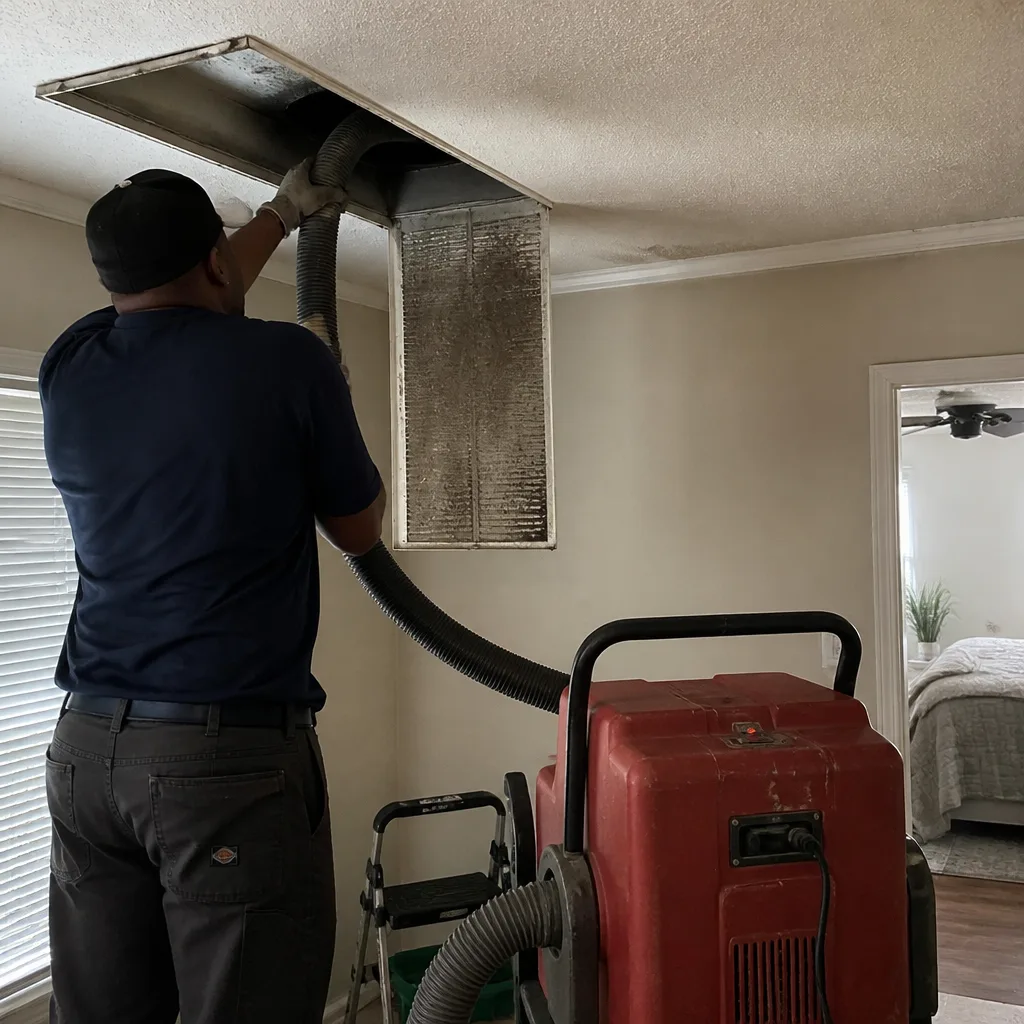 Before
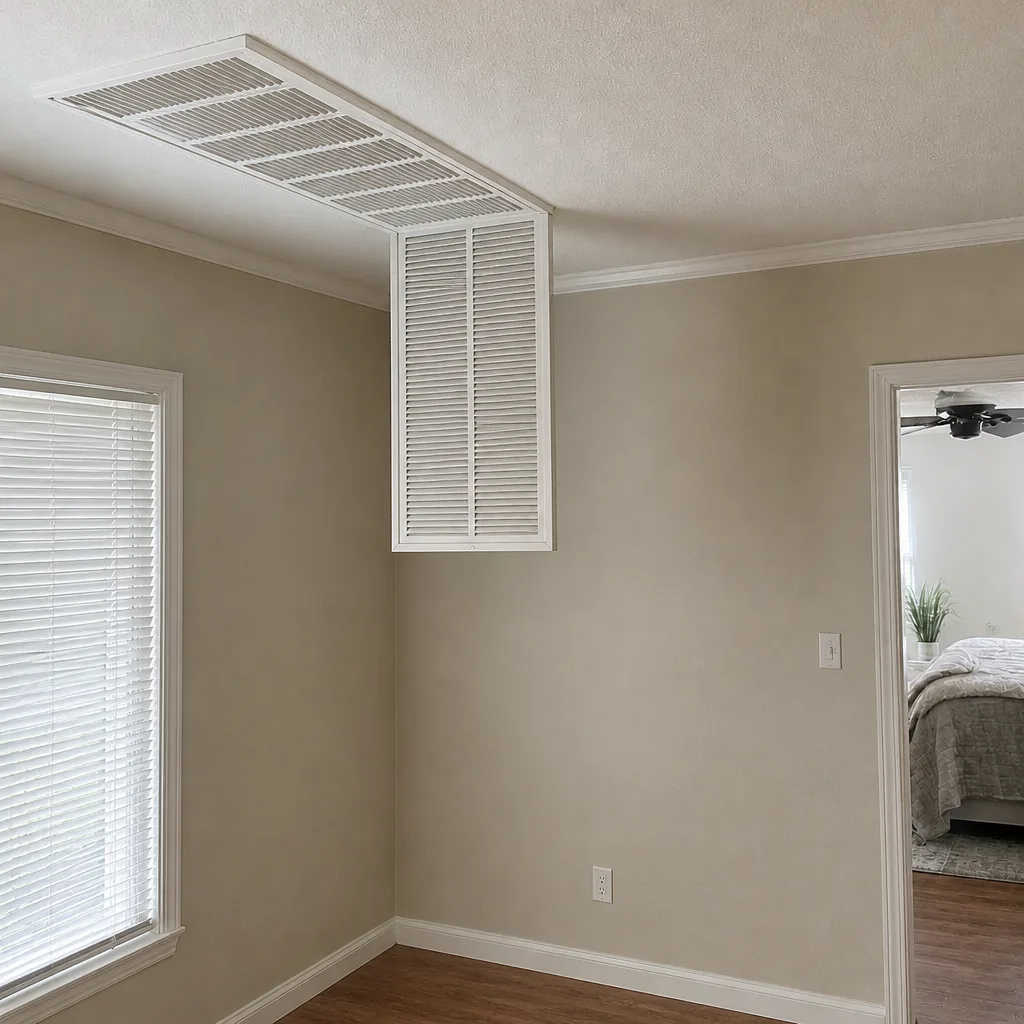 After
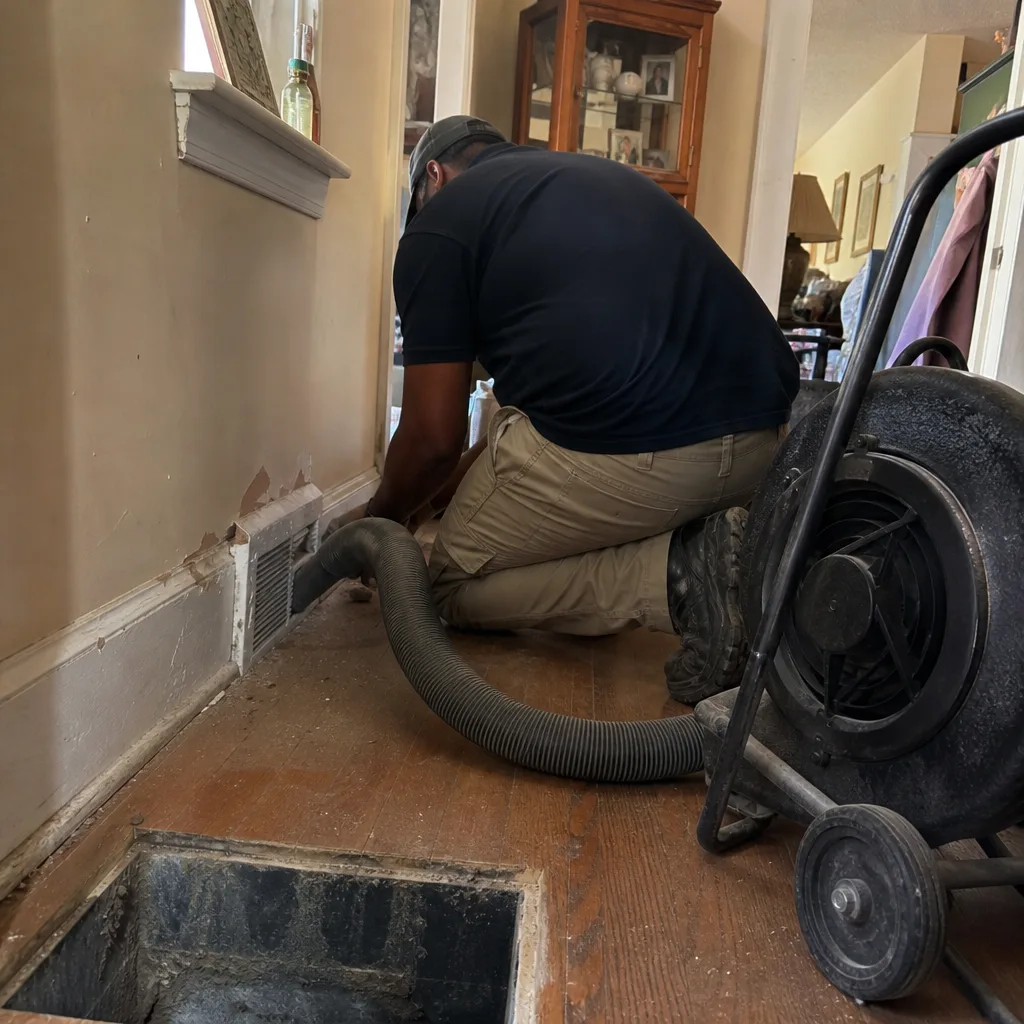 Before
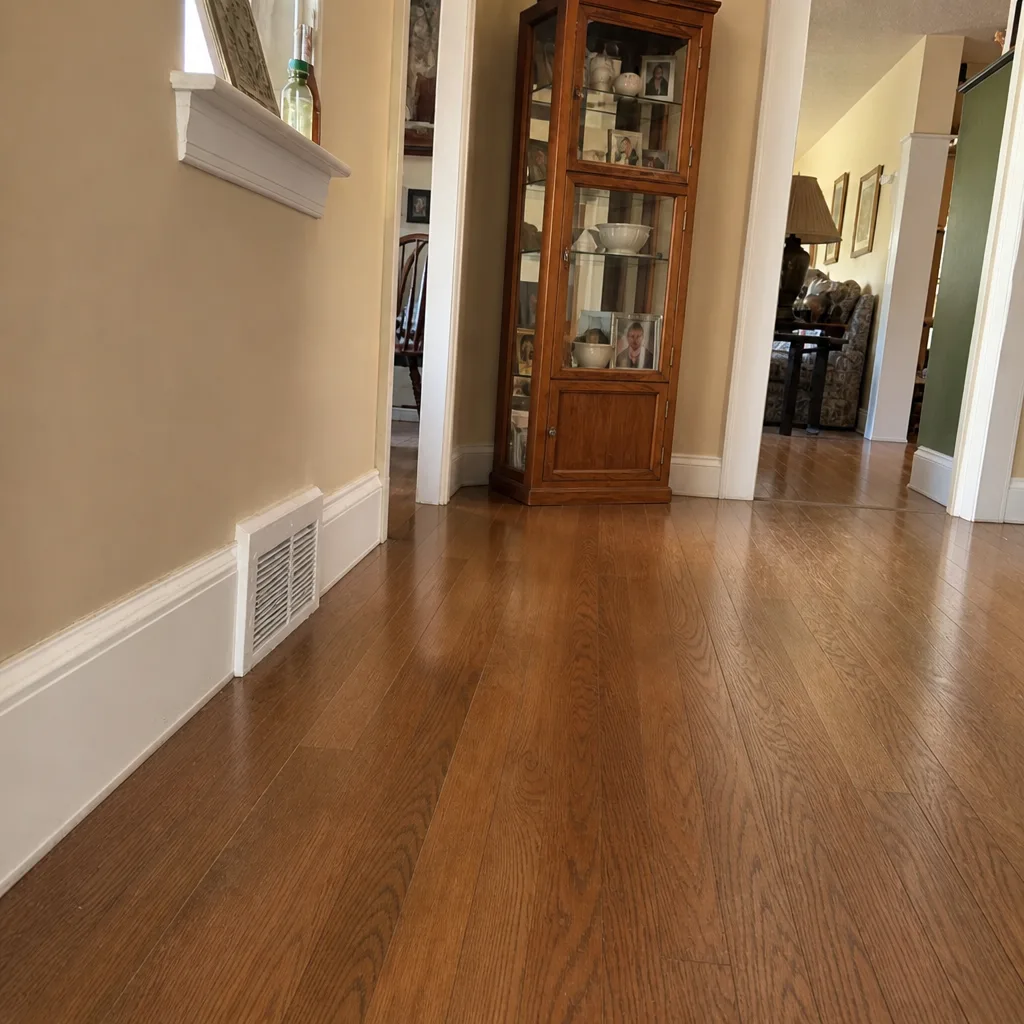 After
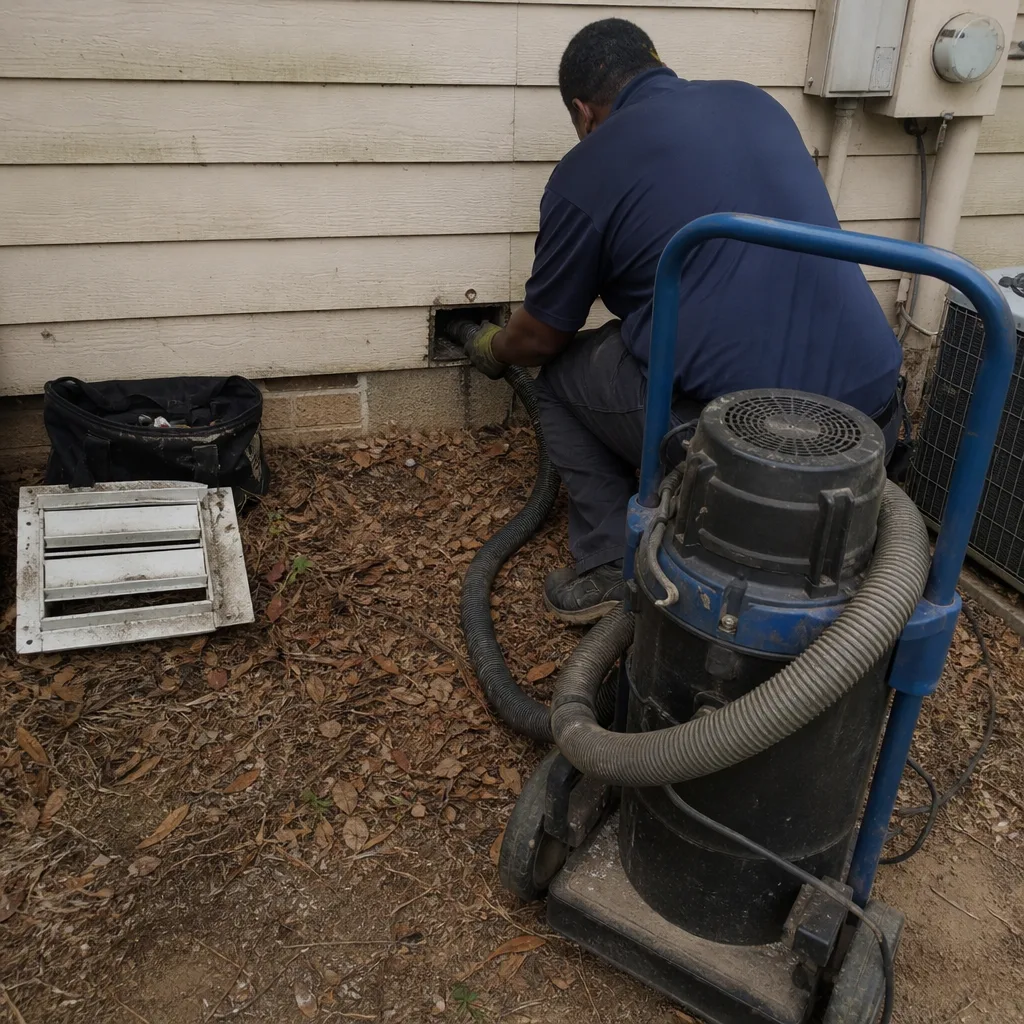 Before
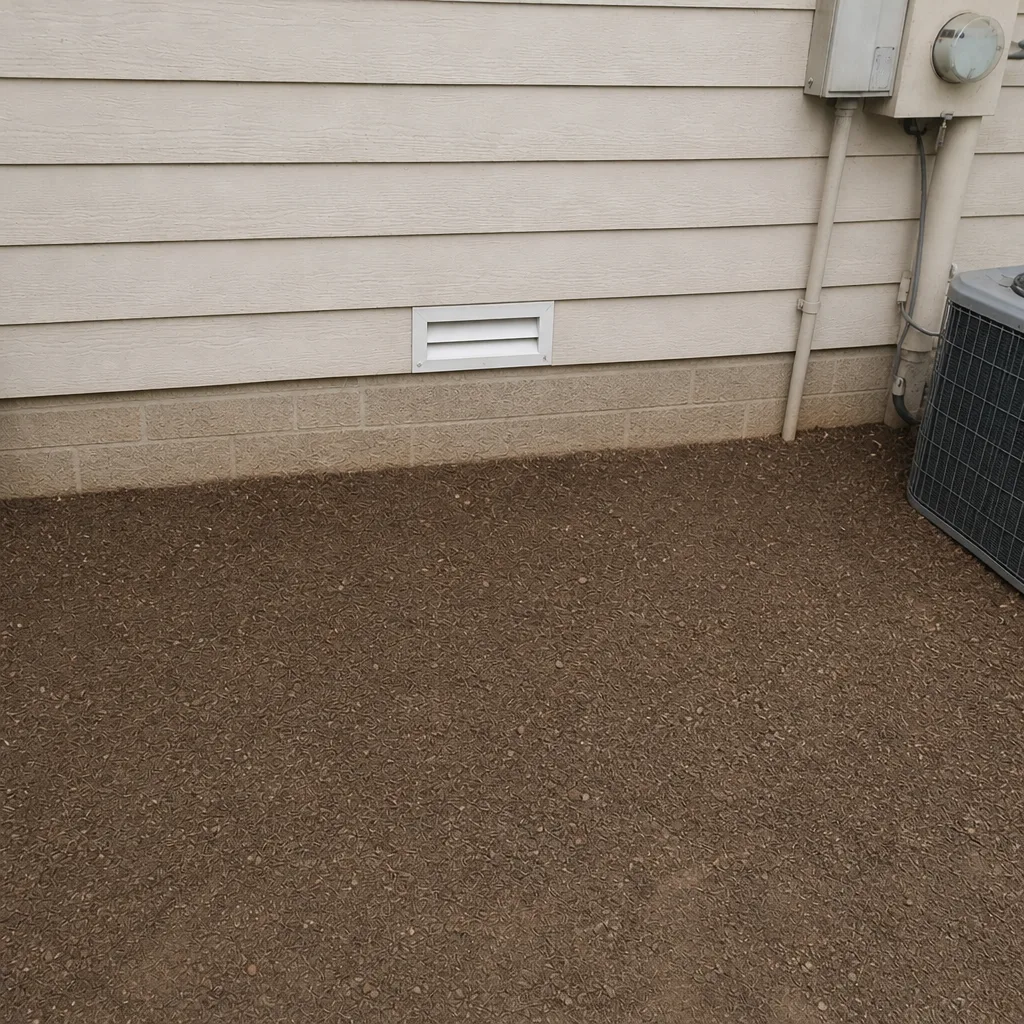 After
When to Call a Professional
Some symptoms have a clear answer without any work. A single dusty register after a renovation is almost certainly a cleaning problem. A room that never gets air is almost certainly a repair problem. But some symptoms cross a line where guessing costs money. A musty smell that returns after cleaning, moisture in the crawlspace, a dryer that takes two cycles to dry a load, or a system that was installed with flex duct in a vented South Fulton crawlspace are all situations where a camera inspection and a proper walk-through are worth the call. Our team uses Rotobrush brush systems, Nikro vacuum equipment, and Abatement Technologies filtration, and we handle cleaning and repair on the same visit. Tidewater Air Duct Cleaning offers free estimates in South Fulton. Call (833) 991-9213. We answer 24/7. Fast dispatch from 7am to 7pm, Sunday through Friday.
Frequently Asked Questions
If your registers deliver air but the air is dusty, or there’s visible buildup inside the register boots, you need cleaning. If rooms stay uneven, registers don’t deliver air, or the tissue test shows leakage at the boot, you need repair. A musty smell that returns after cleaning almost always means repair and moisture work, not another cleaning. A visual walk-through before any work starts tells you which problem you actually have. Call (833) 991-9213 for a free estimate.
Because the cleaning addressed dust, and the smell is coming from moisture or a damaged liner. In South Fulton, the crawlspace humidity load means flex duct can absorb moisture and stay damp, which supports biological growth on the inner liner. Cleaning dislodges loose material briefly, but if the moisture source is still active or the liner is degrading, the smell returns. Finding the moisture source and inspecting the liner is the next step.
You can test airflow with the tissue test at each supply register and inspect the register boots with a flashlight. You can also check the crawlspace and attic for standing water, visible moisture, or sagging flex duct. What you can’t check yourself is a disconnected trunk line buried in insulation, a collapsed flex section under a floor, or liner delamination deep inside a run. Those require a camera inspection. Call (833) 991-9213 to schedule one with a free estimate.
Usually one of three duct problems: a collapsed or kinked flex duct section restricting airflow, an internal blockage at a bend or reducer, or a disconnected trunk line that isn’t delivering air to that branch. A kink or a blockage shows up as weak airflow at the register. A disconnected run shows no airflow at all. The fix differs for each, so the diagnosis matters before any work starts.
The honest answer is that whole-system pricing depends on your system: the number of registers and returns, the number of HVAC systems, and whether repair work turns up during the walk-through. We give one flat price per system, agreed before work starts, with no per-vent pricing. We don’t quote a coupon figure to get in the door. Call (833) 991-9213 for an exact quote, and estimates are free.
A low quote usually buys a shopvac pass over the registers, not a whole-system clean. Professional-grade equipment like Rotobrush brush systems, Nikro vacuum equipment, and Abatement Technologies filtration takes more setup and more time, which is why the pricing is different. The bigger question is whether the company will walk the system, check for disconnected runs, and show you before-and-after photos of your own ducts. If they won’t, the cheap quote isn’t cheap. Call (833) 991-9213 for an estimate that covers the whole system.
The Bottom Line
The symptoms that send South Fulton homeowners to a general handyman or a new air conditioner are usually duct-system problems: collapsed flex duct, disconnected trunk lines, moisture in the crawlspace, or deteriorating liner. A cleaning fixes dust and buildup. A repair fixes airflow and damage. A camera inspection and a visual walk-through tell you which one you need before anyone touches a vacuum. Our team handles cleaning, dryer vent work, and duct repair on the same visit, using Rotobrush, Nikro, and Abatement Technologies equipment, so what the walk-through finds can be fixed in one call. One call covers cleaning, venting, and repair.
Call (833) 991-9213 for a free estimate. We answer 24/7. Fast dispatch from 7am to 7pm, Sunday through Friday.
Written by the team at Tidewater Air Duct Cleaning.